Table of Contents
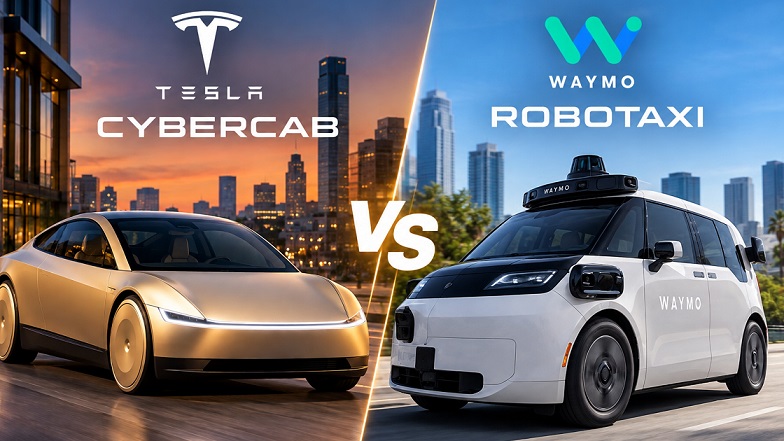
Tesla launched the cybercab—a two-seat car with no steering wheel—into paid service in Austin on September 3, 2026. By then, Waymo was already running more than 500,000 paid rides a week across ten U.S. cities. The competition appears unfair on paper, but scale isn’t the only thing that matters when you’re the one standing on a curb waiting for a ride.
Tesla’s Robotaxi service and the Cybercab are not the same thing. Tesla has been running Model Y robotaxis with safety monitors in Austin, Dallas, Houston, Miami, Orlando, and Tampa for over a year. The Cybercab, the purpose-built two-seater, only started carrying paying customers in September, and only in parts of Austin. Waymo, meanwhile, operates a mixed fleet of Jaguar I-PACE vehicles and its newer Ojai, with commercial service in roughly a dozen U.S. metro areas and plans for London and Tokyo.
So the real question is, which company is turning self-driving technology into a transportation service that ordinary people can actually rely on. That means availability, reliability, safety, convenience, price, comfort, accessibility, and the ability to grow without falling apart?
The Expansion Race: Cities Versus Coverage
Waymo’s growth this year has been super fast. The company went from roughly 400,000 weekly paid trips in February to over 500,000 by late March, and it’s chasing one million rides a week by the end of 2026. It now serves airports in San Francisco, San Jose, Phoenix, and San Antonio, with Denver, San Diego, and Tampa opening in September. London is set to be its first market outside the U.S.
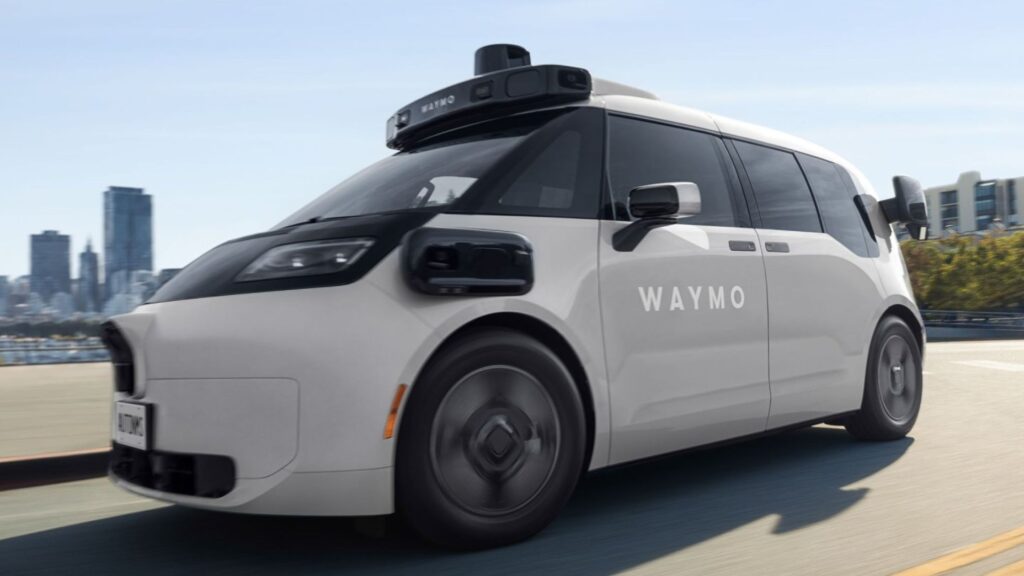
A new vehicle is also in town. Waymo’s sixth-generation Driver debuted on the Ojai, a van built on a Zeekr chassis from China and finished at Waymo’s Mesa, Arizona plant with manufacturing partner Magna. The new sensor suite cuts hardware count by 42% and reportedly costs under $20,000 per vehicle, which is the kind of number that makes wider deployment financially realistic. In August, Waymo had nearly 1,000 Ojai units staged at the Arizona factory, most of them already converted and ready to ship.
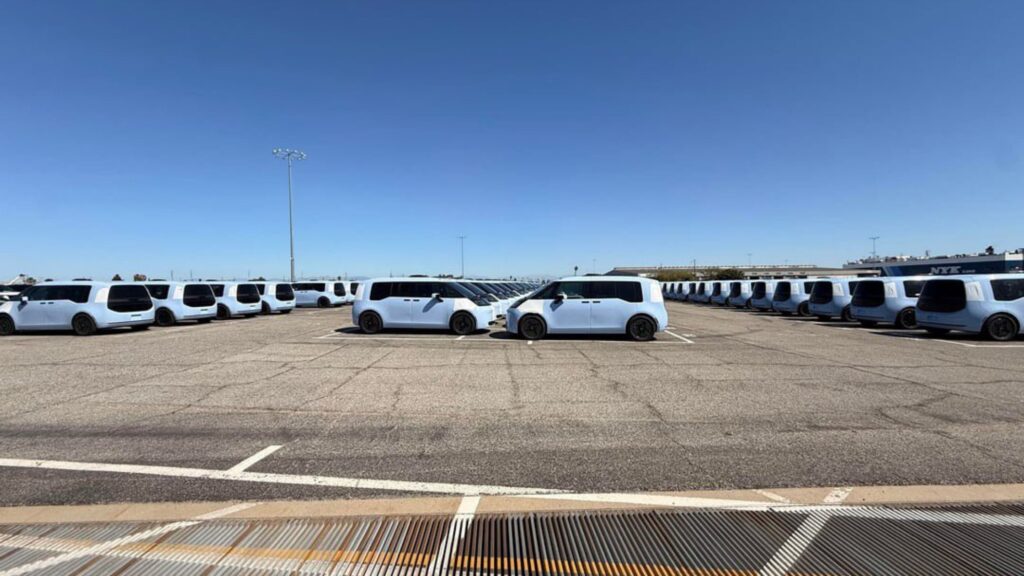
A silver version with upgraded interior trim is now ramping up at the same plant, headed first to San Francisco, Los Angeles, and Las Vegas.
Tesla’s expansion looks different because it’s trying to solve a different problem. Rather than retrofitting an existing car with sensors, Tesla wants to manufacture its way to scale. The Cybercab fleet in Austin grew from under 40 vehicles to more than 300 in about a month, and Elon Musk told investors on the Q3 earnings call that driverless mileage is climbing “like a rocket going to orbit.” Dallas is next, with Tesla targeting multi-city, round-the-clock service by December. Tesla’s Robotaxi website already lists six metro areas for the Model Y service, though how much of that is genuinely unsupervised varies by city.
Two Bets on Autonomy: Cameras Against a Full Sensor Stack
Tesla’s system relies almost entirely on cameras and neural networks trained on driving data. No lidar and no radar in the Cybercab’s sensor suite. The simple logic is that cameras are cheap, they scale with every car Tesla builds, and the whole fleet improves together through software updates. Removing lidar also removes a cost that has historically run into the thousands of dollars per vehicle.
Waymo’s sixth-generation system pairs 13 cameras with four lidar units and six radars. That’s actually fewer sensors than its previous generation, a deliberate cost-cutting move, but it keeps multiple ways of sensing the world layered on top of each other. Waymo’s argument has always been that redundancy matters most exactly when one sensor type fails, like a camera blinded by low sun or heavy rain.
Neither approach has settled the argument yet. A camera-only system that works well in Austin’s wide, sunny streets hasn’t been tested the same way in snow, fog, or the kind of low-visibility chaos that construction zones create. A lidar-heavy system costs more to build and still has to prove it can scale as cheaply as Tesla claims cameras will. The honest comparison isn’t “which sensor is smarter.” It’s which combination holds up at the scale of an actual transportation business, across weather, traffic, and the thousand small edge cases that never show up in a product demo.
The Ride Itself: Booking, Waiting, and Getting Where You’re Going
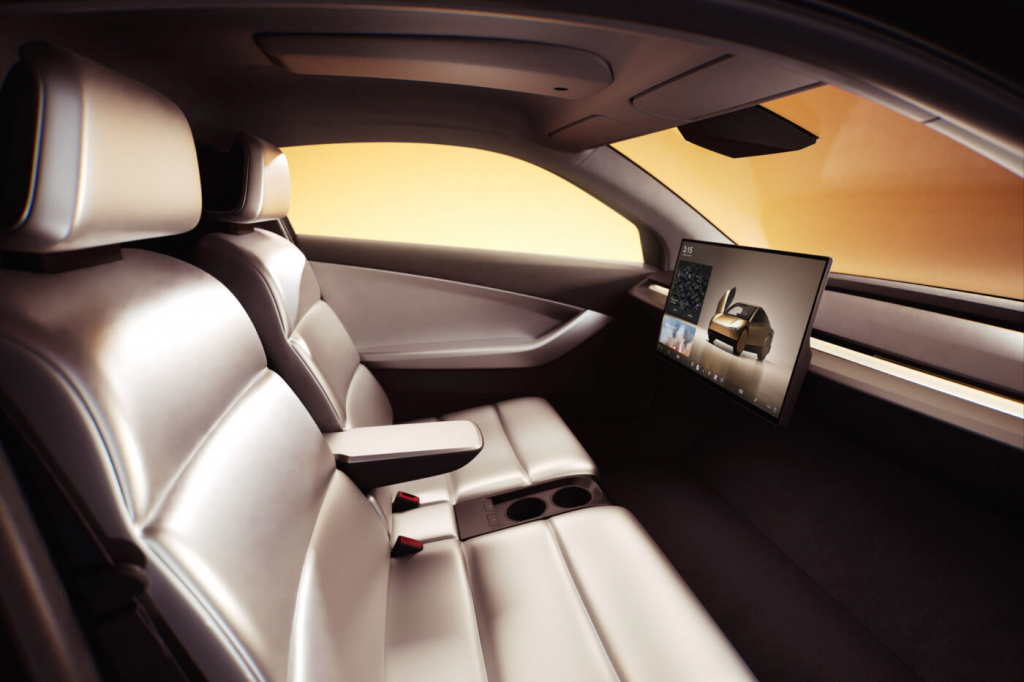
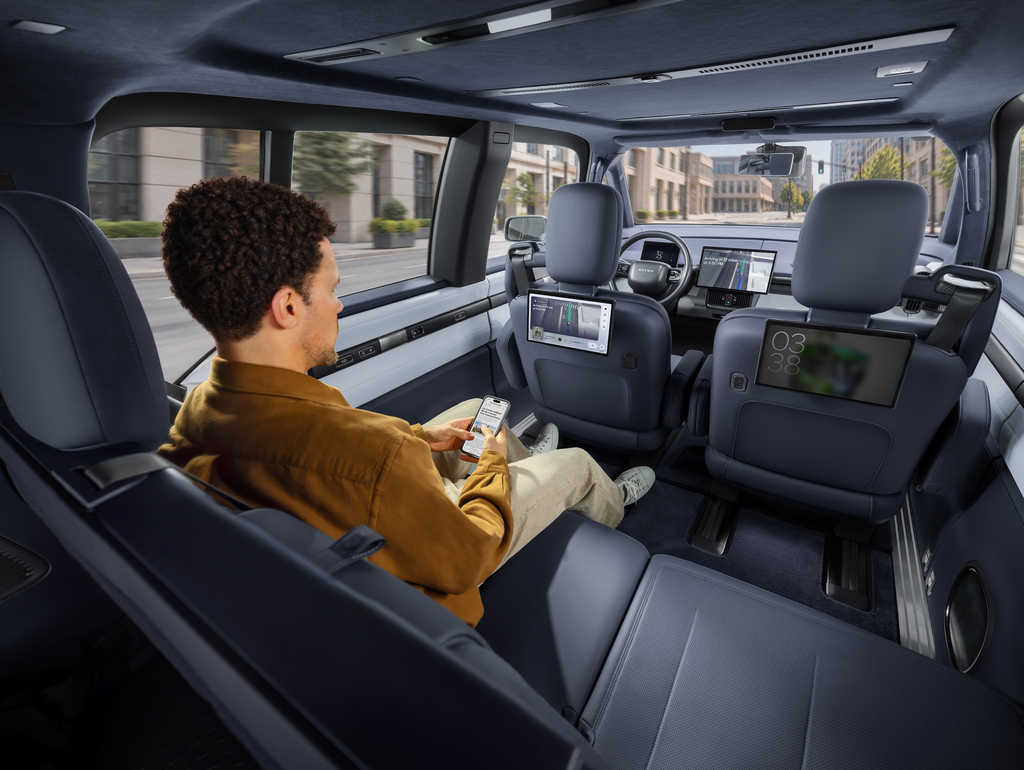
A robotaxi is a full trip. Waymo’s app lets riders set a pickup point, watch the car approach on a live map, and use Gemini-powered voice commands to adjust the air conditioning, change the music, or request a short detour. Tesla’s Robotaxi app offers similar in-cabin personalization, including climate and media controls, through a passenger-facing touchscreen in the Cybercab since there’s no driver and no dashboard in the conventional sense.
The practical difference shows up in wait times. Research firm Obi, which tracked tens of thousands of real ride requests in the San Francisco Bay Area, found Tesla’s average pickup time ran close to 15 minutes, compared with under six minutes for Waymo. That gap tracks directly to fleet size. Waymo has roughly 1,000 vehicles operating in San Francisco alone; Tesla’s local fleet was closer to 150.
Then there’s the two-seat limit. The Cybercab works fine for a solo rider or a couple with light bags. It’s a harder sell for a family heading to the airport with luggage, or for four friends splitting a fare. Waymo’s Ojai, with its flat floor and wider cabin, is built with that kind of trip in mind.
Accessibility is where both companies come up short. Neither Tesla nor Waymo currently operates a vehicle that accommodates a non-folding power wheelchair. Disability advocates have pushed back hard on this in Washington, D.C. and Nevada, where Waymo has told local officials it hasn’t found an electric vehicle platform that meets both its wheelchair-access needs and its retrofit requirements. Tesla has said it’s developing a purpose-built accessible vehicle but hasn’t given a timeline. Until one of them solves this, “accessible to everyone” isn’t an honest claim for either service.
Safety: What the Crash Reports Actually Say
Waymo publishes its safety record through its own Safety Impact Hub, reporting roughly 90% fewer serious-injury crashes and 82% fewer airbag deployments than human drivers across more than 220 million rider-only miles. An outside study by the Insurance Institute for Highway Safety found a somewhat lower, though still large, reduction of about 81% fewer injury crashes. Waymo’s numbers aren’t beyond question. Federal investigators have looked into incidents involving a low-speed collision with a child in Santa Monica and Waymo vehicles failing to stop for school buses, and the company issued a voluntary software recall over the latter. But the pattern across multiple independent reviews points the same direction.
Tesla’s record is harder to evaluate cleanly, partly because of how long the company withheld detail. For most of a year, Tesla was the only operator filing fully redacted crash narratives with NHTSA under the agency’s Standing General Order, while Waymo, Zoox, and others filed full accounts. Tesla unredacted all 17 of its Robotaxi crash reports from Austin in May 2026. Most turned out to be minor: vehicles rear-ended while stopped, a Cybercab-predecessor Model Y clipping a construction barricade at 9 mph. Three incidents, though, involved remote teleoperators taking control and causing the collision themselves, which raises a different question: not whether the autonomous system drives safely, but whether human intervention introduces its own risk. More recent monthly filings have shown stretches with zero at-fault incidents attributed to Tesla’s system.
The Cybercab adds a regulatory bottleneck the Model Y never had. Because it has no steering wheel, pedals, or mirrors, NHTSA opened an audit query asking whether Tesla’s position, that certain federal vehicle safety standards simply don’t apply to a car with no manual controls, actually holds up. The inquiry covers up to 1,000 vehicles and doesn’t by itself prove anything is unsafe. But it does mean the Cybercab’s path to wider deployment runs through a regulatory question that Waymo’s more conventional vehicle layout doesn’t have to answer. Tesla’s response was due October 30, 2026.
The Price War: Who is Really Cheaper
Here Tesla has a clear, measurable lead, at least for now. Obi’s pricing study of nearly 100,000 Bay Area rides found Tesla averaging $8.17 per trip against $19.69 for Waymo, $17.47 for Uber, and $15.47 for Lyft. On a per-kilometer basis, Tesla came in at roughly a third of Waymo’s rate, with no real evidence of surge pricing during the study period.
However, two important factors make these numbers more complex. First, Tesla has already raised its prices by 41% since launching in that market, which is the highest increase among all four providers, even though it remains the cheapest choice overall. Second, customers who pay Tesla’s lower fares often face longer wait times, meaning the lower cost comes with a trade-off in convenience.
Waymo is gradually narrowing its price gap with traditional services rather than charging far more. Its prices used to be up to 40% higher than Uber’s, but that difference has shrunk to less than 13%, and shorter trips are almost identical in price. This drop is mainly due to cheaper sensor technology on newer models and rising fares across ride-hailing services. Since neither company has proven that individual rides are profitable yet, current pricing mostly shows their current business strategy: Tesla is keeping prices low to win market share quickly, while Waymo is maintaining a higher price point while its service quality allows it.
Manufacturing Scale Versus Operational Scale
Tesla focuses heavily on making the Cybercab cheap and easy to build in large numbers. The company wants to sell the vehicle for under $30,000, keep running costs down to around twenty to thirty cents per mile, and eventually build up to two million units a year across several factories. Tesla executives have stated they hope to begin selling these vehicles to the public by late 2026. However, because large-scale production is fairly new and federal safety reviews are ongoing, this date is more of an ambitious goal than a guaranteed promise.
Waymo takes a different approach by focusing on the daily work of running a driverless taxi service. The company already has real-world experience directing vehicles, setting up service zones, helping cars remotely when they run into problems, and working directly with city officials. While this practical experience gives Waymo a strong operational lead, running the service is extremely expensive. Waymo’s parent company continues to report massive financial losses on the project, while Tesla keeps its specific robotaxi costs hidden within its overall numbers. As a result, neither business has clearly shown investors a proven path to making a profit yet.
The Cybercab vs. Waymo Scorecard
Comparing the Cybercab and Waymo fairly means looking at what matters most, because features like safety and reliability are much more important to a rider than how an app looks. The framework below weighs these factors based on practical value, though these rankings reflect reasoned judgment rather than a strict industry rule. Some areas have clear proof and data behind them, while others rely on early estimates and limited testing.
| Category | Weight | Where the evidence points |
|---|---|---|
| Safety and reliability | 25% | Edge to Waymo, based on a longer public track record and third-party verification; Tesla’s recent monthly data is improving but its history of redacted reporting makes trend comparison harder |
| Passenger convenience | 20% | Waymo, on wait times and trip completion; Tesla loses ground here mainly due to fleet size, not technology |
| Affordability | 15% | Tesla, clearly, though its fares are rising fast and neither company has shown the economics are sustainable yet |
| Geographic availability | 15% | Waymo, by a wide margin, on both city count and useful coverage like airports and freeways |
| Comfort and accessibility | 10% | Roughly tied and weak on both sides; Waymo’s Ojai offers more room, but neither service has solved wheelchair access |
| Scalability | 10% | Too early to call; Tesla’s manufacturing story is more compelling on paper, Waymo’s is more proven in practice |
| Technology and personalization | 5% | Close to even; both offer in-app voice and climate controls |
Who Has the Edge?
Waymo currently offers a more complete ride service than the Tesla Cybercab. It operates in more places, serves more airports, picks up passengers faster, and shares much more detailed safety information. These advantages are backed by real data from millions of self-driving miles across many cities.
Tesla is taking a very different approach that could change the industry if it succeeds. Instead of modifying expensive cars with added sensors, Tesla aims to build cheap, two-seat vehicles in massive quantities to lower ride prices far below competitors. However, the Cybercab is currently limited to small areas in one city, lacks standard controls like steering wheels, and has not shared the extensive safety data that Waymo has provided for years.
When comparing the two today, the real difference comes down to strategy. Waymo has already built a working, proven driverless service, while Tesla is betting that mass-producing inexpensive vehicles will eventually beat out years of real-world driving experience.
You May Also Like:
Is Self-driving Technology Influencing the Way People Buy Cars Today?
Check Out Waymo’s New Silver Ojai and Its Mesmerizing Features
Tesla’s Cybercab Launch Event: Is Elon Musk’s Bet Finally Paying Off?

I’m Dr. Brandial Bright, also known as the AVangelist. As a dedicated and passionate researcher in autonomous and electric vehicles (AVs and EVs), my mission is to educate and raise awareness within the automotive industry. As the Founder and Managing Partner of Fifth Level Consulting, I promote the adoption and innovation of advanced vehicle technologies through speaking engagements, consulting, and research as we progress to level 5 fully autonomous vehicles.