Table of Contents
- On September 3, 2026, Tesla began commercial Cybercab deployment with just 45 units authorized in Texas. NHTSA opened a federal audit on the exact same day.
- Waymo operates roughly 3,500 to 4,000 vehicles across 11 US metro areas and was logging 500,000 paid rides per week as of March 2026. Tesla’s Austin pilot is a fraction of that.
- Tesla has filed production targets with regulators showing ambitions above 125,000 Cybercabs annually. No competitor can manufacture autonomous vehicles at that potential scale.
On September 3, 2026, Tesla officially unveiled the commercial Cybercab at ACL Live in downtown Austin.
The event was invite-only. There was no public livestream, despite Tesla initially suggesting one would happen. Some invitations went to riders who had completed Robotaxi trips between August 17 and 23, with five sweepstakes winners drawn from that pool. Others received direct “Exclusive Access” emails. Millions on X refreshed for a stream that never came.
The “Tesla’s Cybercab launch” has three different moments. The first was the October 2024 “We, Robot” event at Warner Bros. studios in Los Angeles, where Musk unveiled the Cybercab concept. Two seats. No steering wheel. No pedals. A consumer purchase price promised below $30,000. Robotaxi operating costs floated at roughly $0.20 per mile. That was a vision.
The second came in June 2025, when Tesla launched a commercial robotaxi service in Austin using modified Model Y vehicles. Real passengers, real rides, but a borrowed vehicle.
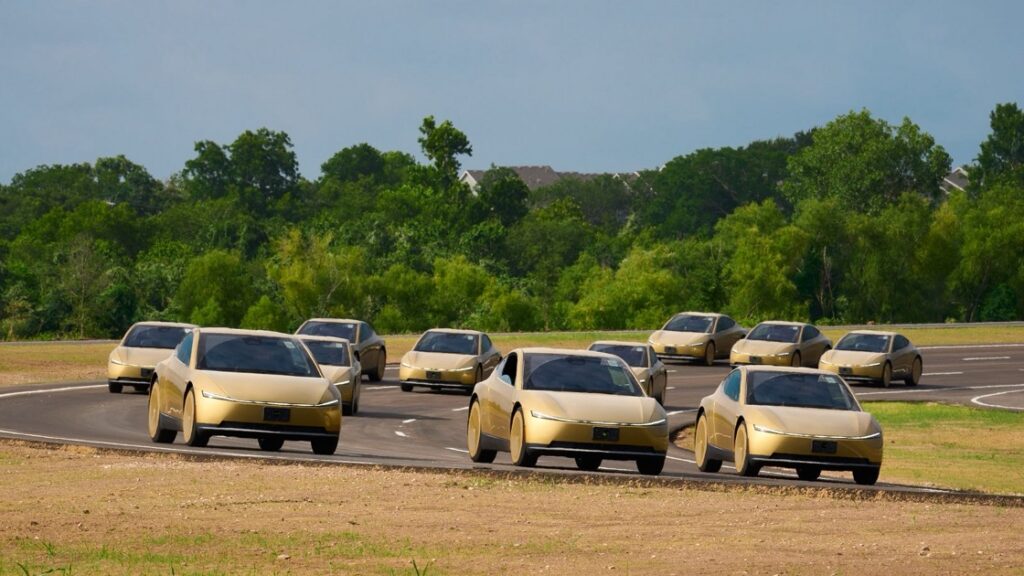
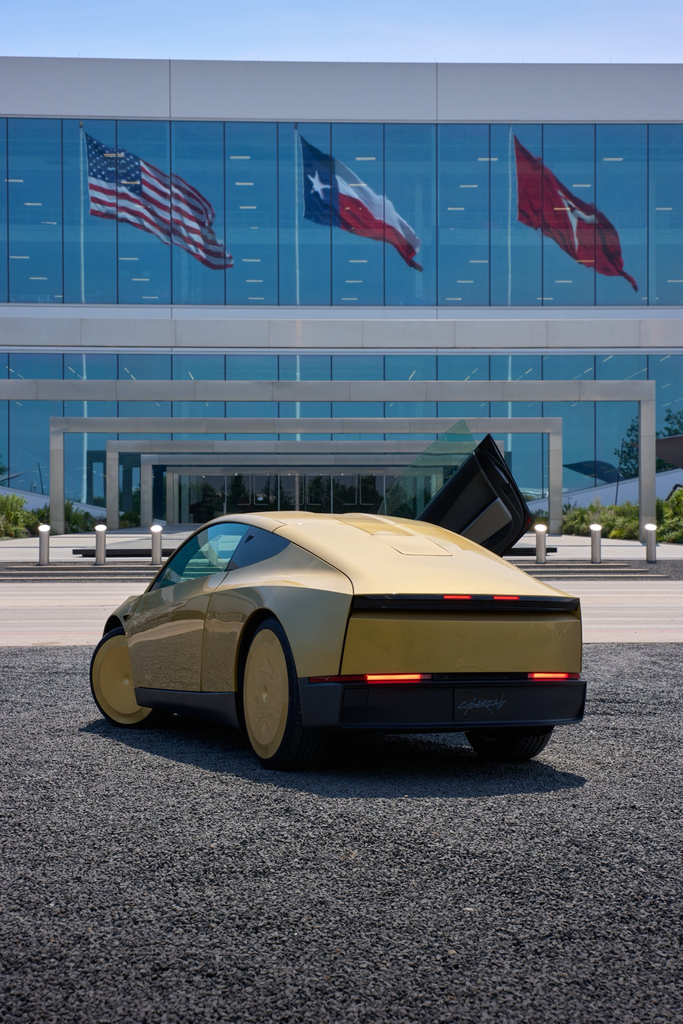
The third happened on September 3, 2026. A gold-painted, gull-wing-doored Cybercab, purpose-built and controlless, entered Tesla’s commercial ride-hailing fleet for the first time. About 45 Cybercabs were authorized for commercial robotaxi use in Texas.
The Tech Behind the Cybercab and How It Stacks Up
The Cybercab runs Tesla’s AI4 computer. It uses eight cameras arranged in a 360-degree ring. No lidar, no radar, no ultrasonic sensors. Just cameras and a neural network trained on data from hundreds of millions of miles driven by Tesla’s consumer fleet.
Waymo’s current vehicles use 13 cameras, four lidar units, and six radar sensors. Waymo’s VP of onboard software, Srikanth Thirumalai, made the contrast explicit in an August 27, 2026 blog post timed closely to Tesla’s launch.
After 200 million fully autonomous miles, he wrote, Waymo was convinced that camera-only systems “aren’t enough” for safe, full-scale autonomy. He called attempting to upgrade a driver-assist system into a full autonomy product “a false summit.”
Tesla’s position is quite the opposite. Musk has long argued that lidar is unnecessary. If humans navigate roads with eyes alone, cameras should be sufficient. A single lidar unit can cost many multiples of what a camera costs. Tesla’s eight-camera stack is a fraction of what competitors spend on hardware cost.
NHTSA’s Engineering Analysis EA26002 found that Tesla’s camera-only system failed to detect roadway conditions that impaired camera visibility in nine documented crashes, including reduced visibility from fog, sun glare, and dust.
The Cybercab will face those same conditions. NHTSA noted this explicitly the day the Cybercab launched.
That’s the main issue with this launch.
It’s not whether the Cybercab can drive. It clearly can. The real question is whether it can drive safely across millions of commercial miles, in every weather condition, without using radar or lidar.
No “Musk Time” this Time Around
When Elon Musk announced at the “We, Robot” event that Cybercab production would start in 2026 or before 2027, many people were skeptical. Tesla has a long history of missing deadlines, with major projects like Full Self-Driving and the new Roadster experiencing significant delays.
This time, however, Tesla delivered early by launching commercial Cybercab service in 2026. The company has also filed official plans to build more than 125,000 Cybercabs each year at its factory in Austin, Texas.
Tesla vs. Waymo
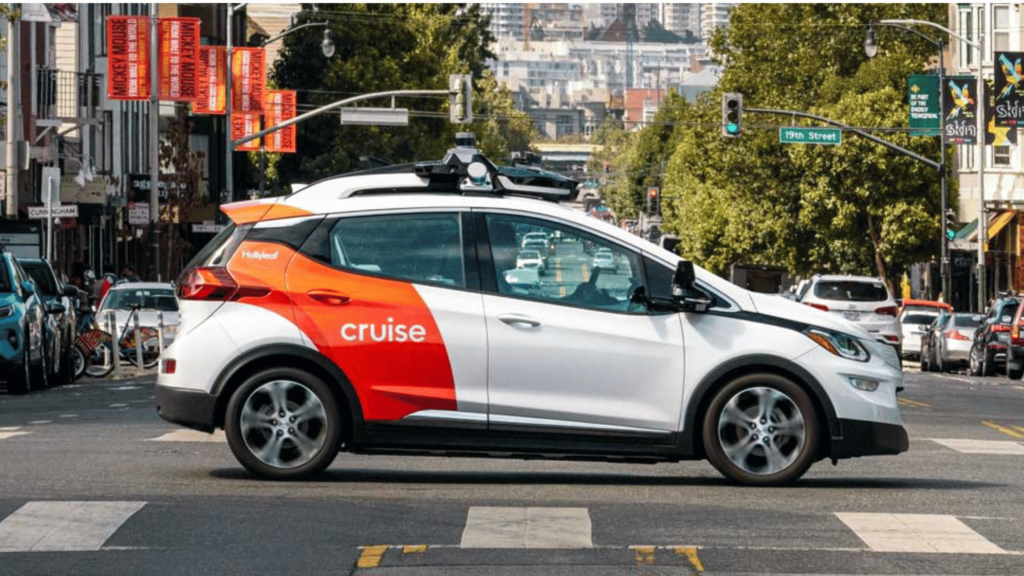
As of March 2026, Waymo was logging approximately 500,000 paid rides per week across 11 US metro areas, with a fleet of roughly 3,500 to 4,000 vehicles. In February 2026, the company closed a $16 billion funding round at a $126 billion valuation, the largest capital raise any autonomous vehicle company has ever completed.
Waymo’s co-CEO Tekedra Mawakana set a target of one million weekly rides by the end of 2026.
Waymo has more than 20 million lifetime paid trips and over 220 million rider-only miles on public roads. Its crash rate per mile runs below human-driven ride-hailing services.
None of this, however, makes Waymo safe from competition.
Tesla’s biggest advantage is manufacturing. The company builds cars at automotive scale. Waymo does not. An independent forecast by FutureSearch estimated that reaching one million weekly rides would require roughly 7,200 vehicles. At Waymo’s fleet expansion pace in mid-2026, it would likely fall somewhere between 775,000 and 840,000 rides per week by year-end, short of the target.
If regulatory bodies approve its plans, Tesla could build 125,000 Cybercabs every year—a production speed no competitor can match.
The cost to build these cars is also very different. Competitors like Waymo use many expensive sensors per vehicle, while Tesla uses low-cost cameras. If Tesla’s self-driving software proves safe on a large scale, the company could offer cheaper rides than anyone else, which is key to winning in the taxi business.
The $30,000 Promise Is Still Open
At the October 2024 unveiling, Musk said consumers would eventually be able to buy a Cybercab for under $30,000. As of Tesla’s Cybercab launch event in September 2026, there is no firm retail price and no broad consumer availability. The vehicle operates inside a commercial fleet.
A sub-$30,000 fully autonomous vehicle would be the first of its kind priced within reach of a mass-market buyer.
The fleet model may actually be more lucrative anyway. A Cybercab operating commercially for most of the day generates revenue continuously. A privately owned car sits parked roughly 95% of the time. Tesla has not clarified which direction it intends to lean.
NHTSA Opened an Audit on Launch Day
On September 3, 2026, federal safety regulators opened an investigation into roughly 1,000 Tesla Cybercabs. They are checking whether Tesla’s claim that the vehicle meets all federal vehicle safety standards is actually valid.
Federal safety rules were originally written for traditional cars with steering wheels, pedals, and mirrors—none of which the Cybercab has. Tesla argues that these rules simply do not apply to a vehicle designed without human controls, but regulators want to closely examine that.
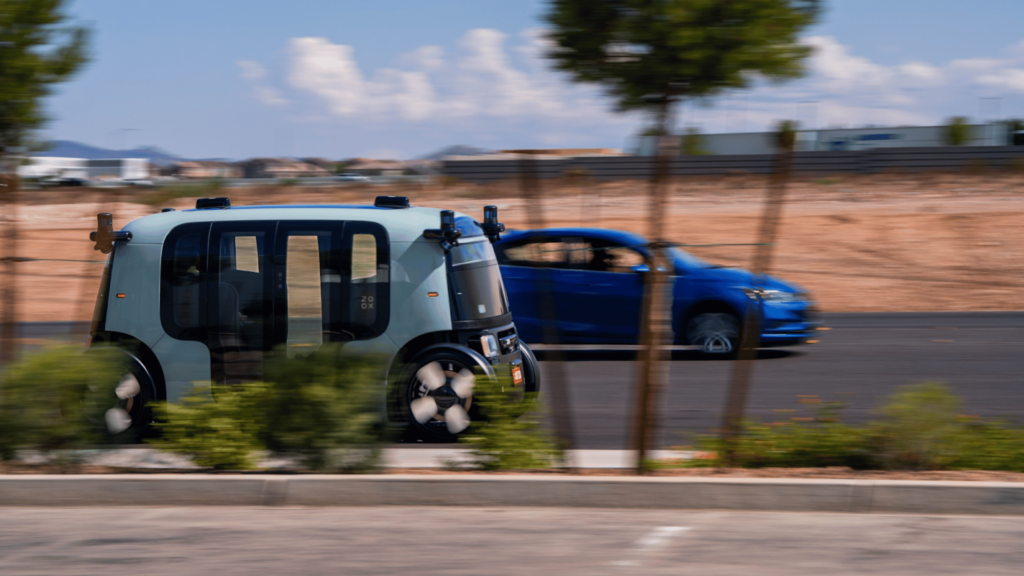
The inquiry is not a recall or an order to stop rides. A similar situation happened in the past. In 2022, Amazon’s Zoox self-certified its own steering-wheel-free robotaxi, which led to a government audit.
Zoox eventually had to apply for a formal safety exemption, a process that took nearly four years and ended with strict limits on how many vehicles it could operate.
Tesla moved much faster by skipping the exemption process entirely. If regulators approve Tesla’s method, it will set an important pattern for future self-driving cars. If they do not, Tesla could face strict deployment limits or forced corrections that slow its growth.
A final decision from safety regulators will take time, so Cybercab rides are continuing in Austin for now. It is also worth noting that these vehicles are not totally on their own, as Tesla uses remote human operators to help the cars when necessary.
The Data Advantage
Tesla’s consumer fleet has been generating camera-based driving data for years across tens of millions of vehicles worldwide. Every Tesla running FSD feeds information back into the training pipeline.
That volume of real-world data is something no competitor has accumulated at the same speed.
Safety statistics, built across billions of miles, will ultimately decide who wins the commercial autonomous driving market.
As Cybercab rides accumulate in Austin, Tesla gains something it didn’t have before September 3: commercial passenger miles on a purpose-built, steering-wheel-free vehicle in a live market.
Every mile driven helps teach the self-driving software. Whenever the car faces a strange or tricky driving situation, the system learns from what went right or wrong. This continuous feedback loop is why Tesla believes that putting as many cars on the road as possible is the key to improving the technology.
The main uncertainty is whether Tesla can grow its fleet fast enough to perfect the system before a bad accident happens. If a major crash occurs first, it could easily destroy public trust in the technology.
What “Paying Off” Would Actually Look Like
Elon Musk’s bet on using only cameras for self-driving cars will succeed only if three things happen at the same time. First, the Cybercab needs to drive enough commercial miles to build a clear, public safety record that matches Waymo’s track record.
Second, Tesla must use its massive factory capacity to put thousands of Cybercabs on the road without running into government delays or legal bans.
Finally, the cost to run each self-driving mile must stay low enough for the business to make money and support itself as it grows.
You May Also Like:
10 Fascinating Things to Know About the Tesla Cybercab
10 Intriguing Key Facts About the Electric Tesla Semi Truck
Will Self-Driving Cars Replace Human Drivers Anytime Soon?

I’m Dr. Brandial Bright, also known as the AVangelist. As a dedicated and passionate researcher in autonomous and electric vehicles (AVs and EVs), my mission is to educate and raise awareness within the automotive industry. As the Founder and Managing Partner of Fifth Level Consulting, I promote the adoption and innovation of advanced vehicle technologies through speaking engagements, consulting, and research as we progress to level 5 fully autonomous vehicles.