For so many years now, self-driving companies have built their businesses towards a simple model: develop the technology, buy or build the vehicles, operate the fleet, and create an app through which passengers could book rides.
That model still exists. But the industry is increasingly moving towards partnerships and shared responsibilities.
While self-driving companies have spent years perfecting driverless technology, the problem is that most of them can’t fill their cars. And without consistent rider demand, you can’t train better AI, you can’t justify fleet costs, and you can’t convince investors that you have a path to profit.
A self-driving company may handle the autonomous driving system, while Uber or Lyft provides access to riders. Another partner may own or manufacture the vehicle, while another manages charging, cleaning, maintenance, depots, or fleet operations.
Building a vehicle that can drive itself is extraordinarily difficult. But getting enough people into that vehicle every day is a completely different business problem.
A robotaxi company also has to deal with customer acquisition, ride matching, payment, pricing, customer support, demand forecasting, etc. Uber and Lyft have spent years—and billions of dollars—building many of these capabilities.
An AV company does not necessarily need to reinvent the ride-hailing marketplace if Uber or Lyft can provide access to existing demand.
This allows the AV developer to concentrate more heavily on autonomy, vehicle integration, safety, and fleet expansion.
Building a vehicle that can drive itself is extraordinarily difficult. But getting enough people into that vehicle every day is a completely different business problem.
Leading Self-Driving Companies Partnering With Uber and Lyft
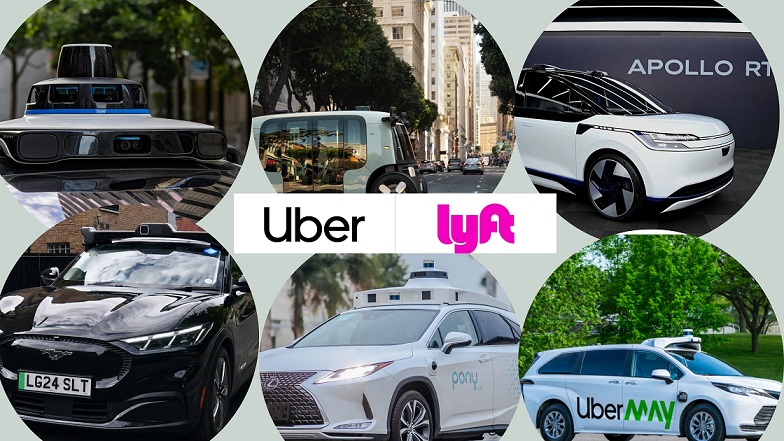
Here are the major self-driving companies partnering with Uber and Lyft for commercial AV distribution:
Waymo
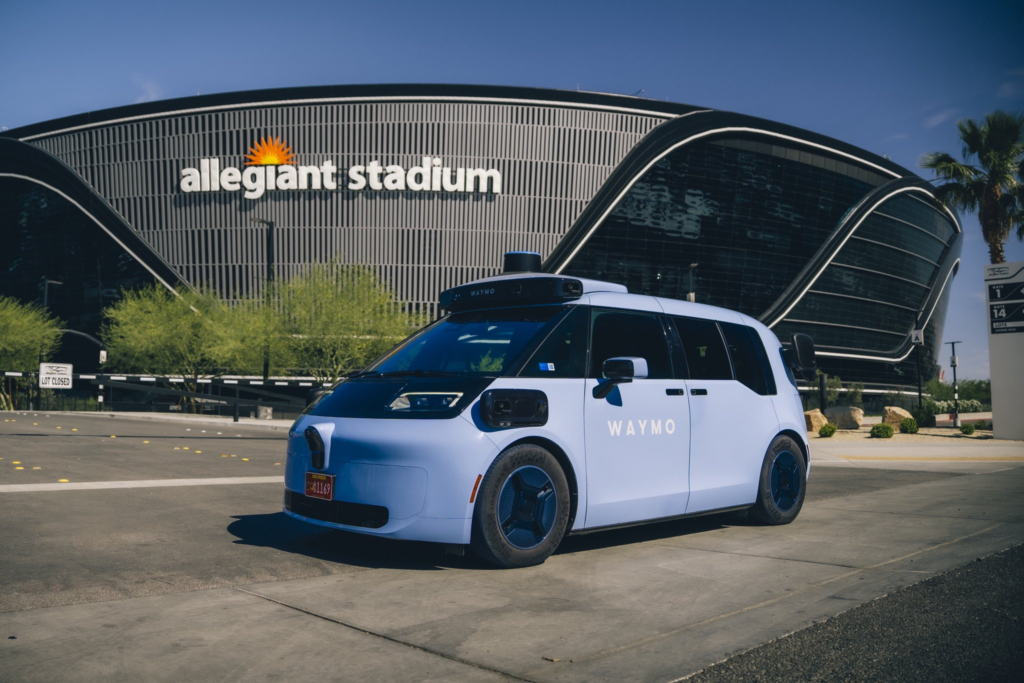
Waymo is partnering with both Uber and Lyft.
In September 2024, Waymo and Uber announced expansion into Austin, Texas, and Atlanta, Georgia. Austin launched in March 2025. Atlanta followed in June 2025. Both cities are Uber-exclusive. Riders can only access Waymo vehicles through the Uber app. Under the arrangement, Uber manages fleet services (cleaning, charging, maintenance, depot operations) through a company called Moove Cars. Waymo handles vehicle testing and roadside assistance. In Atlanta, the initial service area covered 65 square miles spanning Downtown, Buckhead, and Capitol View. Uber CEO Dara Khosrowshahi later said these Waymo robotaxis were “busier than 99% of human drivers.”
Waymo’s Lyft deal came next. On September 17, 2025, the two companies announced a partnership to launch robotaxi service in Nashville, Tennessee, by 2026. Lyft handles fleet operations through its subsidiary Flexdrive and is building a purpose-built AV facility for the fleet.
Riders in Nashville will be able to hail a Waymo via the Waymo and Lyft apps, giving them dual access. In Austin and Atlanta, the Uber app is the only option.
Waymo has also announced plans for Washington, D.C., Miami, Dallas, Denver, and Detroit. Not all will route through Uber or Lyft.
Zoox
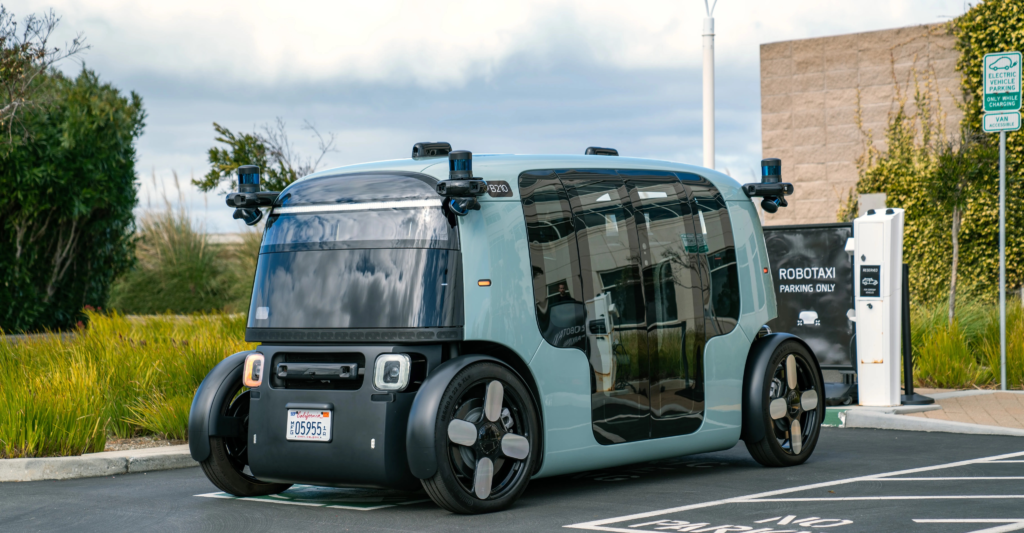
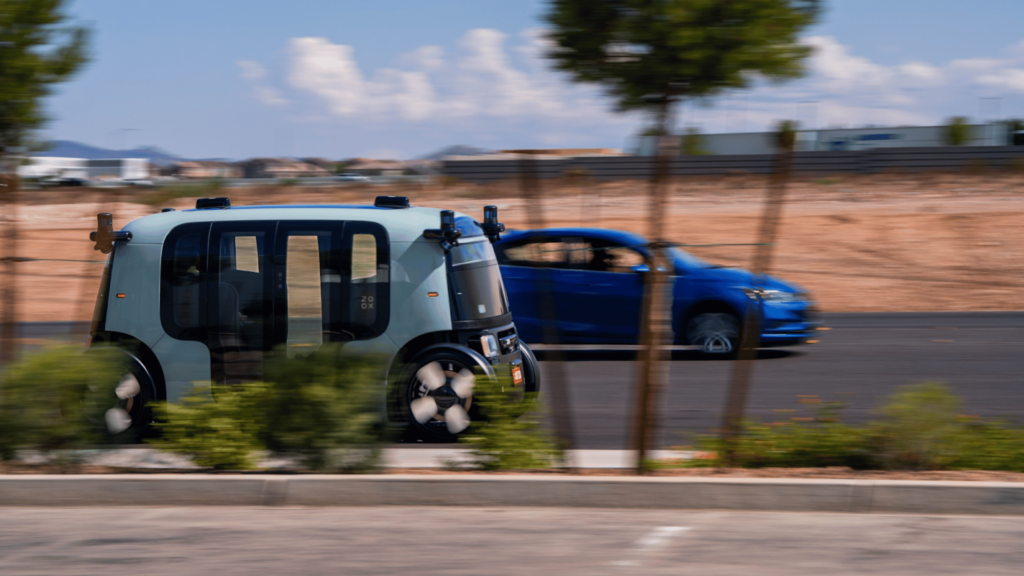
On March 11, 2026, Zoox and Uber announced a multiyear strategic partnership. This was the first time Zoox had ever worked with a third-party platform. Before that, Amazon’s self-driving subsidiary had only offered rides through its own app, free of charge, in Las Vegas and select San Francisco neighborhoods. By early March 2026, it had served more than 300,000 riders without charging for a single trip.
The Uber partnership launches first in Las Vegas, with Los Angeles following by mid-2027. Riders on the Uber app may be matched with a Zoox robotaxi for eligible trips. Zoox keeps running its own app in both cities.
Wayve
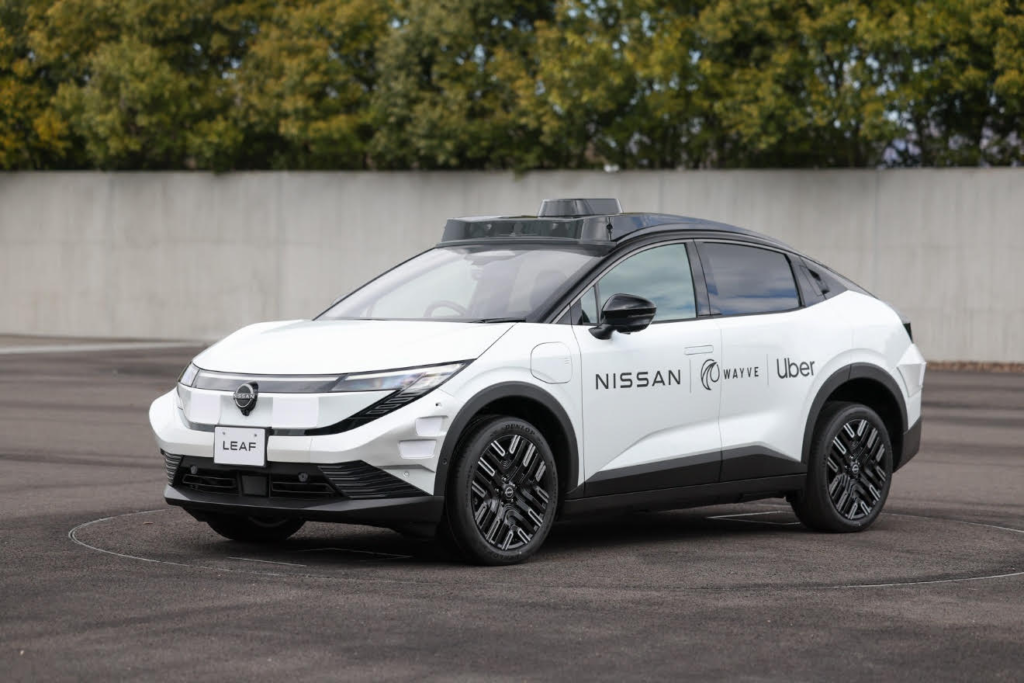
Wayve is a UK-based autonomous driving startup that builds what it calls “Embodied AI.” Its system is mapless, designed to operate without geofenced limits. That literally makes it more versatile across cities and countries than systems that rely on HD maps.
In August 2024, Uber announced a multi-year collaboration with Wayve and made an undisclosed investment as part of the company’s $1.05 billion Series C round. The deal targeted Uber’s global network of more than 150 million monthly users.
By June 2025, the partnership moved to live trials. Wayve and Uber announced public-road testing of Level 4 autonomous vehicles in London after Transport for London granted Wayve’s vehicles Private Hire Vehicle licences. The UK Secretary of State for Transport fast-tracked a regulatory framework for the pilots, calling the deal “a fantastic vote of confidence in this new technology.”
In March 2026, Uber added a second Wayve market: Wayve-powered self-driving Nissan Leaf EVs on Uber’s network in Tokyo, targeted for late 2026. Stellantis is also part of a separate trilateral collaboration with Wayve and Uber exploring Level 4 deployments across Europe and North America.
Baidu Apollo Go
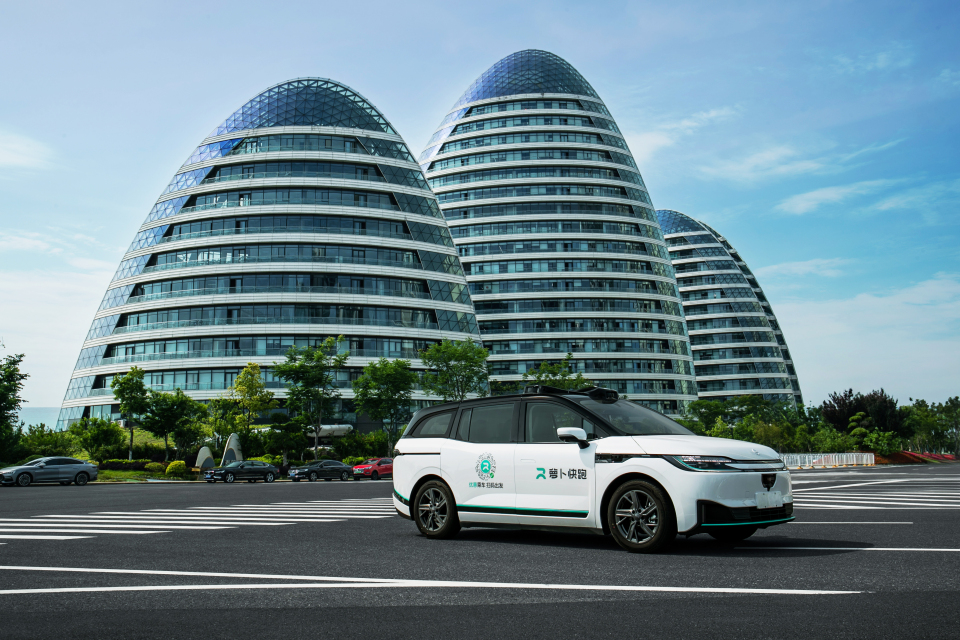
Baidu’s Apollo Go is partnering with both Uber and Lyft in different geographic markets.
Apollo Go is China’s largest autonomous ride-hailing service. By August 2025, it had logged more than 11 million rides across 15 cities worldwide, including Hong Kong and Middle Eastern hubs, and accumulated over 170 million kilometers of autonomous driving. Its sixth-generation vehicle, the RT6, is the latest robotaxi from the company.
The Lyft deal came first. On August 4, 2025, Baidu and Lyft announced a strategic partnership to deploy Apollo Go’s RT6 vehicles in Germany and the UK starting in 2026, pending regulatory approval. The plan is to scale to thousands of vehicles across Europe in subsequent years.
Baidu’s Uber deal covers Dubai and global markets outside the US and mainland China. In January 2026, Uber opened an “Apollo Go Park” in Dubai, its first overseas operations and management center. By late July 2026, Apollo Go had begun robotaxi testing in London simultaneously on both Uber and Lyft.
Lucid + Nuro + Uber
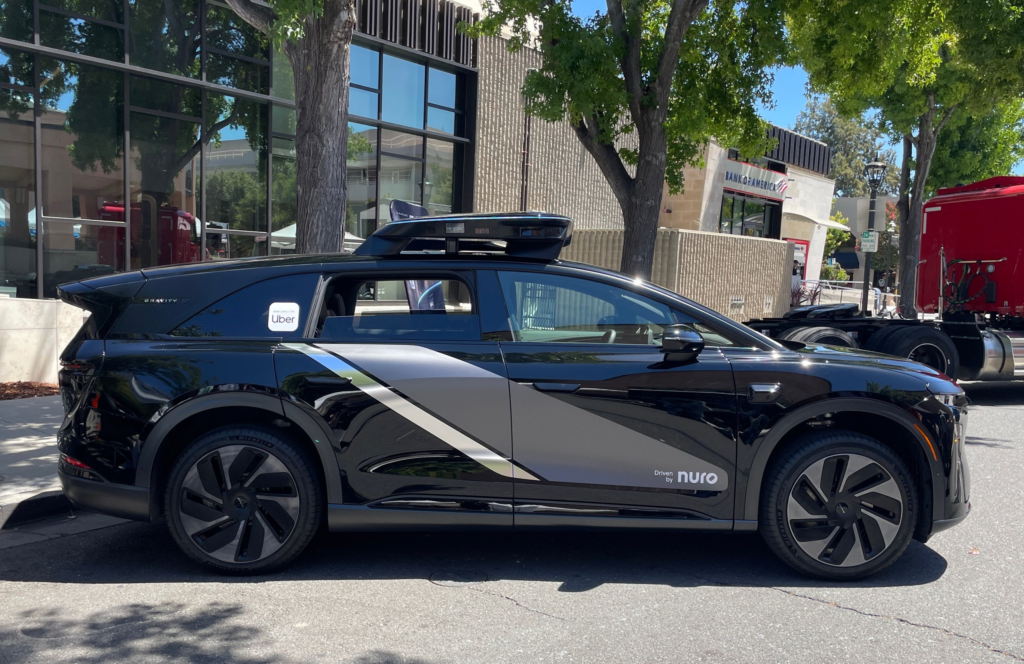
This is Uber’s most capital-intensive AV bet to date, and it’s entirely Uber-exclusive.
In July 2025, Uber, Lucid Group, and Nuro announced a global robotaxi program on the Uber platform only. Uber committed $300 million in equity investment to Lucid, plus an additional undisclosed investment in Nuro tied to development and commercial milestones. The agreement calls for Uber (or its designated fleet operators) to purchase a minimum of 20,000 Lucid vehicles equipped with Nuro’s Level 4 autonomous driving system over six years. Commercial launch is targeted for a major US city in late 2026.
Here’s how the model works: Lucid builds the EV platform, Nuro integrates the self-driving stack, and Uber provides distribution.
Mobileye
Mobileye’s partnership with Lyft, announced November 6, 2024, is structurally different. Mobileye isn’t deploying its own robotaxi fleet. Instead, it’s opening Lyft’s network to any fleet operator running vehicles with Mobileye Drive, the company’s self-driving system.
Here’s how it works: vehicle manufacturers integrate Mobileye Drive into purpose-built cars. Fleet operators buy those vehicles and plug into Lyft’s platform through its AV Partner APIs. The vehicles go into service “Lyft-ready,” connected directly to Lyft’s 40 million annual riders across North America. Mobileye CEO Amnon Shashua said the arrangement would allow AV customers “to reach new markets and geographies with autonomous services.” Mobileye Drive-equipped vehicles are already being piloted with mobility operators in Germany, Norway, Croatia, and the United States.
What Mobileye and Lyft are quietly building is a distribution layer. Any qualified operator, in any qualifying city, could plug into Lyft’s demand network without negotiating a direct partnership with Lyft. If it scales, it could be more structurally disruptive than any single-city robotaxi launch. This model is absolutely worth watching.
WeRide
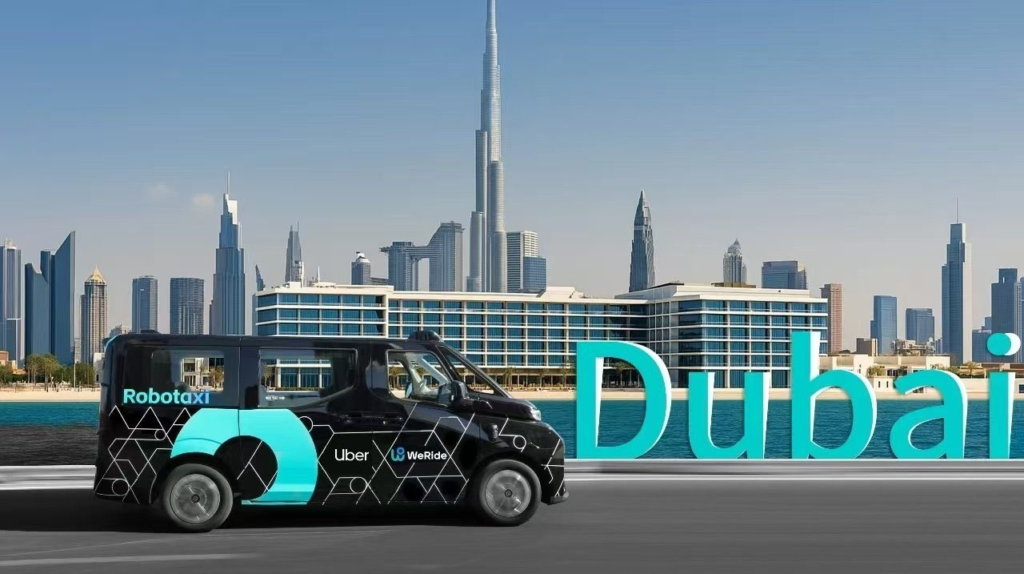
WeRide moved faster than almost anyone expected, and its Uber partnership is now the most operationally advanced outside the United States.
In September 2024, WeRide and Uber announced their collaboration. Three months later, in December 2024, they launched commercial robotaxi service in Abu Dhabi. It was the first time autonomous vehicles appeared on the Uber platform outside the US. The service initially included safety operators aboard.
By October 2025, WeRide secured the world’s first city-level fully driverless robotaxi permit outside the US. In November 2025, WeRide and Uber launched fully driverless Level 4 commercial operations starting on Yas Island. Riders could book through UberX, Uber Comfort, or Uber’s brand-new dedicated “Autonomous” category, the first of its kind globally on Uber’s platform.
Growth since then has been relentless. The fleet tripled in size between December 2024 and July 2025. By July 2025, service had expanded to Al Reem, Al Maryah, Saadiyat, and Yas Islands, plus highway routes to Zayed International Airport. By February 2026, the service covered approximately 70% of Abu Dhabi’s core areas, including the Sheikh Zayed Grand Mosque corridor, Khalifa City, and Masdar City. That same month, WeRide and Uber committed to deploying at least 1,200 robotaxis across Abu Dhabi, Dubai, and Riyadh by 2027.
In May 2025, the partnership added 15 major global cities over five years, including European markets. WeRide currently holds autonomous driving permits in five countries: China, the UAE, Singapore, France, and the United States.
Motional
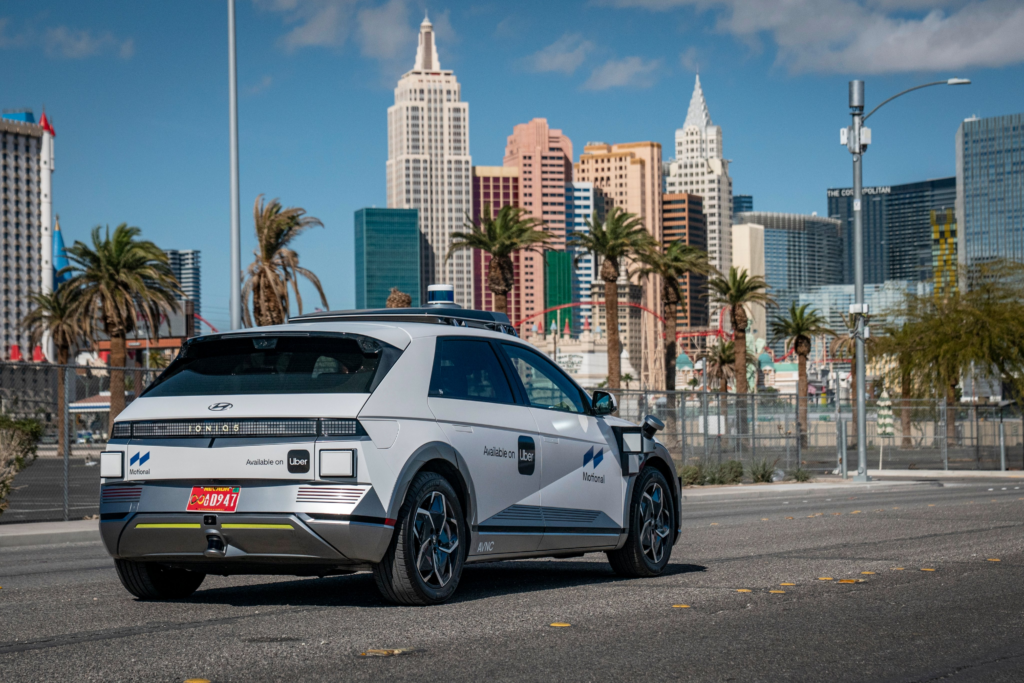
Motional launched in 2020 as a $4 billion joint venture between Aptiv and Hyundai. It ran commercial pilots with both Uber and Lyft in Las Vegas, plus Uber Eats delivery in Los Angeles, accumulating more than 130,000 autonomous rides. Then in early 2024, Aptiv pulled out, citing unsustainable costs and an uncertain path to profit. Motional paused all commercial deployments in May 2024 and cut its workforce.
Hyundai moved in with close to $1 billion: $475 million invested directly into Motional and $448 million to buy out part of Aptiv’s equity stake. The company rebuilt its autonomous driving system using an AI-first approach, largely out of public view.
In March 2026, Motional relaunched robotaxi service in Las Vegas on the Uber platform. Vehicles are all-electric Hyundai IONIQ 5 robotaxis operating across five areas of the city. Human safety monitors are still riding along. Fully driverless service is targeted for end of 2026. The 10-year commercial framework Motional and Uber signed in 2022 remains the foundation.
The Las Vegas Strip is now running Motional, WeRide (via Uber), and Zoox (via Uber) in parallel.
Pony.ai
Pony.ai is the only autonomous vehicle company on this list that operates paid, fully driverless robotaxi services in all four of China’s tier-one cities: Beijing, Shanghai, Guangzhou, and Shenzhen. That’s a commercial track record most Western AV companies still don’t have.
The Pony.ai and Uber partnership was announced May 6, 2025. The Middle East was identified as the first international launch market, with safety operators in the initial phase. In 2026, Pony.ai and Uber worked with Croatian mobility company Verne to launch Europe’s first commercial robotaxi service in Zagreb. Verne operates as the local fleet owner and operator under the deal.
On August 13, 2026, Pony.ai and Uber announced expansion to four additional European cities, building on Zagreb, for a total of more than 2,000 Pony.ai robotaxis across Europe. The updated agreement also covers Middle East expansion. Pony.ai said it has achieved city-wide breakeven unit economics in multiple Chinese markets, a data point few autonomous vehicle companies can offer their distribution partners.
May Mobility
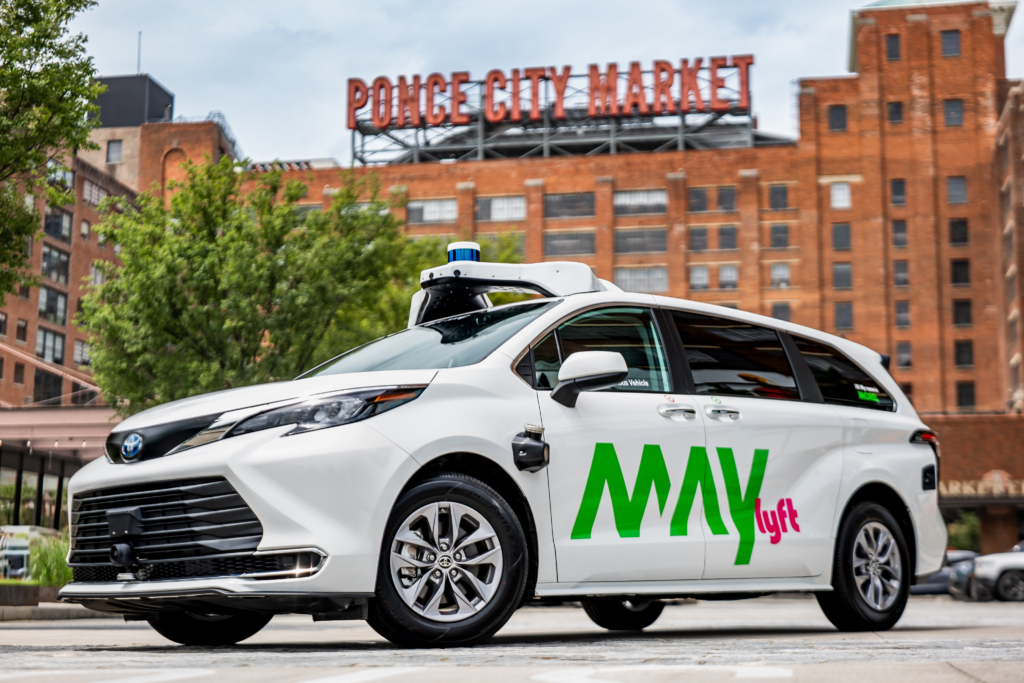
May Mobility is partnering with both Uber and Lyft, in different US cities.
The Lyft deal launched first. On September 10, 2025, May Mobility and Lyft began a robotaxi pilot in Atlanta’s Midtown area. The vehicles are hybrid-electric Toyota Sienna minivans running May Mobility’s autonomous system, built on its patented Multi-Policy Decision Making platform. A standby operator rides in each vehicle for now. Lyft has said the long-term plan is to scale from dozens of vehicles to hundreds or thousands, with no fixed timeline yet.
The Uber side targets Arlington, Texas, with launch announced for late 2025. May Mobility has also laid out plans to deploy thousands of vehicles on the Uber platform over time and to expand into Japan.
The Actual Dynamic Here
What’s happening across all these deals is a clean division of labor. Self-driving companies build the technology. Uber and Lyft provide demand, infrastructure, and operational know-how at city scale.
Neither side can do the other’s job efficiently.
For self-driving companies, going alone is expensive and slow. Building rider acquisition, safety operations, and consumer trust from zero takes years. Uber has more than 150 million monthly users globally and operational infrastructure across hundreds of cities. Lyft has 40 million annual riders in North America and a growing European platform. Plugging into either network gets a self-driving program to commercial scale faster than any alternative.
Lyft co-founder John Zimmer told CNBC he expects autonomous vehicles to handle roughly 5% of Lyft trips, with human drivers covering the rest. Uber’s Khosrowshahi has said publicly that the company sees a clear path to becoming “the largest facilitator of AV trips in the world.” Uber has now spent more than $10 billion building out autonomous vehicle partnerships instead of trying to own the technology itself.
Every self-driving company on this list already knows the distribution battle matters as much as the technology race.
The partnerships are proof.
You May Also Like:
Best Self-Driving Cars in the US
10 Best Self-Driving Electric Cars
Zoox is 12! Says 2026 Is Its “Biggest Year Yet”

I’m Dr. Brandial Bright, also known as the AVangelist. As a dedicated and passionate researcher in autonomous and electric vehicles (AVs and EVs), my mission is to educate and raise awareness within the automotive industry. As the Founder and Managing Partner of Fifth Level Consulting, I promote the adoption and innovation of advanced vehicle technologies through speaking engagements, consulting, and research as we progress to level 5 fully autonomous vehicles.