Key Talking Points
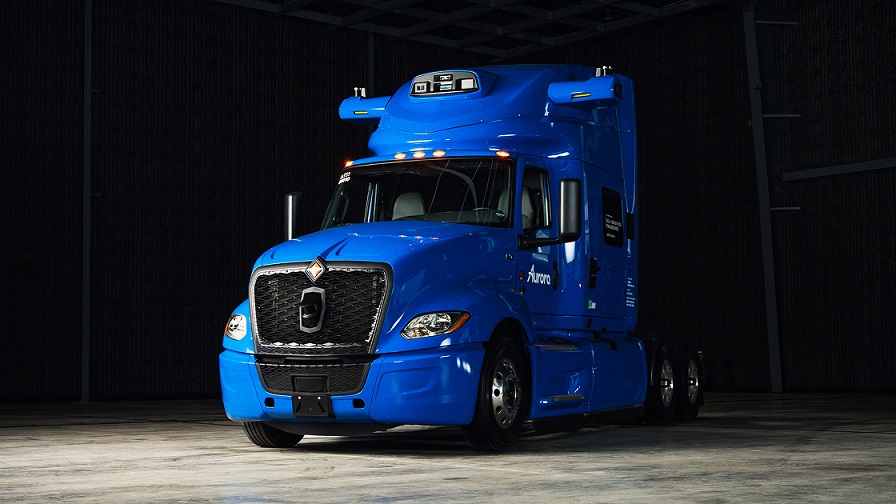
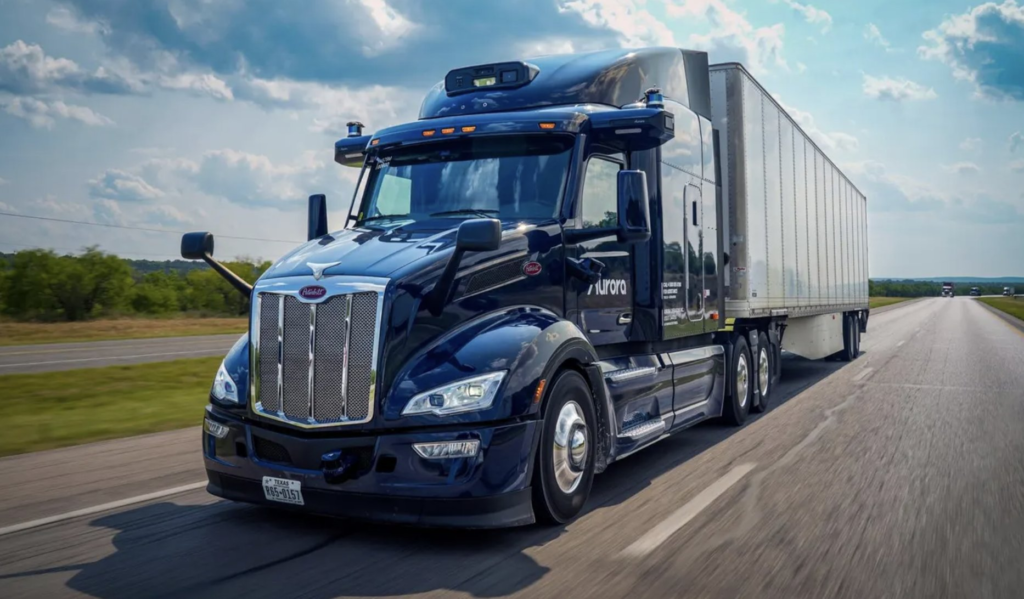
- Aurora Innovation launched Aurora Driver 2 on July 22, 2026, successfully combining updated autonomous-driving software, a new second-generation hardware kit, and a new truck platform based on the International LT Series
- The new hardware is engineered for approximately one million miles of operation and is expected to cut Aurora Driver hardware costs by more than 50%. Aurora Driver 2 trucks run without anyone in the driver’s seat
- Aurora now operates 10 driverless freight routes across the U.S. Sun Belt, with nearly 440,000 driverless miles and zero Aurora Driver-attributed collisions on record
Aurora Innovation spent most of 2025 proving to the world that its trucks could drive themselves on public highways without incident.
That worked.
But the harder part was building enough cheap trucks to matter commercially.
On July 22, 2026, Aurora Innovation unveiled Aurora Driver 2, its second-generation driverless truck platform. The tech is a full-stack upgrade — new software, new hardware, and a new physical truck platform built on the International LT Series. It’s also the company’s clearest signal yet that it’s trying to shift from pilot testing to something that actually scales.
What Aurora Driver 2 Actually Is
Aurora Driver 2 is three things packaged together.
The first is updated autonomous-driving software. Before this launch, Aurora had been steadily working on conditions its system could handle: rain, dense fog, high winds, active construction zones, and dynamic rerouting mid-trip. The new software now supports operations regardless of weather and road conditions across the southern United States.
In its first year of driverless operations in Texas, inclement weather alone constrained Aurora’s trucks roughly 40% of the time. The updated software is changing that, the company assures.
The second is new hardware. Aurora’s new kit is a far cry from its first-generation kit. It’s built to last approximately one million miles, which is roughly the usable lifespan of a long-haul tractor. It runs on dual Nvidia Thor processors, features improved sensor-cleaning systems, and is designed for higher uptime and lower maintenance frequency.
Aurora projects the new kit will reduce Aurora Driver hardware costs by more than 50% compared to the first generation.
The third component is the new truck platform. Aurora Driver 2 debuted on the International LT Series, with Roush as the manufacturing upfitter. The same hardware kit is also available on the Volvo VNL Autonomous, installed directly on Volvo’s production line at its New River Valley plant in Virginia.
As Aurora’s VP of vehicle product development, Kenny Quinn, put it: “Same hardware kit, multiple vehicle platforms.”
No One in the Driver’s Seat
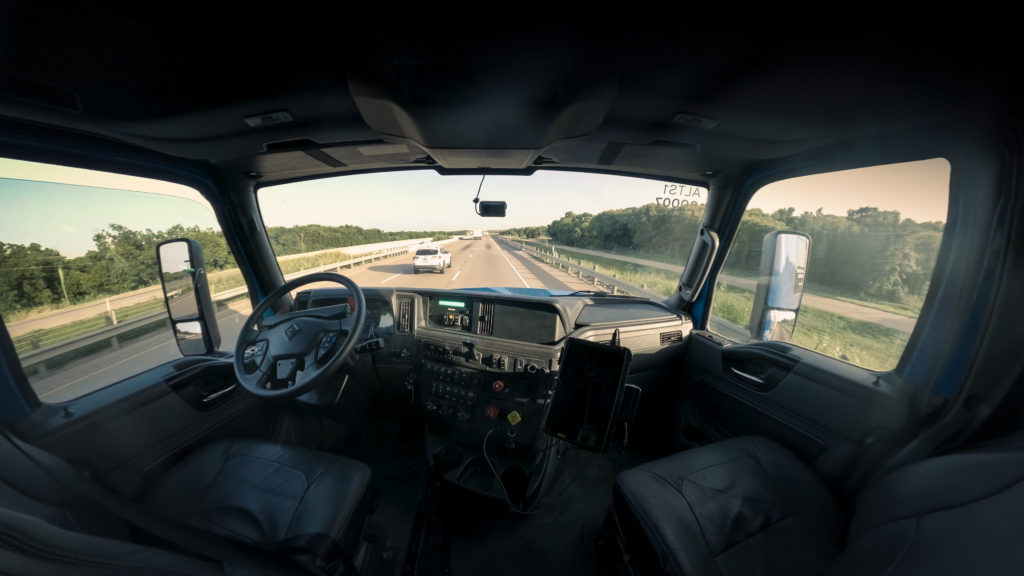
Aurora Driver 2 trucks operate without anyone in the driver’s seat. In limited cases, a roadside-assistance team member may ride in the rear of the cab, but that person is not there to drive. Aurora is moving beyond supervised autonomy to full driverless operations.
That doesn’t mean they operate without human support. There are still people involved in fleet monitoring, remote operations, roadside assistance, maintenance, and freight coordination. But the trucks are, by any reasonable standard, driving themselves.
The Economics Behind It
Autonomous trucking attracted enormous capital investment between 2018 and 2022, with estimates putting total sector investment at well over $10 billion during that period.
Honestly, not all of it was well spent. TuSimple, once considered a front-runner, effectively collapsed under governance failures and the widening gap between its stated ambitions and operational reality. Several others exited, pivoted, or shut down entirely.
This is why Aurora Driver 2-enabled 50%-plus hardware cost reduction matters immensely.
Progress is being made, but Aurora’s current financials are not without concern. Q2 2026 revenue was $2 million. Operating losses were $266 million for the quarter. Cash burn ran approximately $225 million in operating cash during the same period. The company ended Q2 with roughly $1.2 billion in cash and short-term investments, and projects positive free cash flow by 2028. Full-year 2026 revenue guidance is $14 to $16 million, with most of it back-loaded towards Q4. Aurora is targeting an $80 million annualized revenue run rate by year-end.
The truth, however, is that revenue at this stage is less important than whether the per-truck economics are trending in the right direction. The 50%-plus cost reduction, combined with trucks that Aurora expects to operate roughly 20 hours per day, is the company’s evidence that they are.
Driver Shortage Isn’t Entirely a Cause for Concern
Most times when people hear about autonomous trucks, they think about driver replacement. The fear in itself is valid, but there’s more.
The trucking industry faces a genuine long-haul driver shortage, driven by difficult working conditions, irregular schedules, and an aging workforce. That shortage creates real capacity constraints for freight customers. Aurora’s position is that autonomous trucks are majorly for capacity expansion instead of labor substitution.
A conventional long-haul truck can only move when its driver is legally permitted to drive. Federal hours-of-service rules cap a driver at 11 hours of driving within a 14-hour on-duty window, followed by a mandatory 10-hour rest period. Aurora’s system doesn’t rest. A trip from Fort Worth to Phoenix, roughly 1,000 miles, takes an Aurora Driver-powered truck approximately 15 hours. Under current regulations, a human driver would need at least two days to complete the same route legally.
For freight customers, shorter delivery time changes supply chain planning in so many ways.
Chris Urmson, Aurora’s CEO and co-founder, said it clearly during the Q2 earnings call: customers are primarily motivated by the ability to expand capacity and better utilize their assets. Driver replacement is a consequence, not the pitch.
You May Also Like:
Top 5 Autonomous Trucking Companies in the US (2026)
10 Intriguing Key Facts About the Electric Tesla Semi Truck
Where Aurora Operates Right Now
Aurora’s driverless freight network currently covers 10 routes across the U.S. Sun Belt. Confirmed operational points include:
- Dallas, Texas
- Fort Worth, Texas
- Laredo, Texas
- El Paso, Texas
- Oklahoma City, Oklahoma
- Phoenix, Arizona
Aurora’s self-driving trucks can now travel nonstop on a 1,000-mile route between Fort Worth and Phoenix, exceeding what a human driver can legally accomplish in one shift under federal hours-of-service rules. Aurora has been running this route nonstop. The company has also validated driverless bi-directional operations between Dallas and Laredo, and has expanded into Oklahoma City in partnership with Volvo Autonomous Solutions.
As of the end of June 2026, Aurora’s trucks had completed nearly 440,000 driverless miles with zero Aurora Driver-attributed collisions. The plan is to expand across the full southern United States, from Florida to California.
Manufacturing Is the Immediate Test
Aurora provides the autonomous driving system. It doesn’t build trucks. The physical manufacturing is handled by Roush, which has set up a dedicated upfit facility. As of the Q2 results, Roush had begun production and was targeting an annual run rate of 1,000 trucks by October 2026.
Volvo’s integration path is a different ballgame altogether. The Volvo VNL Autonomous receives the Aurora hardware on Volvo’s production line in Virginia, with Volvo Autonomous Solutions expected to begin driverless operations in Q1 2027.
PACCAR, the parent company of Kenworth and Peterbilt, is also working with Aurora to define the path to a third-generation hardware integration on PACCAR’s future autonomy-ready assembly lines.
The Regulatory Issue
The autonomous vehicle industry isn’t all technical. Government regulation and the politics behind it remain a major talking point.
California recently authorized driverless commercial truck operations. Likewise, federal momentum towards a national autonomous vehicle framework is building up. On the flip side, regulation isn’t one dimensional. A single high-profile incident anywhere in the autonomous trucking sector could generate political headwinds that slow permitting across the board, regardless of which company is involved.
On Aurora’s end, the Aurora Driver 2 tech was built to ensure that autonomous trucks by Aurora Innovation are safe and completely ready to transform supply chains.
Also Read:
Autonomous Freight Revolution: How Self-Driving Trucks Are Reshaping Global Supply Chains
Autonomous Vehicles: 10 Things to Know About Aurora Innovation

I’m Dr. Brandial Bright, also known as the AVangelist. As a dedicated and passionate researcher in autonomous and electric vehicles (AVs and EVs), my mission is to educate and raise awareness within the automotive industry. As the Founder and Managing Partner of Fifth Level Consulting, I promote the adoption and innovation of advanced vehicle technologies through speaking engagements, consulting, and research as we progress to level 5 fully autonomous vehicles.