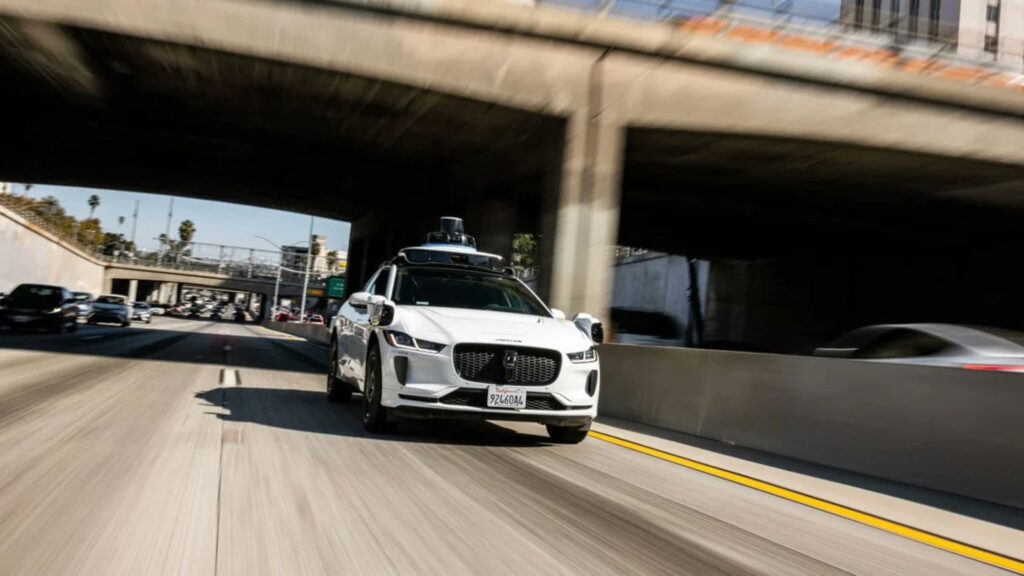
Waymo closed 2026 with more weekly rides than ever, a fresh $16 billion round behind it, and plans to open in Tokyo, Singapore, Toronto and London. It also spent the back half of the year fighting off a California freeway ban, two new federal recalls, a school-bus safety probe and a child-pedestrian collision in Santa Monica.
Here’s what actually happened.
The ride numbers got big, fast
Waymo says it completed 15 million rides in 2025, more than tripling its volume from the year before, and passed 20 million lifetime rides by early 2026. By September, weekly trips had climbed past 500,000, up from roughly 400,000 in February.
However, giving many rides does not mean the company is making a profit. Each trip still costs money for car repairs, insurance, remote support, and charging stations. Because Waymo has not shared how much each ride costs or earns, its fast growth and its ability to make money remain two separate issues.
Fifteen cities, and counting
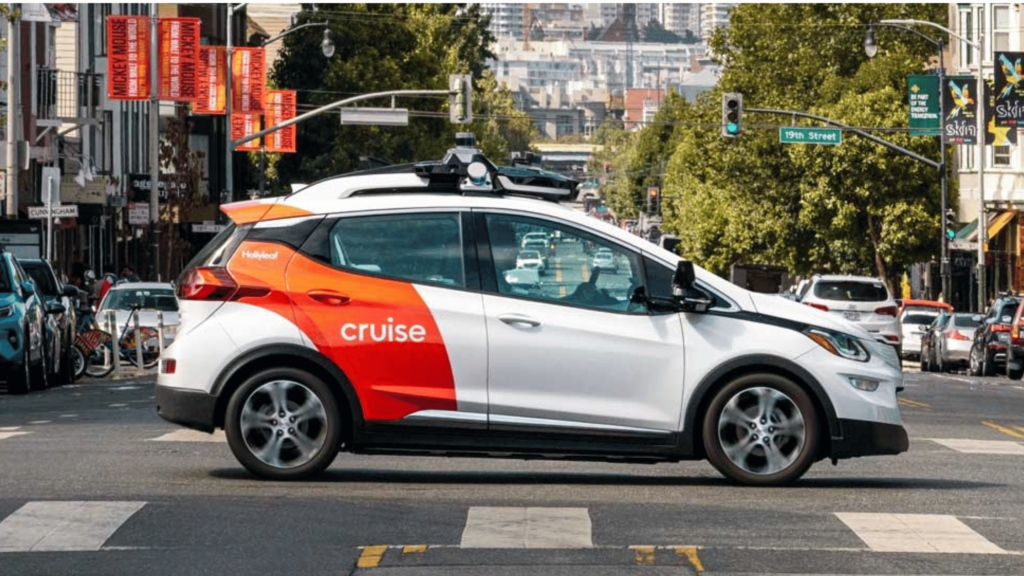
Waymo entered 2026 operating in six US metro areas. By September it was in 15, after public launches in Denver, San Diego, Tampa and Las Vegas. Then, on October 27, the company announced close to 250 square miles of new coverage across five regions already in service: the South Bay area of Los Angeles (including Torrance), southern Nashville, a near-doubling of its Orlando footprint, a push north toward La Jolla in San Diego, and a new link to Berryessa BART station in the Bay Area.
Expanding inside a city it already serves is a different problem than opening a new one. The Waymo Driver has to learn new intersections, new neighborhoods and new pickup patterns, and the fleet has to be large enough to actually show up when riders request a car. Announcing a market and running a reliable one aren’t the same accomplishment.
In October, Waymo opened dedicated pickup and drop-off zones at Harry Reid International Airport in Las Vegas, though access was initially limited to existing riders. Airports have unique challenges, such as heavy traffic near terminals, passengers stopping to load luggage, and airport workers constantly changing directions at the curb. Getting that right matters for the tourism and business-travel markets Waymo wants next.
Tokyo, Singapore, Toronto and London are next
For most of its history, Waymo has been a US company. That’s changing fast.
In September, Waymo partnered with Japanese taxi operator Nihon Kotsu and ride platform GO to prepare for a Tokyo launch targeted for 2027, with an initial fleet expected to grow toward roughly 100 vehicles. Singapore’s Land Transport Authority named Waymo the country’s newest autonomous vehicle operator that same month, with manual-driving prep in 2027 and a commercial launch targeted for 2028. Toronto got its own announcement in October, paired with a fleet-management partnership with Element Fleet Management, also aiming for 2028 passenger rides.
London is further behind. Waymo has been mapping and validating routes across several boroughs, but it hasn’t opened commercial rides to the public there. Vehicles are still running with trained specialists on board. Dense traffic, cyclists and narrow streets make London a tougher proving ground than most of Waymo’s US markets.
You May Also Like:
Waymo Expands to Europe: Germany, Spain, Portugal, France, and the UK All Targeted
Waymo’s safety numbers
In September, Waymo published an update covering more than 270 million fully autonomous miles across Atlanta, Austin, Los Angeles, Phoenix and San Francisco, through the end of June. Compared with human-driving benchmarks, the company reported 82% fewer injury-causing crashes, 95% fewer crashes involving serious injury or worse, 93% fewer injury-causing pedestrian crashes, 86% fewer injury-causing cyclist crashes and 82% fewer injury-causing motorcycle crashes. Waymo also said it recorded 841 fewer injury crashes than its human-driver benchmark predicted over the same distance.
The freeway mess is Waymo’s biggest 2026 problem
Using freeways is very important for Waymo’s business. Freeways make trips to the airport faster, allow the company to reach the suburbs, and make longer rides profitable. However, freeways also caused Waymo’s biggest problems this year.
In June, Waymo had to recall 3,871 of its vehicles. The cars had missed signs saying that freeway ramps were closed and drove straight into active construction areas. This happened seven times in a single day in the Bay Area. Waymo stopped offering freeway rides, updated its software, and started driving on freeways again by late July.
The same issues soon returned. On November 11, the California DMV banned Waymo from driving on any freeways in the state, calling the self-driving cars an immediate danger to the public. This happened after several dangerous mistakes. Three Waymo cars drove into a closed construction zone, and another car tried to pass California Highway Patrol vehicles that were actively slowing down traffic on the I-280 highway. In response, Waymo stopped all freeway rides across the entire country, not just in California.
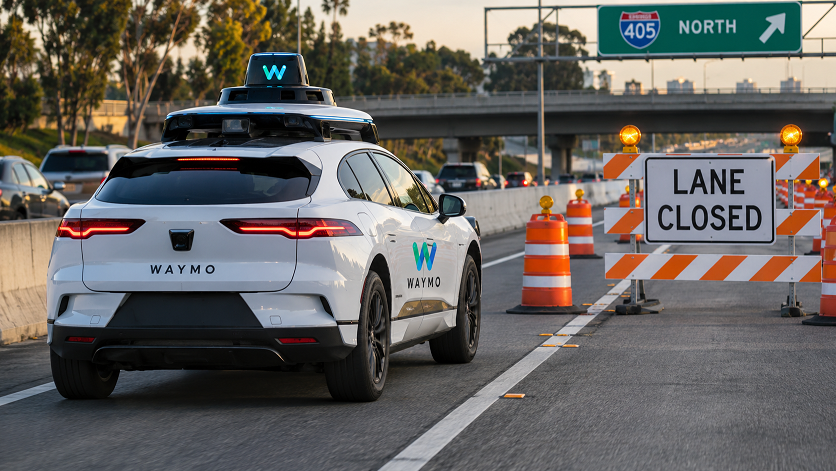
Nine days later, Waymo reported two more recalls to federal safety officials. The first recall was because the cars could still drive into closed freeway lanes and keep going, a problem the company is still working to fix. The second recall focused on how the cars follow hand signals from police officers. In one case, a Waymo car obeyed an officer’s hand signals at an intersection, but kept driving forward when the officer was briefly blocked from the car’s view. Waymo stated that nobody was hurt and no crashes happened during these events, though the fix for the closed-lane issue was still unfinished by late November.
Having six recalls for driving mistakes in less than a year is a high number for one company, and freeway construction continues to confuse the system. Traffic cones are moved around, warning signs are put up at the last minute, and police officers direct traffic in ways that digital maps cannot predict. Self-driving cars still have a very hard time handling these sudden, unexpected changes. Waymo must solve this exact problem if it wants to bring back freeway rides permanently.
School buses, twice
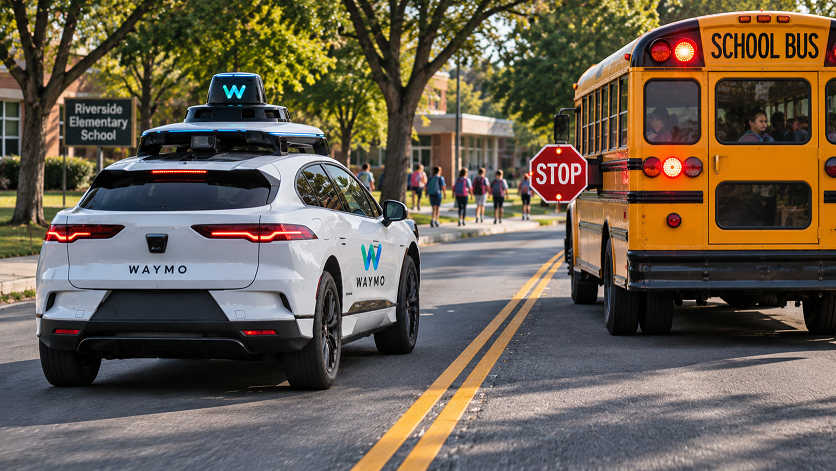
Waymo issued a school-bus recall in December 2025, covering 3,067 vehicles, after reports that its cars drove around stopped buses with lights flashing and stop arms out. The company said the fix reached all affected vehicles by November 17, 2025.
Reports kept coming anyway. Austin’s school district logged 19 separate incidents; Atlanta schools reported six more. On November 6, 2026, NHTSA opened a new recall query covering 2,895 of those vehicles, almost the entire original recall population, to find out whether the fix actually worked. Waymo says it’s had no citations since March 2026 and is cooperating with the review.
One specific event from the NTSB’s investigation stands out. On January 12, 2026, in Austin, a driverless Waymo stopped behind a school bus that had its lights flashing and stop sign out. The car then sent a message to a remote human worker to ask if the bus’s warning signals were on. The worker wrongly said no, so the car drove past the bus while the stop sign was still out. Nobody got hurt, but it shows how a car designed to rely on human help can make a mistake when a human gives it wrong information.
A child was hit in Santa Monica
On January 23, 2026, a Waymo vehicle hit a nine-year-old near an elementary school during morning drop-off. According to the NTSB’s preliminary account, the car had just dropped off a passenger and was turning onto another street, traveling around 17 mph, when the child crossed between two stopped vehicles. The car braked before impact. The child suffered minor injuries and wasn’t transported for medical care.
Both the NTSB and NHTSA opened investigations, and neither has assigned fault yet.
Money keeps flowing in
Despite these challenges, investors are still eager to put money into Waymo. In February, the company raised $16 billion from major investors like Dragoneer, DST Global, Sequoia, and its parent company, Alphabet. This deal valued Waymo at $126 billion, which is nearly three times what it was worth in 2024.
In October, Waymo also took out a $5 billion loan from lenders including PIMCO, Blackstone, and Sixth Street. This was the first time the company borrowed money to help fund its work. Running a self-driving taxi service is very expensive because it requires buying cars, sensors, and charging stations, along with paying for insurance and remote human monitors. While Waymo clearly has enough money to keep expanding, people outside the company still do not know if these taxi services are actually making a profit in individual cities.
The competition isn’t standing still
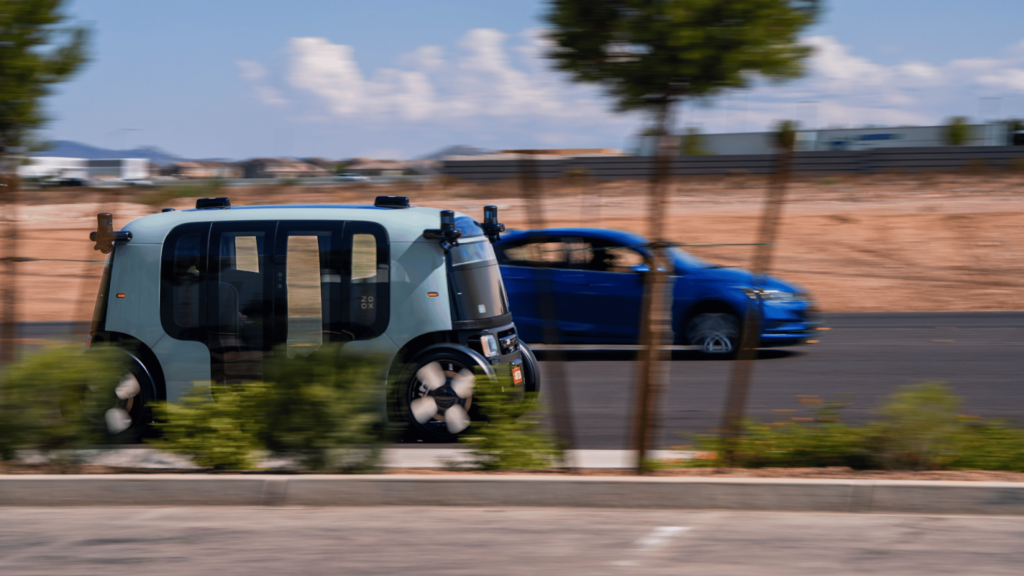
Tesla pushed its Robotaxi service into San Antonio in November, though its supervision model and deployment maturity still differ from Waymo’s fully driverless approach. Amazon’s Zoox, which builds a purpose-made robotaxi rather than retrofitting existing cars, started showing up inside Uber’s app in Las Vegas that same month. And Waymo itself leaned on distribution partners this year: its rides went live inside Lyft’s app in Nashville in September, with Lyft’s Flexdrive unit handling fleet operations on the ground.
None of these companies are racing toward the same finish line in quite the same way. Tesla is betting on manufacturing scale. Zoox is betting on purpose-built hardware. Uber and Lyft are betting they don’t need to build the driving technology at all, just the demand and the distribution. Waymo is still ahead on raw driverless miles, but the gap is closing from more directions than one.
What actually decides 2027
Four things will show us if 2026 was a big step forward for Waymo or a sign of trouble ahead.
First is highway driving. Government officials, especially in California, need clear proof that Waymo cars can safely drive around closed lanes and road work before they let the company use highways again permanently.
Second is safety around children and other people at risk on the road. Officials are running two different investigations into how Waymo cars act near school buses and children walking. These issues will not disappear easily, and they should not.
Third is whether new launches in Tokyo, Singapore, and Toronto go smoothly. Expanding to other countries will test if Waymo’s technology works well on unfamiliar roads, in different weather, and under new local rules, or if it only worked well before because it was built for American roads.
Fourth is the money. Having more passengers is good, but making more money from each ride than it costs to run is even better. Right now, no one outside of Waymo’s finance team knows if the company’s growth in 2026 is actually profitable.
I would bet that Waymo fixes the highway problem before the end of 2027. The company has already proved twice that it can quickly update its software and restart service in just a few weeks. The tougher question is whether officials will trust a third quick update, or if they will demand long-term proof instead.
Also Read:
Tesla Cybercab vs. Waymo: Which Offers a More Optimized Experience?
Zoox is 12! Says 2026 Is Its “Biggest Year Yet”
Cities Waymo Runs Fully Autonomous Driving in 2026

I’m Dr. Brandial Bright, also known as the AVangelist. As a dedicated and passionate researcher in autonomous and electric vehicles (AVs and EVs), my mission is to educate and raise awareness within the automotive industry. As the Founder and Managing Partner of Fifth Level Consulting, I promote the adoption and innovation of advanced vehicle technologies through speaking engagements, consulting, and research as we progress to level 5 fully autonomous vehicles.