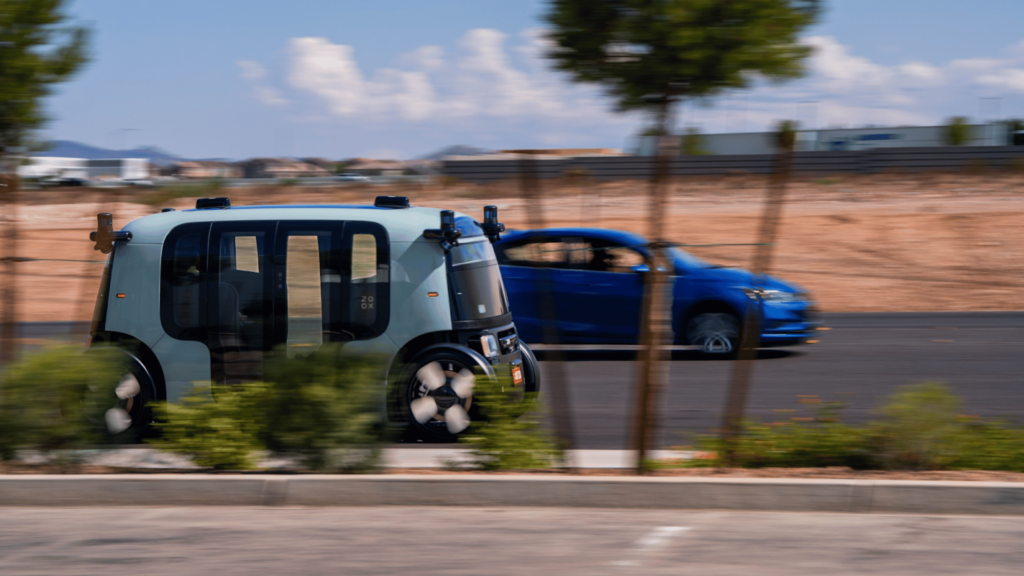

A robotaxi drove into a flooded creek in San Antonio and had to be fished out days later. Thankfully, nobody was hurt. The car was empty, but the story traveled fast. That single incident made Waymo recall nearly 3,800 of its robotaxis. It was the company’s third recall since February 2024.

The thing is, although AV tech is advancing, every time something goes wrong, the public takes a step back.
What is AV Technology and What Can It Do Right?
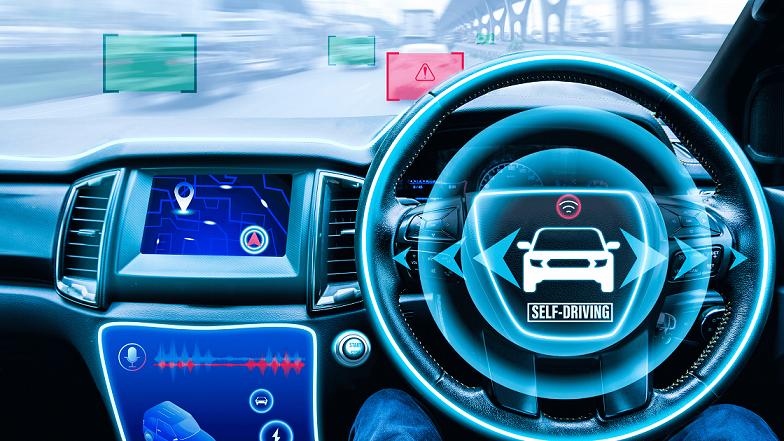
Autonomous vehicle technology refers to systems that allow a vehicle to perceive its environment, make decisions, and operate without a human driver. The Society of Automotive Engineers (SAE) defines six levels of driving automation, from Level 0 (no automation) to Level 5 (full automation under any condition). Most commercially deployed self-driving vehicles today operate at Level 4—fully autonomous within defined geographic areas and conditions.
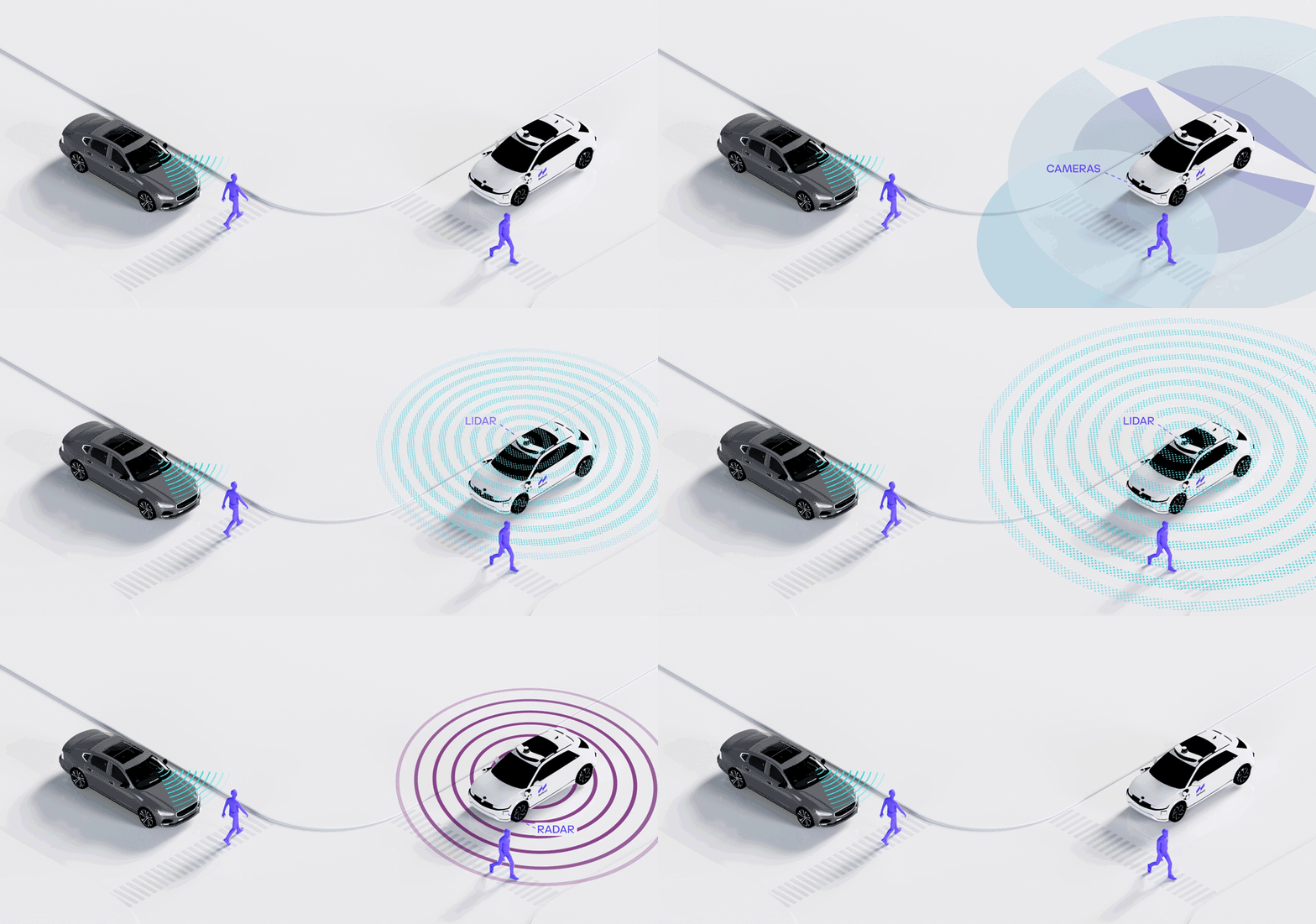
Waymo, Alphabet’s autonomous driving company, has logged over 170 million rider-only miles as of December 2025. It operates robotaxi services in Phoenix, San Francisco, Los Angeles, Austin, and Atlanta. Its vehicles don’t need a human behind the wheel or even a remote operator actively supervising each ride.
The technology, however, is not perfect. Waymo has initiated three major recalls since 2024. However, the interesting part is that no fatalities were recorded. The technology will eventually attain perfection. But how convinced are we?
Autonomous Vehicles vs. the Human Driver
The problem with how most people perceive autonomous vehicles is that they compare them to a “perfect driver”. But guess what? That driver doesn’t exist.
NHTSA data has long cited human behavior as the critical factor in the overwhelming majority of U.S. road crashes. Speeding kills more than 9,000 people annually. Distraction, fatigue, impaired driving, and poor decision-making collectively account for tens of thousands of deaths every year. The U.S. sees roughly 40,000 traffic fatalities per year. Globally, road crashes kill more than 1.19 million people annually, according to the World Health Organization.
Autonomous vehicles don’t overspeed. They don’t drive drowsy after a long shift. They don’t text, swerve in anger, or misjudge a gap because they’re distracted.
Waymo’s safety data, covering 170.7 million driverless miles and published on their Safety Impact Hub, shows that its vehicles experienced 92% fewer crashes resulting in serious injury compared to human drivers covering the same distance in the same cities. A peer-reviewed study published in Traffic Injury Prevention in 2025, based on 56.7 million rider-only Waymo miles, found statistically significant reductions in any-injury crashes and airbag deployment incidents versus human benchmarks.
The Trust Problem Is Real, and Complicated
Autonomous vehicle technology has come a long way, but the vast majority of the public is not as convinced.
A January 2025 AAA survey found that only 13% of U.S. drivers said they’d trust riding in a fully self-driving vehicle. Six in ten reported being afraid to ride in one. More than half said they wouldn’t choose a robotaxi at all, even though 74% were aware they existed.
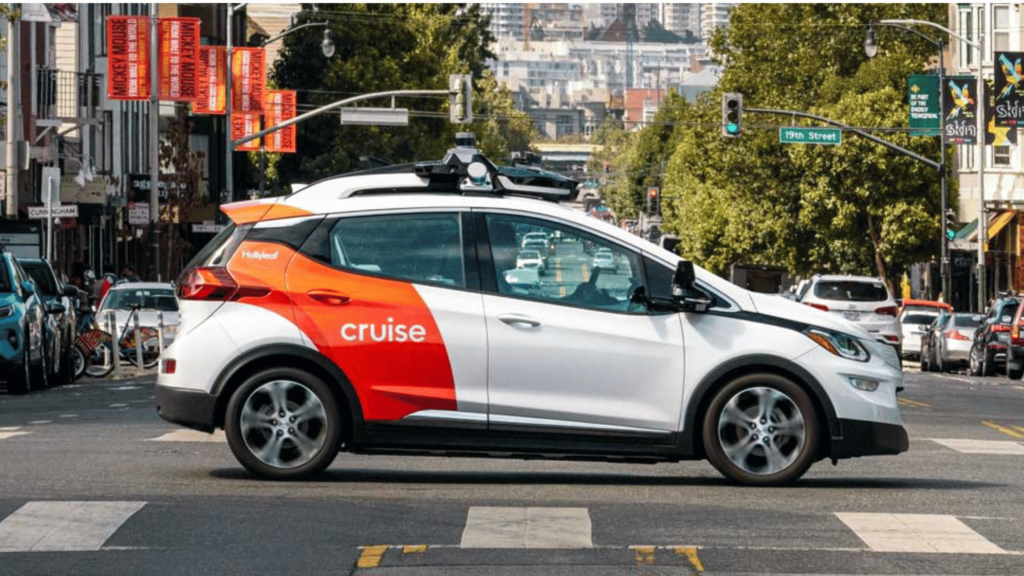
Part of the problem is that every AV incident becomes international news. A Waymo in a creek. A Tesla Autopilot crash. A Cruise robotaxi dragging a pedestrian. These events are visible, documented, and shared. They shape how people evaluate risk, regardless of the aggregate statistics.
Another part of the problem is confusion about what these systems actually are. Many people don’t know the difference between ADAS (driver-assistance features like lane keeping and automatic emergency braking), semi-autonomous systems (like Tesla’s Autopilot, which requires driver attention), and fully autonomous systems like Waymo’s. Misunderstanding creates misplaced expectations. Some drivers overtrust semi-autonomous systems and stop paying attention. Others reject the entire technology based on incidents involving systems that aren’t actually fully autonomous.
The S&P Global Autonomous Driving Consumer Survey, conducted across eight countries in 2025 among nearly 8,000 respondents, found that about two-thirds expressed interest in autonomous features for highway driving. It’s indicative of the fact that people are more comfortable with the idea of AV technology in lower-stakes, high-speed-highway contexts than in complex urban environments.
Robotaxis Are Already Here
Regardless of public hesitation, the deployment of self-driving cars is moving forward.
Waymo now provides more than one million autonomous rides per month across its operating cities. Since March 2025, Waymo robotaxis have been available through the Uber app in Austin and Atlanta. The arrangement means riders can request a robotaxi or a human driver through the same platform.
In July 2025, Uber announced a partnership with Lucid Motors and autonomous software company Nuro to deploy over 20,000 premium robotaxis on the Uber platform over six years, beginning with a major U.S. city launch in late 2026.
On the freight side, Aurora Innovation launched the world’s first commercial fully driverless trucking service between Dallas and Houston in May 2025, moving real freight for customers, including Uber Freight and Hirschbach Motor Lines.
Kodiak Robotics and Gatik continue expanding their autonomous freight operations, particularly on fixed, repeatable routes between distribution hubs.
Sidewalk delivery vehicles from companies like AVRide are handling last-mile logistics in select U.S. cities, while autonomous trucks are beginning to service restaurant supply chains and large logistics networks.
Why California Matters More Than Any Other State
California is where the companies building this technology are based. Until April 2026, California banned autonomous heavy trucks from its roads, a restriction tied in part to lobbying from the Teamsters union, which represents over a million transportation workers. Companies like Aurora, Kodiak, and Gatik tested their trucks in Texas and Arizona instead, splitting engineering teams across state lines.
California finalized new regulations in April 2026, allowing autonomous trucks to operate on state roads for the first time. The rules require 500,000 miles of supervised testing before any driverless permit, monthly data reporting, and 30-second response windows to first responder calls.
California also hosts over 500 autonomous vehicles in active testing as of 2026, more than any other U.S. state.
What’s Happening Around the World
The U.S. doesn’t have a unified federal framework for autonomous vehicles. NHTSA updated its guidelines in March 2026, but comprehensive federal legislation hasn’t passed. That leaves 50 states with 50 different approaches. Eighteen states now allow fully driverless commercial operations with permits. Others are still figuring out basic testing rules.
China is moving faster. More than 20 Chinese cities are actively supporting Level 4 autonomous trials. Baidu’s Apollo robotaxi service, WeRide, and others are operating commercially at scale. Some estimates project 500,000 robotaxis on Chinese roads by 2030, rising to 1.9 million by 2035. The Chinese government has pushed AV adoption as a strategic priority, integrating it with smart city infrastructure and connected road systems.
The EU has historically taken a cautious, safety-first approach. A unified regulatory framework is expected to roll out across member states by 2026, which should reduce the legal fragmentation that has made cross-border AV operations difficult. Germany and Japan have already regulated consumer use of Level 3 systems and are drafting Level 4 guidelines.
Much of Africa, Latin America, and Southeast Asia isn’t yet meaningfully engaged in AV policy.
What Happens to Industries and Jobs
Autonomous vehicle technology is poised to change entire economic structures.
The freight industry is the clearest near-term example. There are roughly 60,000 to 80,000 fewer truck drivers in the U.S. than the industry currently needs, with some forecasts projecting the shortfall could reach 160,000 by 2028. The average age of a professional truck driver is over 48. Autonomous trucks, particularly on predictable long-haul highway routes, are addressing problems the industry can’t solve through recruitment alone.
For urban transportation, the ripple effects are broader. Insurance models built around driver liability will have to shift. City planners will eventually redesign parking, pick-up zones, and road infrastructure around vehicles that don’t need to circle for a spot. Ride-hailing economics change when the cost of a driver disappears.
The Honest Truth
Autonomous vehicle technology is not ready to replace human drivers everywhere, under all conditions. But it’s not slowing down. It’s already on the roads, moving freight, carrying passengers, and accumulating data at a pace no human driver testing program could match. Waymo alone has driven the equivalent of more than 150 human driving lifetimes’ worth of autonomous miles.
The fair benchmark isn’t perfection, it’s enhancement and growth. Autonomous vehicles are already quite strong, but are we convinced enough?

I’m Dr. Brandial Bright, also known as the AVangelist. As a dedicated and passionate researcher in autonomous and electric vehicles (AVs and EVs), my mission is to educate and raise awareness within the automotive industry. As the Founder and Managing Partner of Fifth Level Consulting, I promote the adoption and innovation of advanced vehicle technologies through speaking engagements, consulting, and research as we progress to level 5 fully autonomous vehicles.