Table of Contents
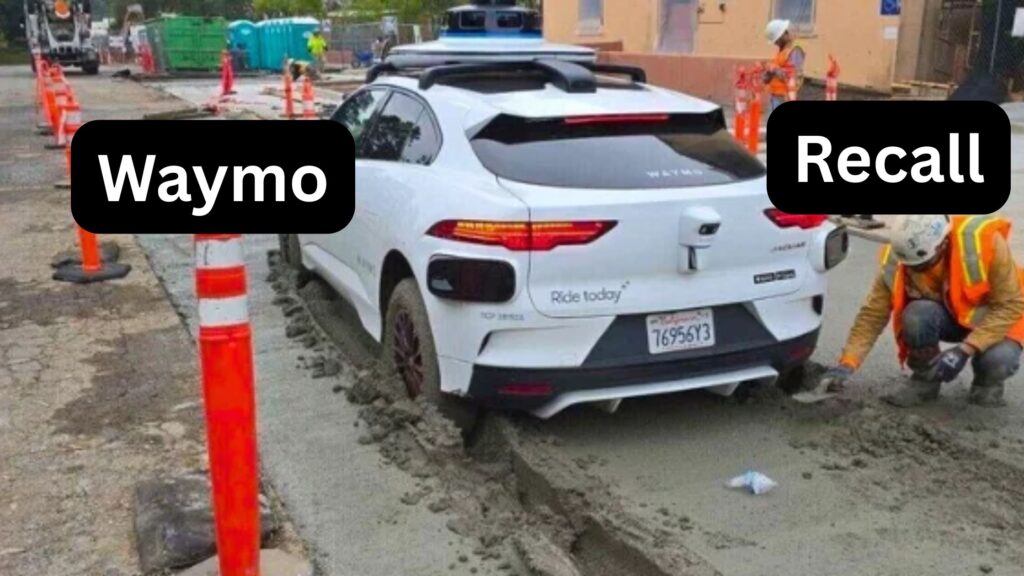
Waymo has pulled almost 4,000 of its robotaxis off America’s highways. The company filed a voluntary recall with the National Highway Traffic Safety Administration after identifying at least 13 cases of its vehicles driving straight into highway sections that were closed for construction. Six happened in Phoenix in April. Seven happened in San Francisco in May.
On May 19, Waymo pulled its fleet off freeways entirely while it worked on a fix. Surface street rides kept running.
One of those San Francisco incidents made it onto social media. A rider filmed his Waymo speeding past cones, lights flashing, and police trailing behind. He told CBS News he turned to his fiancée and thought they were about to die. Waymo later offered him a few free rides as an apology.
This is Waymo’s sixth recall.
What Actually Went Wrong
According to Waymo’s NHTSA filing, the Phoenix vehicles “did not recognize and drove past ramp closure signs into pre-planned freeway construction zones.” The company’s Field Safety Committee restricted freeway driving in that city while engineers looked for the cause.
The San Francisco incident had a slightly different root. Waymo said its software was prioritizing the avoidance of other freeway hazards, or simply failing to recognize the construction zone was there at all. Seven cars drove into active construction lanes on May 18. The fleet was pulled off all highways the next day. The recall itself wasn’t filed until June 8, after Waymo’s internal safety board reviewed the incidents.
Waymo started offering rides on highways only in November 2025.
Why Construction Zones Are Brutal for Self-Driving Cars
Self-driving cars aren’t struggling because driving itself is hard for them. No. It’s simply because roads, especially construction zones, are unpredictable.
Lane lines get painted over, then ignored. Cones move from week to week, sometimes even from day to day. A lane that was open on Monday is closed on Tuesday. Signage is often improvised: a hand-written sign, a flagger waving cars through with gestures that have no fixed rulebook. None of it matches the clean, consistent map data a self-driving car normally rely on.
Human drivers handle this through intuition built over years of messy experience. We notice a flagger’s body language. We see brake lights ahead and slow down before we know exactly why. An AV has to learn all of that from data, and construction zones don’t hold still long enough to be learned the same way twice.
Industry researchers actually have a name for situations that combine several unusual conditions at once: edge cases.
The Real Challenge
Waymo says its vehicles have logged more than 170 million autonomous miles. The hard part of autonomous driving was never the routine 99%. It’s the remaining 1%: Emergency vehicles approaching from odd angles. A pedestrian doing something nobody expects. A mattress falling off a truck. A police officer overriding the traffic signal with hand signals. Temporary lane shifts. Construction zones.
These are edge cases, and by definition, they don’t show up often enough for a system to learn them through sheer repetition. A car can drive a million miles without seeing a specific kind of lane closure, then encounter it for the first time during a paid ride with a passenger in the back seat.
Engineers building these systems now discuss edge cases in tiers. There are categories you can predict, like adverse weather or unusual road markings, and there are the ones nobody wrote down because nobody had seen them happen yet. Some research teams are feeding millions of recorded near-misses and accident reports into training systems specifically to widen that net before deployment, rather than waiting for the real world to deliver the lesson the hard way.
Waymo’s freeway construction zone problem fits squarely into that second, harder category. It wasn’t a known gap the company chose to ignore. It was a scenario that its existing testing hadn’t properly covered.
Designing for the Unknown
In all of this, there’s one lesson to be learnt: AV companies can’t just train their way out of edge cases by collecting more ordinary driving data. What seems to actually move the needle is simulation.
Companies across the industry are now running millions of safety-critical scenarios, night driving, flooding, construction zones, inside virtual environments before any of it touches a public road. Waymo must capture this unfortunate but useful data, recreate it digitally, and use it to stress-test a fix before the updated software goes anywhere near a passenger.
Recalls Are a Sign of a System Working, Not Failing
It’s tempting to read six recalls as six failures stacking up. No. We are actually witnessing what responsible scaling looks like: an AV company operating thousands of vehicles across multiple cities and reporting transparently to regulators.
Thankfully, while all this happened, no fatalities were involved; no passengers were seriously hurt.
However, none of this erases the fact that real people were in those cars when they drove past closed lane signs into active construction. This threatens trust, as pedestrians appear to be very critical of autonomous technology.
Scaling Beyond Friendly Environments
Waymo is in the middle of an aggressive expansion, with plans to launch service in more than 20 new cities this year, including London and Tokyo. Each new city brings its own traffic culture, road design, weather pattern, and driving habits. Each one is a fresh set of edge cases waiting to be discovered.
Truth is, the industry’s next real test isn’t completing a routine ride. A robotaxi can do that, millions of times over. The test is keeping pace, discovering and patching edge cases fast enough to stay ahead of its own expansion, in environments nowhere near as forgiving as the ones the technology was first proven in.
Waymo’s construction zone recall is a step in the right direction. The lesson isn’t that the technology doesn’t work. It’s that the roads themselves are the hardest part of the problem, and they remain unpredictable both for human drivers and for autonomous vehicles.

I’m Dr. Brandial Bright, also known as the AVangelist. As a dedicated and passionate researcher in autonomous and electric vehicles (AVs and EVs), my mission is to educate and raise awareness within the automotive industry. As the Founder and Managing Partner of Fifth Level Consulting, I promote the adoption and innovation of advanced vehicle technologies through speaking engagements, consulting, and research as we progress to level 5 fully autonomous vehicles.