Table of Contents
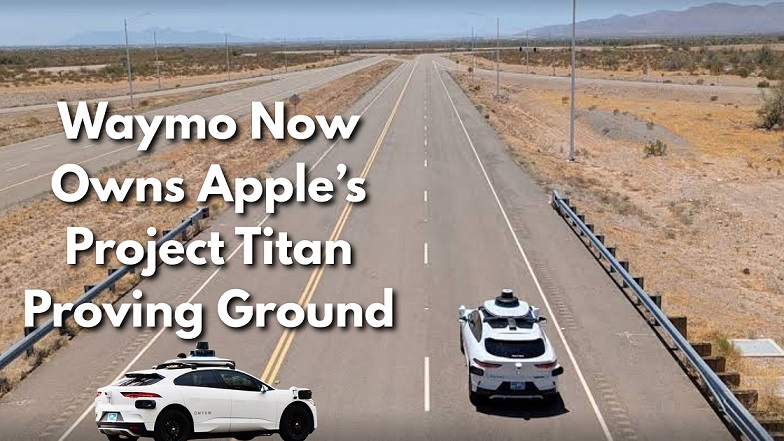
Waymo paid a whooping $220 million for Apple’s abandoned proving ground in the Arizona desert. The property sits near Wittmann, Arizona, a small community northwest of Phoenix. It spans roughly 5,500 acres, which makes it one of the largest dedicated autonomous vehicle testing sites in the country. Apple bought it in 2021 for $125 million after leasing access to it for years. Now Waymo owns it outright, at nearly double what Apple paid.
The seller, Route 14 Investment Partners LLC, is a Delaware shell company tied to Apple. The sale closed on June 5 and was recorded in Maricopa County.
The autonomous vehicle industry is apparently expensive, and it goes beyond just coding infrastructure. Proving grounds, too, are highly essential.
What Waymo Actually Bought
The Wittmann site was originally a Chrysler proving ground, built for testing vehicles in the desert heat. It includes a 115-acre mock city course, a 35-acre vehicle dynamics area, a four-mile oval track, and a stretch of freeway course designed specifically for autonomous testing.
Apple used this land to put prototype self-driving cars through repeated trials, away from public roads and public scrutiny. The company needed somewhere private to test sensors, run edge cases, and crash-test its software’s judgment before any of it touched a real street.
Waymo already has proving grounds of its own. There’s the Castle Proving Ground in California and the Transportation Research Center in Ohio. However, both are small compared to their new acquisition in Wittmann.
A Waymo spokesperson told TechCrunch the company plans to use the site for rider-only testing, motion-control evaluation, training its operations staff, and future growth as the fleet expands. Arizona also happens to be where Waymo already runs a vehicle integration plant in Mesa.
Self-driving cars need three things in huge supply: data, repetition, and a safe place to fail and make corrections. A 5,500-acre desert lot gives you all three at once.
Why Apple Walked Away
Apple’s car program, known internally as “Project Titan,” ran for about a decade before it was shut down in early 2024. The company spent more than $10 billion on it, according to reporting from The New York Times.
It started in 2014 as an answer to Tesla, an electric car meant to compete on Apple’s terms. Somewhere along the way, the ambition grew. Apple decided it wanted full autonomy too, the kind where no one touches the wheel. That single decision probably sank the whole project.
Building an electric car is hard. However, building a car that drives itself, with zero human input, is a different kind of hard. Bloomberg’s Mark Gurman, who broke much of the original Titan reporting, has said Apple eventually came to terms with the fact that full Level 5 autonomy was not happening on any timeline the company could plan around. Not in five years. Maybe not in fifteen.
Apple poached engineers from Tesla, Ford, GM, Porsche, and even NASA along the way. At one point, the company reportedly discussed buying Tesla outright. None of that converted into a product. Internal cost estimates for a single vehicle reportedly crept over $120,000, a number nowhere near sustainable for mass production. By February 2024, Apple cut its losses and folded the program, shifting many of the engineers onto its AI teams instead.
The Arizona land was one of the last physical pieces of Titan still sitting on Apple’s books.
Every company chasing self-driving cars eventually needs a proving ground. Software alone is not enough. You need real-world driving data collected over millions of miles. You need edge cases, the rare, weird situations that break naive systems, things like a deer in the road, a flooded intersection, a construction worker waving cars through a closed lane by hand. You need to test in rain, in heat, in glare, and in snow. You need to throw pedestrians, cyclists, and emergency vehicles at your system thousands of times over before you ever let it near a real one.
None of that can happen safely on public roads alone. Companies need closed environments where dangerous situations can be rehearsed over and over without anyone getting hurt. That is what a proving ground actually is.
Waymo’s Journey
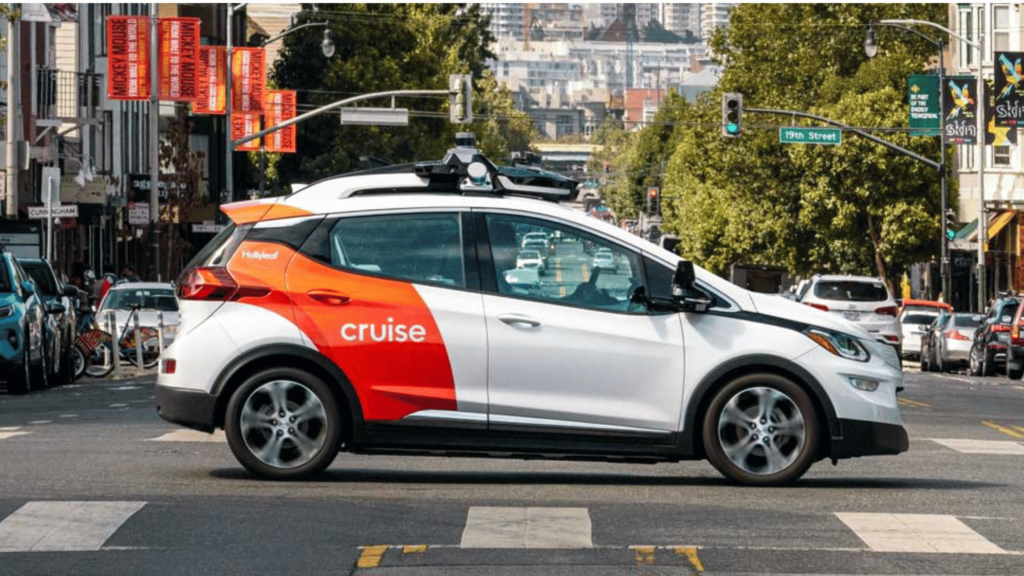
Waymo has come a long way from where it started. Back in 2009, it was a research effort inside Google with a handful of modified Toyota Priuses. Today, it operates commercial robotaxi services in more than ten U.S. cities, including Phoenix, Los Angeles, the San Francisco Bay Area, Austin, and Atlanta. The company has logged well over 170 million rider-only miles.
It raised $16 billion earlier this year at a $126 billion valuation, the single largest investment any autonomous vehicle company has ever pulled in.
Autonomous technology, although expensive, is revolutionary. As with every technology, it can only get better from here.
You May Also Like:
10 Best Self-Driving Electric Cars for 2026
6 Best Self-Driving Cars in the US (2026)
Top 5 Autonomous Trucking Companies in the US (2026)

I’m Dr. Brandial Bright, also known as the AVangelist. As a dedicated and passionate researcher in autonomous and electric vehicles (AVs and EVs), my mission is to educate and raise awareness within the automotive industry. As the Founder and Managing Partner of Fifth Level Consulting, I promote the adoption and innovation of advanced vehicle technologies through speaking engagements, consulting, and research as we progress to level 5 fully autonomous vehicles.