Table of Contents
Updated: December 2025
The landscape of autonomous vehicles is shifting rapidly, and Zoox represents one of the big names pushing this revolution. The Amazon-owned company is reimagining what self-driving vehicles can look like. Quite unlike traditional cars retrofitted with autonomous technology, Zoox built something entirely different from the ground up. But where exactly can you experience this futuristic ride? What service areas in the U.S. is Zoox currently covering? Let’s find out below.
What Makes Zoox Different from Other Autonomous Services
Before we dive into specific service locations, it’s worth understanding what sets Zoox apart in the autonomous vehicle industry.
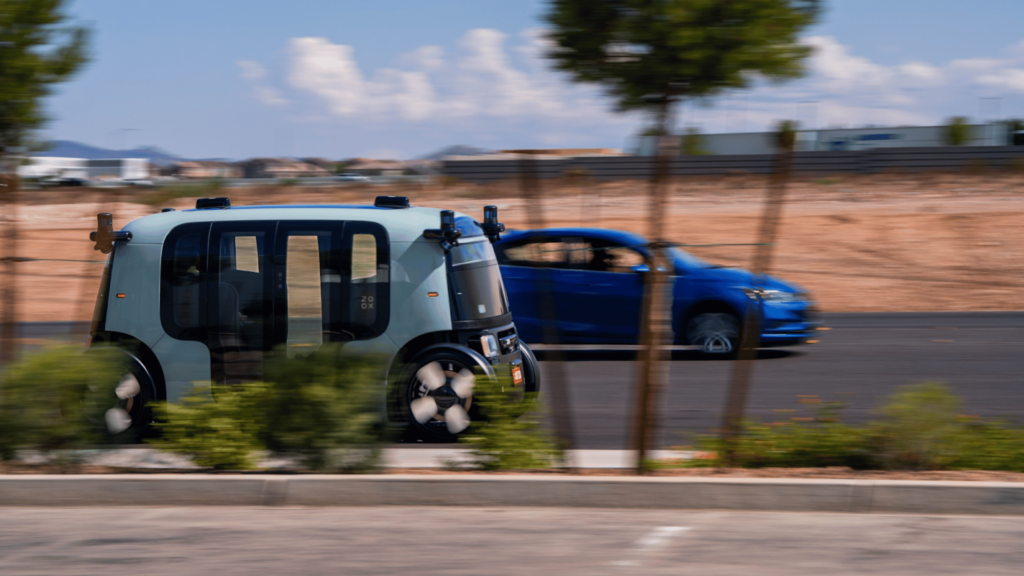
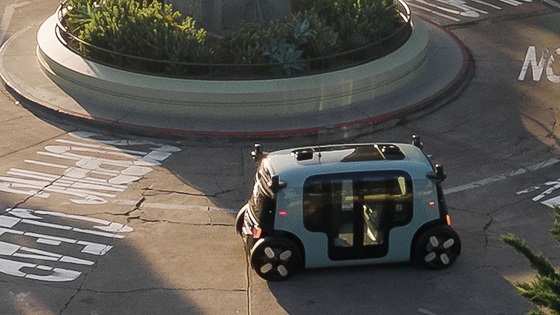
The AV company was acquired by Amazon in 2020 for over $1.2 billion. Zoox didn’t just modify existing vehicles—they designed a purpose-built, bidirectional robotaxi from scratch, meaning it can drive backwards and forward with ease.
There’s no steering wheel in a Zoox robotaxi, no pedals, and passengers sit facing each other in a lounge-like configuration.
According to the company’s official materials, Zoox operates with “a clean-sheet approach to both vehicle design and autonomous driving technology,” which influences where and how they choose to deploy their services.
Current Zoox Service Areas: Where You Can Ride Today
Here are the updated Zoox service areas in the US; where you can ride Zoox robotaxi today.
Las Vegas, Nevada: The Primary Testing Ground
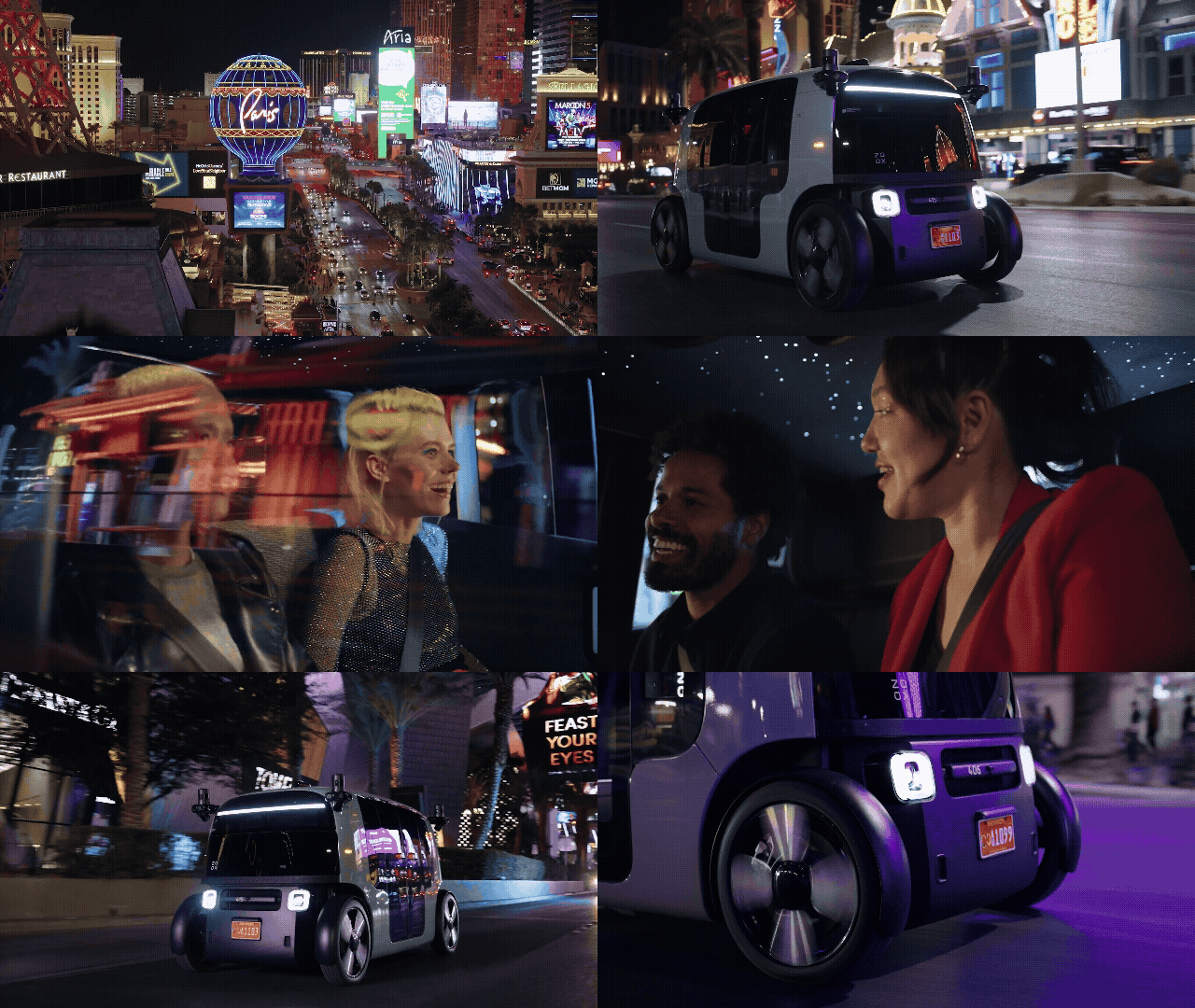
Las Vegas has emerged as the flagship location for Zoox’s commercial operations. The city is becoming a genuine service area where real passengers can experience autonomous Zoox rides.
Why Las Vegas?
The city offers several advantages for autonomous vehicle deployment:
- Consistent weather patterns with minimal rain or snow
- A grid-based street layout that simplifies navigation
- A tourism-focused economy that welcomes innovative transportation options
- Progressive regulatory environment for autonomous vehicles
- High demand for short-distance urban transportation
Zoox began offering employee rides in Las Vegas in February 2023, marking a significant milestone in their commercial journey. By 2024, the company expanded to include public riders through an invitation-only program, allowing select members of the community to experience the technology firsthand.
The service primarily operates in a geofenced area that includes popular destinations along the Las Vegas Strip and surrounding neighborhoods. While the exact boundaries aren’t publicly mapped in detail, riders report routes connecting entertainment districts, residential areas, and commercial centers.
Foster City, California: The Home Base
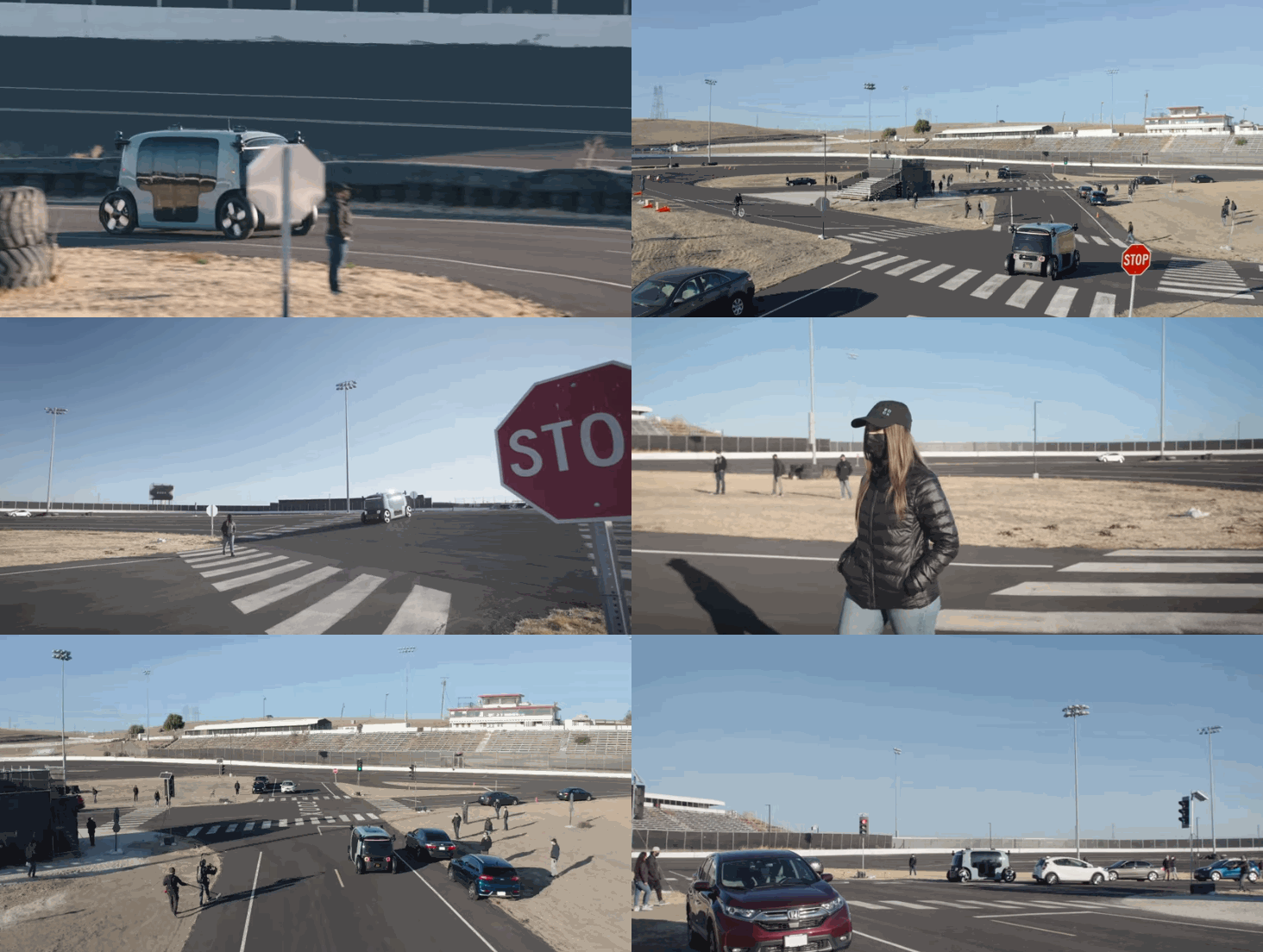
Foster City, located in the San Francisco Bay Area, serves as Zoox’s headquarters and primary development center. While not a full commercial service area like Las Vegas, Foster City plays a crucial role in the company’s operations.
Here, Zoox conducts extensive testing on private roads and controlled environments. Employees have access to autonomous rides within designated areas, providing valuable real-world data in a more controlled setting. The Bay Area’s complex driving conditions—including diverse weather, heavy traffic, and challenging road layouts—make it an ideal proving ground for refining the technology.
Foster City represents the research and development heart of Zoox’s operations, where engineers can quickly iterate on software updates and vehicle improvements based on daily testing feedback.
You May Also Like:
Waymo Service Areas in the US: A Definitive Guide
Understanding Zoox’s Expansion Strategy
The rollout of Zoox service areas follows a deliberate, safety-first approach that prioritizes thorough testing before public deployment.
The Phased Approach
Zoox’s expansion follows a clear pattern:
Phase 1: Internal Testing involves exclusively employee riders who understand the technology’s capabilities and limitations. This phase can last months or even years, allowing engineers to refine the system in real-world conditions.
Phase 2: Invitation-Only Public Access gradually introduces community members through waitlists and targeted invitations. This controlled expansion helps manage demand while gathering diverse rider feedback.
Phase 3: Broader Public Availability opens the service to anyone within the operating area, though this phase may still include geographic restrictions and limited operating hours.
Las Vegas currently sits somewhere between Phase 2 and Phase 3.
Planned and Potential Future Service Areas
Austin: Coming soon
Miami: Coming soon
The Regulatory Landscape
Regulation plays an enormous role in where Zoox autonomous vehicles can operate.
State-by-State Variations
Nevada has positioned itself as one of the most autonomous-vehicle-friendly states in America. The Nevada Department of Motor Vehicles established an Autonomous Vehicle Testing Program as early as 2012, giving companies like Zoox clear pathways for deployment.
California, while home to most AV development companies, maintains stricter testing and deployment regulations through the California DMV’s Autonomous Vehicle Program. Companies must obtain specific permits for testing with and without drivers, and separate permits for commercial deployment.
According to the National Conference of State Legislatures, over 30 states have enacted some form of autonomous vehicle legislation. However, expanding to new service areas often requires securing entirely new regulatory frameworks.
Federal Oversight and Local Autonomy
While the National Highway Traffic Safety Administration (NHTSA) provides federal guidance on autonomous vehicles, much of the regulatory power remains at state and local levels. Cities can impose additional requirements, designated operating zones, and safety protocols beyond state regulations.
This means that even within favorable states, Zoox must work with individual municipalities to establish service areas—a process that can take months or years of collaboration, testing, and trust-building.
How Zoox Service Areas Are Designed and Mapped
The creation of a new Zoox service area involves far more than simply sending vehicles to a new city. The process requires exhaustive mapping, testing, and validation.
High-Definition Mapping
Before a single passenger ride occurs in a new area, Zoox creates incredibly detailed 3D maps of every street within the planned service zone. These maps capture not just road layouts but also:
- Traffic signal locations and timing patterns
- Lane markings and road surface conditions
- Building facades and permanent landmarks
- Elevation changes and road grades
- Parking configurations and loading zones
These maps serve as a foundation that the vehicle’s real-time sensors can reference, helping the autonomous system understand its precise location and anticipate what’s ahead.
Geofencing and Operating Domains
Each Zoox service area operates within carefully defined geographic boundaries called geofences. These digital boundaries ensure vehicles only operate in thoroughly mapped and tested environments where their performance has been validated.
The operating domain also includes temporal restrictions—many autonomous services initially operate only during certain hours or in specific weather conditions. As confidence grows, these restrictions gradually expand.
What It’s Actually Like to Ride in a Zoox Service Area
Understanding the rider experience helps illustrate why location selection matters so much to Zoox’s success.
The Booking Process
Accessing Zoox rides in available service areas resemble familiar ride-hailing apps, with users requesting rides through a dedicated Zoox application. Alternatively, riders who have trouble with booking with the app can visit a physical Zoox pickup point, find a Zoox concierge member and they will assist in setting up your ride.

The In-Vehicle Experience
The Zoox vehicle’s interior feels more like a private lounge than a traditional car. Passengers sit facing each other on cushioned benches, with ample legroom and large windows providing 360-degree visibility. A display screen shows the route, upcoming maneuvers, and real-time information about the vehicle’s perception of its environment.
According to riders who’ve experienced the service in Las Vegas, the ride quality is smooth and confidence-inspiring. The vehicle accelerates and brakes gently, takes turns at reasonable speeds, and navigates complex traffic scenarios with what feels like cautious competence.
Conclusion
Zoox service areas in and out of the U.S. will most definitely keep growing. The company is incrementally building a foundation for autonomous transportation that prioritizes safety, reliability, and rider experience.
For those wondering when they’ll see Zoox robotaxis in their own communities, the answer depends on many factors (one of which is regulatory frameworks)—but the path is clear. As the technology matures and public trust grows, Zoox will scale its service areas to encompass more cities and serve more riders.
Also Read:
6 Best Self-Driving Cars in the US (2025)
Top 5 Autonomous Trucking Companies in the US (2025)
Waymo Service Areas in the US: A Definitive Guide

I’m Dr. Brandial Bright, also known as the AVangelist. As a dedicated and passionate researcher in autonomous and electric vehicles (AVs and EVs), my mission is to educate and raise awareness within the automotive industry. As the Founder and Managing Partner of Fifth Level Consulting, I promote the adoption and innovation of advanced vehicle technologies through speaking engagements, consulting, and research as we progress to level 5 fully autonomous vehicles.