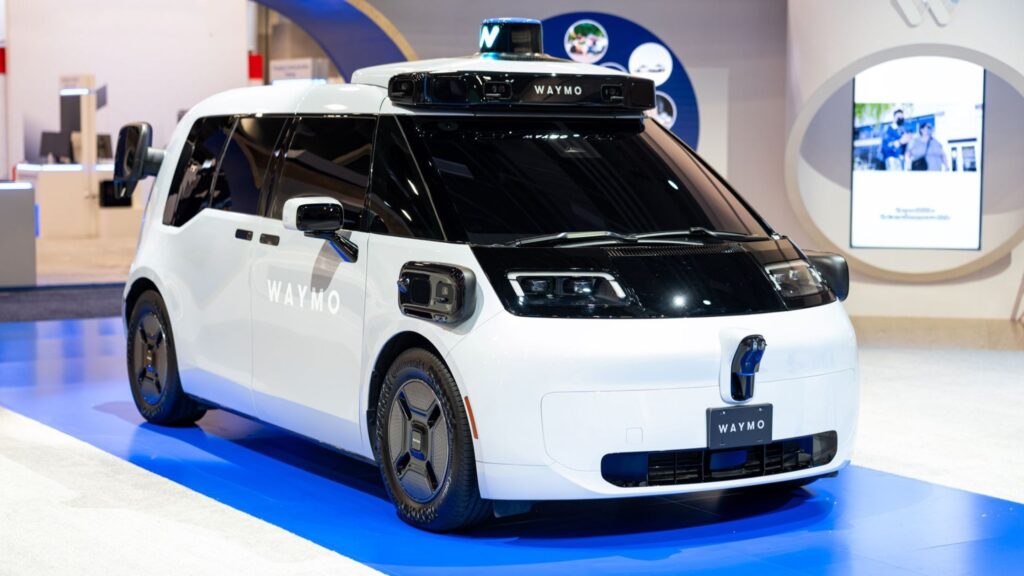
On February 12, 2026. Waymo, the Alphabet-owned autonomous vehicle company, launched fully driverless operations with its brand-new robotaxi, the Ojai. No human behind the wheel. Just software, sensors, and seven years of hard-won lessons from millions of real miles.
Without a doubt, this is the beginning of Waymo’s next era.
What is the Ojai, and Where Did It Come From?
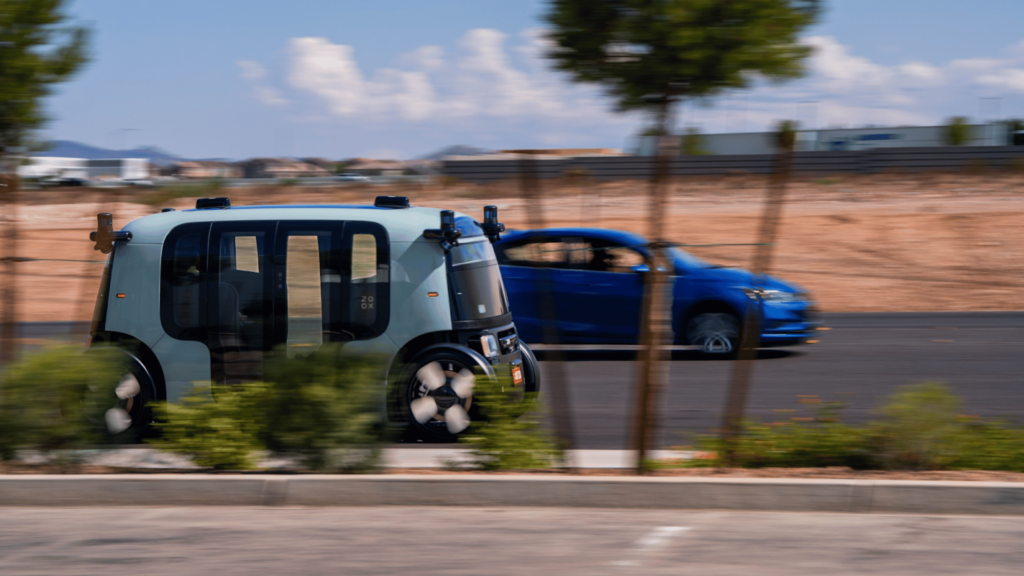
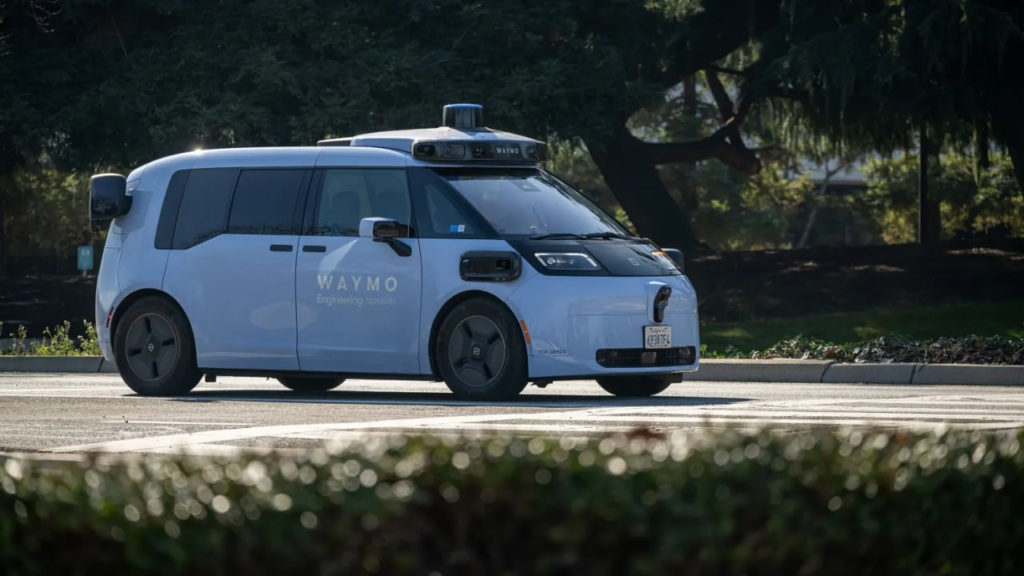
Waymo’s 6th-generation robotaxi, the Ojai (pronounced oh-HI), is a purpose-built electric robotaxi van developed in partnership with Chinese automaker Zeekr. The vehicle was originally known internally as the Zeekr RT, and Waymo confirmed the Zeekr-built robotaxi would be known as the Waymo Ojai—a name drawn from a California city—reflecting a desire to use a U.S.-friendly identity, since the Zeekr brand remains unfamiliar to most American riders.
Waymo on Thursday said it has begun using its sixth-generation driverless system to provide robotaxi rides to employees on Ojai vehicles, which use a base model made by Chinese automaker Geely.
Spokesperson Sandy Karp told CNBC that Waymo will not provide “any access to its closely-held autonomous driving technology, sensor data, nor any rider information” to Zeekr. The Chinese automaker is responsible for providing “base vehicles,” and Waymo installs its autonomous driving technology in the cars in the U.S.
Sixth-generation Ojai, is a workhorse. Certification documents reveal a rear-mounted motor pushing 268 horsepower and a 93-kWh LFP battery. The standout technical feature is the 800-volt architecture—a critical mechanical upgrade over the I-Pace, theoretically allowing for the rapid-fire charging sessions required to keep a robotaxi fleet operational 24/7.
The Manufacturing Partnership: Zeekr and Geely
Waymo selected Zeekr for a simple reason: cost and capability at scale. Chinese automakers have achieved significant cost advantages in EV manufacturing that Western brands cannot currently match.
The Zeekr RT is based on a Chinese minivan—the Zeekr MIX—which costs about $40,000. The original hard point vehicle was adapted by Zeekr into the Zeekr MIX in 2023. The MIX is a very high content vehicle that baselines in China at around $38,000. The decontented RT for Waymo is likely significantly less, perhaps closer to $32,000–$33,000, since features like automated seat rails, leather throughout, and lounger seats with massage in the back are not included.
The overall cost reduction is substantial, with the sixth-generation Driver expected to cost less than $20,000 per unit on top of vehicle costs. This would mean that Waymo has effectively cut the price by more than 50% compared to the fifth-generation system. All-in, each completed Ojai robotaxi is estimated to cost roughly $50,000–$55,000, compared to the roughly $150,000 each Jaguar I-Pace cost fully equipped. Here’s the economic logic: Waymo can deploy three times as many vehicles for the same capital.
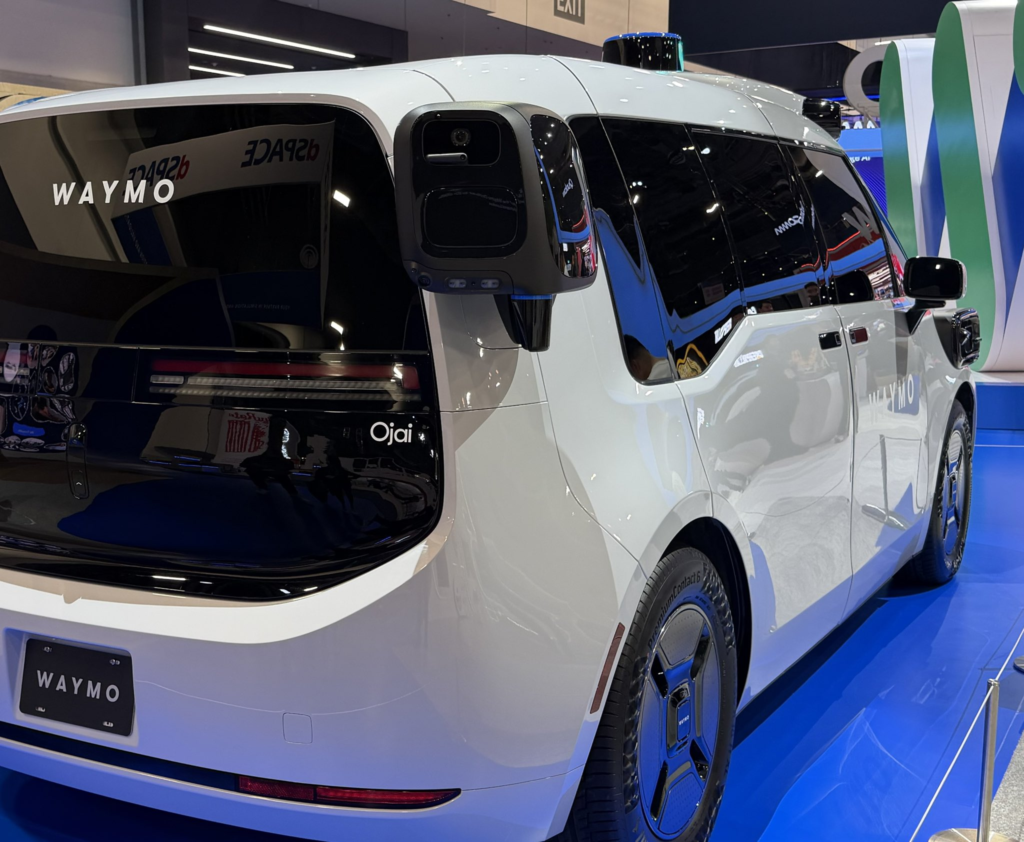
Zeekr manufactures the base vehicle in China before importing it to the United States. Waymo then retrofits the sixth-generation autonomous hardware at its facility in Arizona. This allows Waymo to separate vehicle manufacturing from sensor integration, giving the company flexibility in sourcing.
According to Waymo’s official launch blog post:
“The 6th-generation Waymo Driver is the product of seven years of safety-proven service amassed from driving nearly 200 million fully autonomous miles across the densest cores of 10+ major cities and an expanding network of freeways.”
Here’s how the 6th-gen sensor suite compares to the 5th-gen I-Pace fleet:
| Sensor Type | 5th-Gen (Jaguar I-Pace) | 6th-Gen (Ojai) |
| Cameras | 29 | 13 |
| Lidars | 5 | 4 |
| Radars | 6 | 6 |
| Total sensors | 40 | 23 |
That’s a 42% reduction in total sensors; yet the 6th-gen system sees better, farther, and with more clarity than its predecessor.
The Vision System
In the camera department, the latest system uses a total of 16 17-megapixel cameras that can capture “millions of data points for incredibly sharp images.” Compared to the previous-generation system, which had 29 cameras, the new imagers also have significantly improved dynamic range, allowing them to “see” a lot better during the night.
While cameras on conventional cars can struggle with raindrops, road grime, and ice, the 6th-gen system features integrated cleaning systems to maintain visibility. In conditions where a camera’s view may be limited, lidar and radar provide the necessary redundancy to maintain the Waymo Driver’s perception.
Lidar
Automotive-grade lidar has come down in price by around 75% since 2021. The lidar system leverages advancements in cost-efficiency over the last five years, with custom-designed chips and optical components built in California.
Strategically placed short-range lidars provide redundant coverage to cameras, enabling the sixth-generation Waymo Driver to associate accurate distance measurements with camera imagery.
Imaging Radar
Waymo’s imaging radar creates dense, temporal maps that instantly track the distance, velocity, and size of objects in all lighting and weather conditions. The new radar includes improved algorithms along with better hardware to provide better performance in rain and snow.
EARs
To complement its visual sensors, the Waymo Driver has long utilized External Audio Receivers (EARs) that help the Driver detect important sounds on the road, such as approaching emergency vehicles and railroad crossings. The Driver’s EARs are strategically placed around the central perception dome to optimize its ability to hear sirens and localize where the sounds are coming from while reducing wind noise, especially at high speeds.
Custom Silicon: Processing More With Less
Waymo has pushed more processing complexity into its custom silicon chips rather than relying on multiple hardware components. This approach delivers superior results; the new cameras outperform the highly capable system on the 5th-generation vehicles, even as Waymo continues to reduce costs by using less than half the number of cameras.
You May Also Like:
6 Best Self-Driving Cars in the US (2026)
10 Best Self-Driving Electric Cars for 2026
Top 5 Autonomous Trucking Companies in the US (2026)
Platform Flexibility: One Driver, Many Vehicles
Waymo is focused on building a Driver and not a vehicle. Therefore, it has designed a versatile, integrated autonomous driving system that can be adapted to various platforms and use cases over time. This approach allows Waymo to reconfigure sensors and generalize its AI to meet each platform’s unique needs—whether it is the Ojai or the Hyundai IONIQ 5.
Hyundai is reportedly looking to supply Waymo with 50,000 IONIQ 5 units for the robotaxi fleet, a deal that would represent the largest single vehicle order in autonomous driving history. Combined with the Zeekr Ojai vans and a separate Toyota partnership for consumer vehicles, Waymo is diversifying its hardware supply chain in a way no competitor has matched.
The China Question
“We’re locked in a race with China, but it seems like you’re getting in bed with China,” Sen. Bernie Moreno (R-Ohio) said to Waymo’s safety chief at a committee hearing. Waymo spokesperson Sandy Karp told CNBC that the company will not provide “any access to its closely-held autonomous driving technology, sensor data, nor any rider information” to Zeekr. The Chinese automaker is responsible for providing “base vehicles,” and Waymo installs its autonomous driving technology in the cars in the U.S.
Waymo’s chief safety officer also admitted under questioning from Senator Ed Markey that some of the company’s remote assistance operators—the humans who review camera feeds and suggest routes when a vehicle encounters a situation it cannot resolve—are based in the Philippines. Markey called this a cybersecurity and safety risk.
Waymo avoids current anti-China trade restrictions by shipping “glider” bodies from China and installing the proprietary autonomous “brains” in the United States.
Safety: The Numbers Speak
Waymo reports 90% fewer serious injury-causing crashes and 82% fewer airbag deployments than human drivers across 127 million miles, a dataset no competitor can match.
A subsequent study using insurance claims data that is currently under peer review found the Waymo service had similarly large reductions compared to humans over 25 million miles driven. Waymo had an 88% reduction in property damage claims and 92% reduction in bodily injury claims compared to the overall population.
That said, Waymo is not without scrutiny. The National Highway Traffic Safety Administration (NHTSA) recently opened a probe into an incident in January in which a Waymo robotaxi struck a child near a Santa Monica elementary school during drop-off hours. According to Waymo, the vehicle detected the child as they ran out from behind a parked SUV and braked hard, slowing from about 17 miles per hour to under 6 miles per hour before making contact.
A Washington Post opinion piece noted that self-driving cars are “racking up an impressive safety record, and they could save many lives when widely deployed,” even as some politicians continue raising objections.
Also Read:
2025 Waymo Safety Impact Compared with Human Drivers (in Waymo’s Operating Cities)
Nuro’s Autonomous Vehicle Journey: From Delivery Robots to Level 4 Robotaxis with Uber and Lucid

I’m Dr. Brandial Bright, also known as the AVangelist. As a dedicated and passionate researcher in autonomous and electric vehicles (AVs and EVs), my mission is to educate and raise awareness within the automotive industry. As the Founder and Managing Partner of Fifth Level Consulting, I promote the adoption and innovation of advanced vehicle technologies through speaking engagements, consulting, and research as we progress to level 5 fully autonomous vehicles.