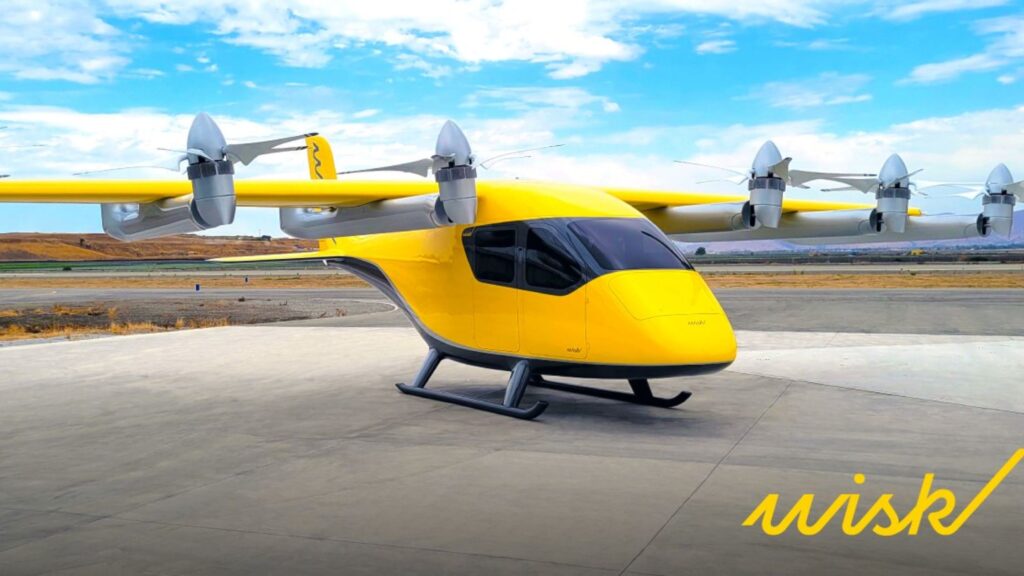
- Boeing’s Wisk Aero is the only company in the world to have designed, built, and flown six generations of eVTOL aircraft, logging over 1,750 test flights since 2010.
- On December 16, 2025, Wisk’s Generation 6 autonomous air taxi made its historic maiden flight, becoming the first-ever candidate for FAA-certified commercial autonomous passenger flight in the United States.
- Unlike rivals like Joby and Archer, Wisk’s Gen 6 has no cockpit controls at all—it is designed from the ground up to fly without a pilot, supervised remotely by a single human overseeing up to three aircraft at once.
What Is Wisk Aero?
The story began in 2010, when “Zee Aero” was founded with early backing from Google co-founder Larry Page. Zee Aero quietly worked on electric vertical takeoff and landing technology for years before merging with another Page-backed venture, Kitty Hawk, in 2017.
By 2019, Boeing entered the picture.
On June 25 of that year, Kitty Hawk and Boeing announced a formal partnership, combining Cora’s innovations with Boeing’s deep aerospace expertise. The Cora team was then spun off and rebranded as Wisk Aero in December 2019.
By May 2023, the arrangement became even tighter: Wisk became a wholly owned subsidiary of Boeing, continuing to operate independently out of Mountain View, California.
Today, Boeing’s Wisk Aero describes itself as “an autonomous aviation company dedicated to creating a future for air travel that elevates people, communities, and aviation.”
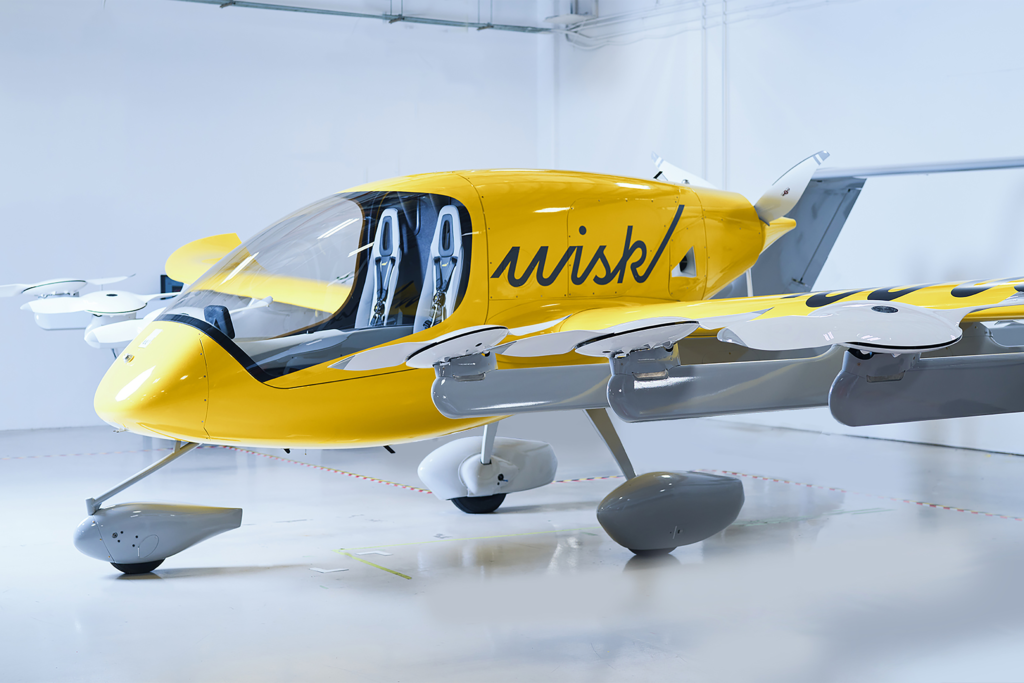
The Differentiating Factor
There are dozens of companies involved in air taxi. Most competitors—Joby, Archer, Lilium—are building piloted eVTOLs. A human pilot sits in the cockpit. Wisk took a different path. Gen 6 features an autonomy-first design that completely lacks flight controls.
There’s no joystick. No yoke. No throttle. The aircraft thinks for itself.
It’s a bold invention that required Wisk to spend over a decade, and go through five full generations of aircraft, before arriving at a product it believes is ready for certification.
From Zee Aero to Gen 6: A 15-Year Journey
Six Generations of Learning
Wisk is the only company to have designed, built, and flown six generations of eVTOL aircraft. Each generation was a fundamental upgrade. The company treated every generation as a learning exercise, accumulating flight data, safety insights, and autonomy improvements across hundreds of test flights before moving forward.
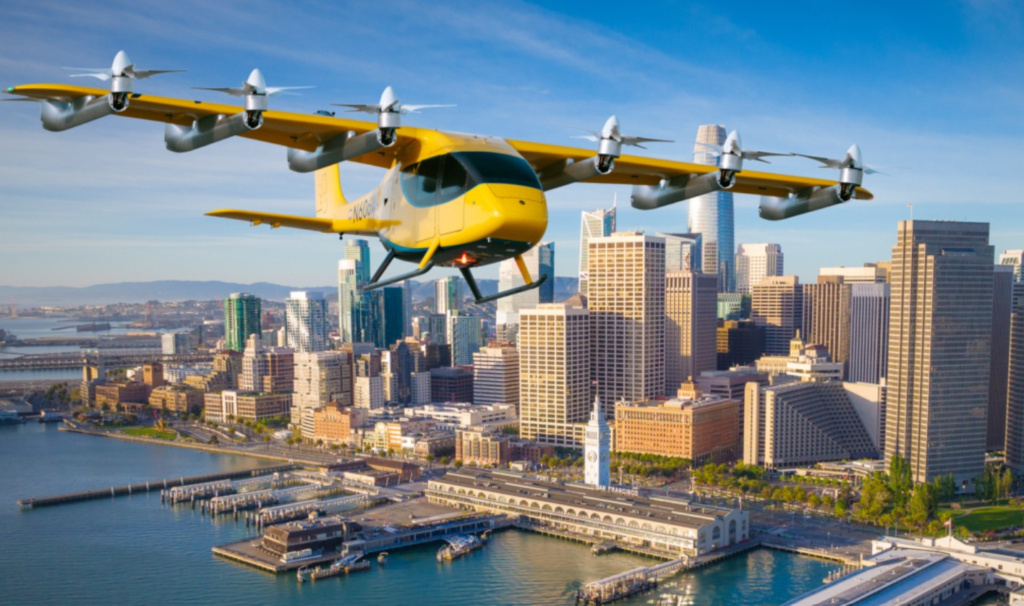
Wisk has conducted more than 1,750 test flights using earlier eVTOL prototypes, including public demonstrations in Los Angeles with its Generation 5. Almost 200 of those were with the Gen 5 alone.
Key Milestones
• 2019: Wisk Aero is officially formed as a Boeing-Kitty Hawk partnership.
• 2020: Wisk joins NASA’s Advanced Air Mobility Project, collaborating with the FAA on how new vehicles interact with air traffic.
• 2021: Wisk announces a partnership with Blade Urban Air Mobility to operate 30 of its Cora eVTOLs on Blade’s US network.
• January 2022: Boeing announces a $450 million investment in Wisk, a major vote of confidence.
• May 2023: Wisk becomes a wholly owned Boeing subsidiary.
• July 2023: Wisk performs its first-ever public autonomous flight demonstration with Gen 5 at EAA AirVenture Oshkosh.
• October 2023: Wisk becomes the first eVTOL air taxi company to conduct public flights in Los Angeles County, at Long Beach Airport.
• 2024: Wisk acquires Verocel, a software verification and validation company, a critical move for its certification strategy.
• 2024: Wisk obtains its G-1 Stage 2 issue paper from the FAA for Gen 6, laying out airworthiness and environmental standards required for type certification.
• June 2025: Wisk acquires SkyGrid, an air traffic management platform for autonomous aircraft, making it a subsidiary.
• May 2025: Sebastien Vigneron is appointed CEO, having previously led Gen 6 product development.
• December 16, 2025: Gen 6 completes its maiden flight in Hollister, California.
The Generation 6: Inside the Aircraft
Design Philosophy
Gen 6 is a complete electric flying machine, designed around the absence of a pilot, from day one. Gen 6 has room for four passengers and their carry-on luggage. It features a wingspan of 50 feet and is equipped with six dedicated lift rotors and six convertible lift/horizontal rotors.
Key Specs at a Glance
• Passenger capacity: 4 passengers + carry-on luggage
• Wingspan: 50 feet
• Rotors: 6 dedicated lift rotors + 6 convertible lift/cruise rotors
• Range: Up to 90 miles (144 km)
• Cruise speed: Up to 120 knots (~138 mph)
• Service altitude: 2,500 to 4,000 feet
• Charge time: As little as 15 minutes for a full operational charge
• Hover-to-forward flight transition: 30 seconds
The Multi-Vehicle Supervisor: Autonomy With a Human Touch
One of the most interesting aspects of Gen 6 is how it handles oversight. It doesn’t fly completely alone. The company utilize a “Multi-Vehicle Supervisor” system where it is monitored from the ground by a human overseeing three aircraft at a time.
One trained supervisor can safely oversee a fleet of three aircraft simultaneously—which, from a scalability and cost standpoint, is far more efficient than putting a pilot in every cockpit. Wisk believes this model is “key to achieving high levels of safety, scalability, and affordability.”
The Historic First Flight
On December 16, 2025, at exactly 12:26 PM PST, Gen 6 lifted off from Wisk’s flight test facility in Hollister, California. The flight lasted about one minute. The aircraft took off vertically, hovered, performed stabilizing maneuvers, and landed softly.
The Wisk flight is claimed to be the first-ever candidate for FAA type certification of an autonomous, passenger-carrying eVTOL in the United States. No other company has brought a pilotless, passenger-carrying aircraft this far in the FAA certification process.
“This first flight is the moment our team has been working toward, and it is a powerful demonstration of the work, expertise, and commitment that have gone into the Gen 6 program. Seeing Gen 6 take flight is an exciting moment for Wisk and the future of aviation. It reaffirms our belief in autonomy, and we are even more energized to continue the journey to bring safe, everyday flight to everyone.”
— Sebastien Vigneron, CEO, Wisk Aero
What Comes Next: The Road to 2030
Testing Phases
The Gen 6 program is just getting started. Hover phase testing is underway, with additional takeoffs and landings to gauge how the aircraft’s behavior aligns with simulations and models. Testing prototype advancements to higher speeds and altitudes would possibly be the next phase. Hover-to-forward flight transitions could happen within the next six months of the maiden flight.
Wisk’s VP of flight operations predicted that by 2026, the aircraft would fly multiple times per day, several days a week.
“The team at Wisk has built advanced technologies across flight controls, sensing, navigation, mission management, electric power, systems integration, and many others for a product that is designed to meet a rigorous safety case for a focused concept of operations.”
— Brian Yutko, VP Boeing Commercial Airplanes & Wisk Board Chairman
Launch Cities
Wisk has established Houston, Texas as a primary U.S. launch market and is supporting proposals in Florida, New York, and California. Los Angeles and Miami are also on the launch list.
Internationally, Wisk and Skyports Infrastructure have partnered to identify an Entry-into-Service network for Gen 6 in the South East Queensland region of Australia, targeting the 2032 Olympic Games in Brisbane.
Regulations and Certification
Certifying an autonomous eVTOL is genuinely new territory for the FAA. The agency has never done it before. To fly commercially, Wisk must secure three certificates: a Type Certificate (design approval), a Production Certificate (manufacturing approval), and an Operating Certificate (approval to carry paying passengers).
The G-1 and G-2 Issue Papers
In 2024, Wisk received its G-1 Stage 2 issue paper—a document outlining the specific airworthiness and environmental standards Gen 6 must meet. The next step, the G-2 issue paper, will define exactly how Wisk must prove compliance with those standards. All manufacturers are currently awaiting FAA approval of their G-2 issue papers.
New Laws Are Coming
In early 2026, a bipartisan U.S. bill called the Aviation Innovation and Global Competitiveness Act was introduced in Congress. The bill aims to simplify the type certification process for eVTOL manufacturers. President Trump also issued an executive decree creating the eVTOL and AAM Integration Pilot Program (eIPP), which will span three years and permit operations at airports with passengers.
Wisk has committed to participating in the eIPP, calling it “the essential pathway for achieving early commercial operations.”
Why Autonomy Makes Certification Harder
Current FAA software certification frameworks struggle with machine learning systems that are nondeterministic by design. Traditional aircraft software follows predictable pathways. Machine learning models make probabilistic decisions. Certifying such in safety-critical applications requires new regulatory approaches the FAA is still developing.
The Competitive Landscape
Boeing’s Wisk Aero isn’t racing alone. Joby Aviation, Archer Aviation, and others are also in the certification queue. But they are all building piloted aircraft. Wisk’s autonomy-first approach is a unique bet.
The industry is not easy. Lilium, the German eVTOL company that raised over $1 billion, declared bankruptcy in October 2024 after burning through its funding before reaching certification.
What gives Wisk an edge? Boeing’s backing.
Wisk has the financial staying power and institutional credibility that many startups lack. With 15 years of development history and over 1,750 test flights behind it, Wisk’s foundation is arguably stronger than any other autonomous air mobility company in the world.
The Bigger Picture
Boeing’s Wisk Aero is doing something absolutely audacious: building a flying vehicle that carries four human passengers with no human in control onboard. It’s a vision that challenges how we think about technology, transportation, and trust.
I guess it’s safe to say the future of urban air mobility doesn’t need a pilot. Software, sensors, and smart oversight can be safer than human reflexes. Every day flight can be as routine as hailing a cab.
We have yet to find out whether this argument wins, as the story is still being written. But with its December 2025 maiden flight, Wisk put its most compelling chapter on record yet.
You May Also Like:
Top 7 Autonomous Drone Delivery Companies in the US (2025)
Top 9 Self-Driving Delivery Companies in the US (2025) – By Autonomous Miles Covered
Uber Autonomous Drone Delivery Takes Flight: Here’s What to Know

I’m Dr. Brandial Bright, also known as the AVangelist. As a dedicated and passionate researcher in autonomous and electric vehicles (AVs and EVs), my mission is to educate and raise awareness within the automotive industry. As the Founder and Managing Partner of Fifth Level Consulting, I promote the adoption and innovation of advanced vehicle technologies through speaking engagements, consulting, and research as we progress to level 5 fully autonomous vehicles.