
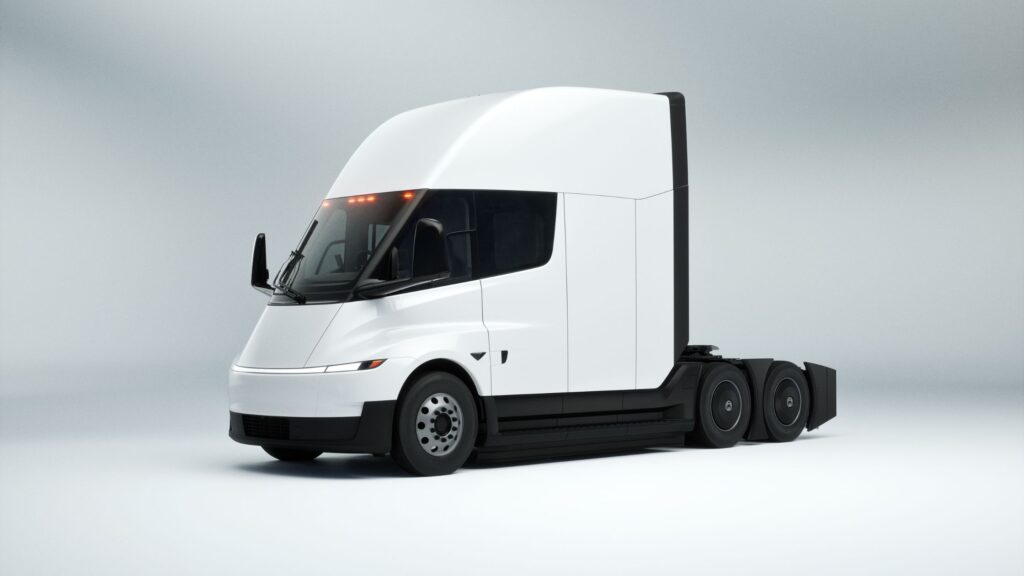
It’s no secret that when Tesla started manufacturing vehicles, they initially focused on sports cars that most people couldn’t afford, but eventually convinced the world that electric vehicles were the rave of the moment. By 2016, Elon Musk had already integrated the Tesla Semi into the company’s master plan, a deliberate push into the freight and supply chain industry.
The first Tesla Semi truck concept dropped in November 2017. Production was delayed for several years, mostly driven by battery supply challenges and the sheer difficulty of powering something that hauls 80,000 pounds down a highway. PepsiCo received the first deliveries in December 2022. But real volume production only kicked off on April 29, 2026, at a brand-new facility built right next to Gigafactory Nevada—a factory planned to produce 50,000 units a year.
What It Brings to the Supply Chain
Freight runs on tight margins, often 2 to 5 percent. Diesel is expensive and unpredictable. Any meaningful cost reduction in that environment is a welcome development.

Tesla has stated that fleet operators can save over $200,000 in fuel costs per million miles traveled. Energy costs run about 70% lower than a comparable diesel rig. Because the Semi has far fewer moving parts—no transmission, no oil changes, and reduced brake wear thanks to regenerative braking—maintenance costs drop too. Logistics managers piloting the truck have reported 20 to 30 percent reductions in total operating costs.
DHL has been one of the most popular early adopters, pairing AI-powered route optimization with its Tesla Semi fleet to cut both downtime and emissions. Walmart, Costco, Sysco, and US Foods were also running tests by mid-2024. PepsiCo, which placed its order back in 2017, uses the truck for Frito-Lay routes that stay under 100 miles a day.
Long-haul routes across rural stretches remain a challenge. The charging network is still being built. But for fleets running fixed corridors in California, Texas, and the Sun Belt, the Tesla Semi has proved to be much more effective.
10 Intriguing Key Facts About the Tesla Semi Truck
1. Three Independent Motors, Triple the Power of a Diesel Truck
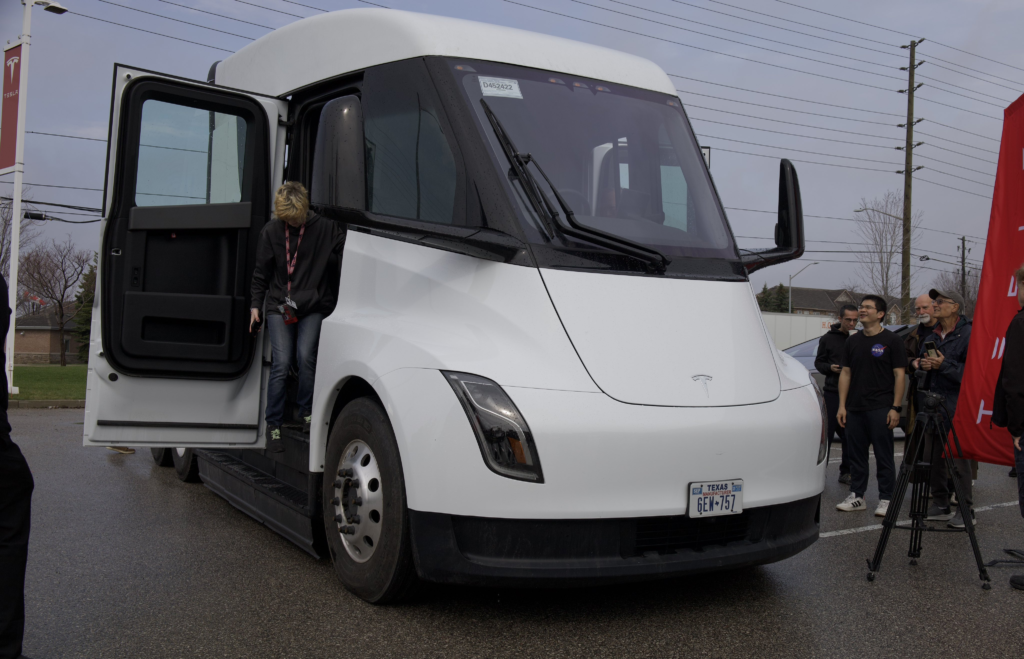
The Tesla Semi truck runs on three independent electric motors mounted on the rear axles, producing up to 800 kW of drive power; that’s over 1,000 horsepower. A typical diesel semi makes about a third of that. Fully loaded at 82,000 pounds, the Semi goes from 0 to 60 mph in 20 seconds. A diesel equivalent takes around a minute. On a 5% incline, where heavily loaded diesel trucks often crawl to 30 mph, the Tesla Semi holds a steady 65 mph.
2. The Battery Is Rated to Last One Million Miles
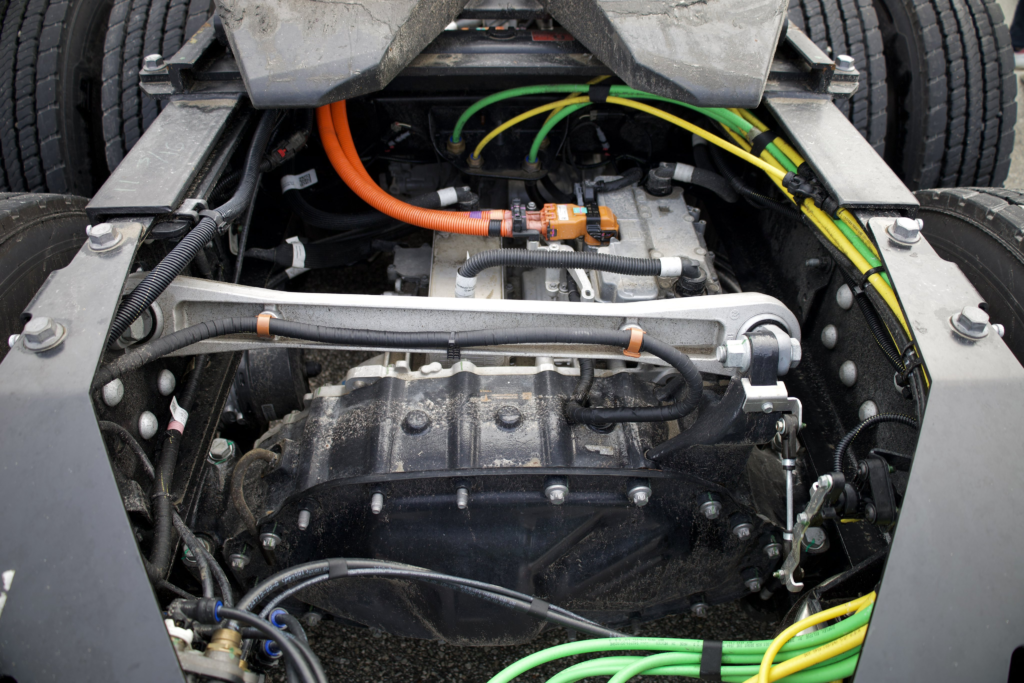
Tesla warrants the Semi’s drivetrain for one million miles; that’s roughly three to four times the expected lifespan of a diesel engine before major overhaul. The battery packs use NCMA lithium-ion chemistry, confirmed officially by California’s Air Resources Board in April 2026. They sit under the cab floor between the axles, keeping the truck’s center of gravity low and improving stability on curves and in crosswinds.
3. The Driver Sits Dead Center, Like a Race Car
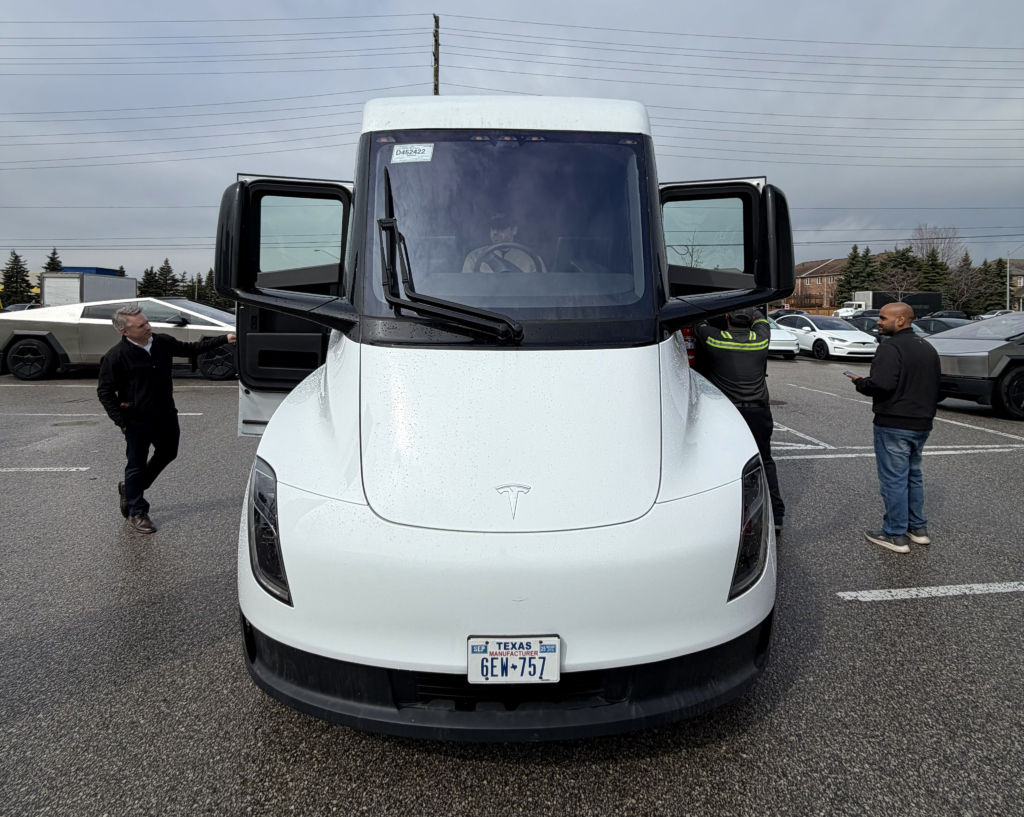
Every commercial truck on the road puts the driver on the left. The Tesla Semi puts them in the middle. Elon Musk called it “like sitting in a race car” at the 2017 reveal, and it’s just cute. A centered seat offers symmetrical visibility, and the cab wraps around the driver with a wide windshield that extends into the door panels. Cameras replace traditional side mirrors, feeding live video to the dual 15-inch touchscreens on either side of the steering wheel—the same screens used in the Model 3. Drivers can stand fully upright inside. There’s overhead storage, a wireless phone charger, and a small rear jump seat for a co-pilot. It’s a day cab, built for regional runs for now.
4. It Actively Works to Prevent Jackknifing
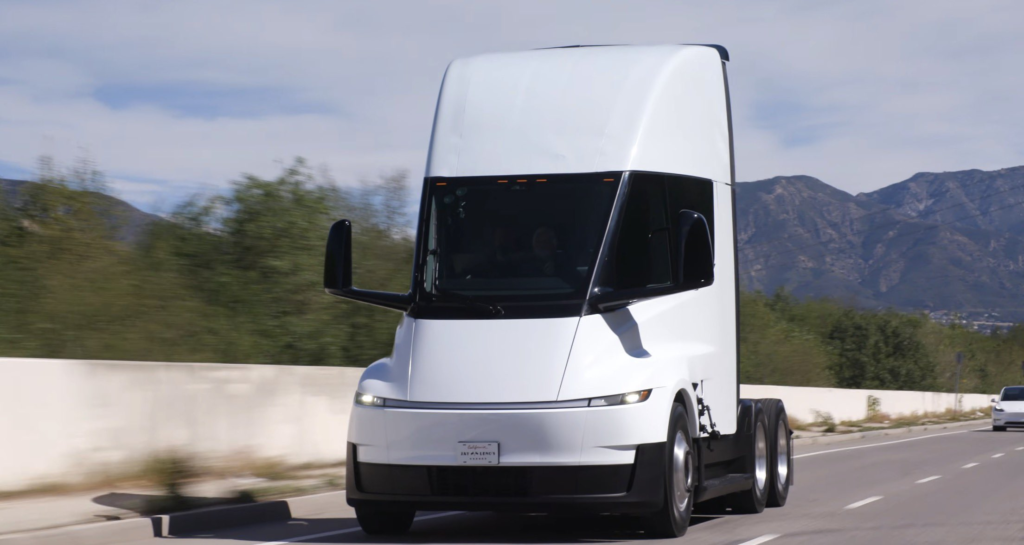
Jackknifing is one of the deadliest events in trucking. It happens when the trailer pushes past the cab during hard braking, often folding the vehicle across multiple lanes. The Tesla Semi’s three motors each operate independently, monitoring and adjusting torque wheel by wheel in real time. If sensors detect the trailer beginning to swing, the system corrects torque and braking at each axle before the fold can develop. Musk declared in 2017 that jackknifing is “impossible” in this truck.
5. It Can Charge to 60% in About 30 Minutes
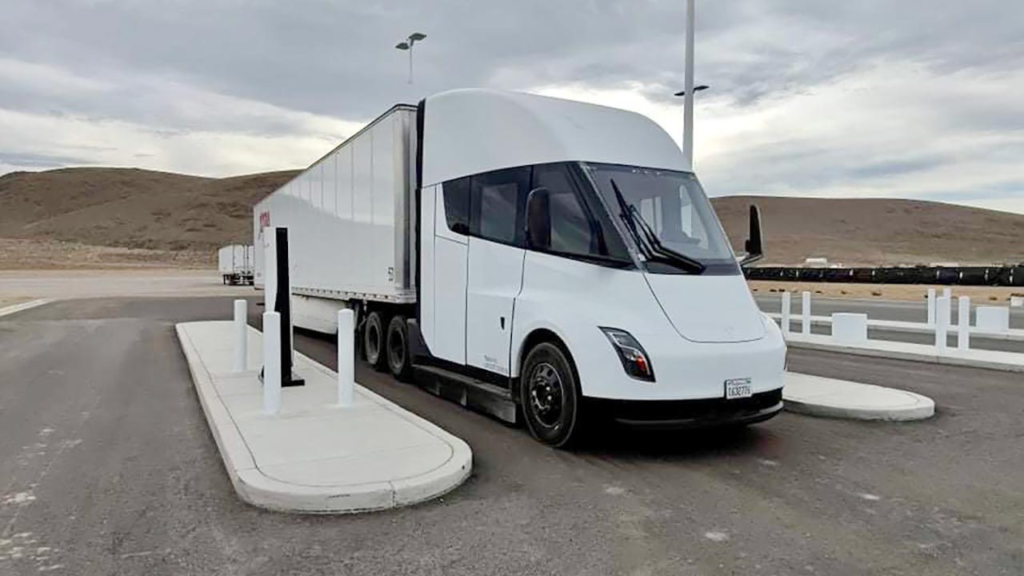
The Tesla Semi truck supports peak charging at 1.2 megawatts via Tesla’s Megacharger system, more than double the Cybertruck’s charging rate. At that speed, it recovers 60% of its battery in roughly 30 minutes. It aligns almost perfectly with the mandatory rest break federal trucking law requires after eight hours of driving. That same half-hour charge can put enough energy into the Semi to fully charge six Tesla Model 3 sedans from empty. Tesla opened its first public Megacharger station for Semi customers in Ontario, California, and is deploying 66 U.S. locations. Pilot stops at Flying J travel centers along major freight corridors are expected by summer 2026.
6. The Long-Range Version Carries One of the Biggest Batteries Ever Put in a Production Vehicle
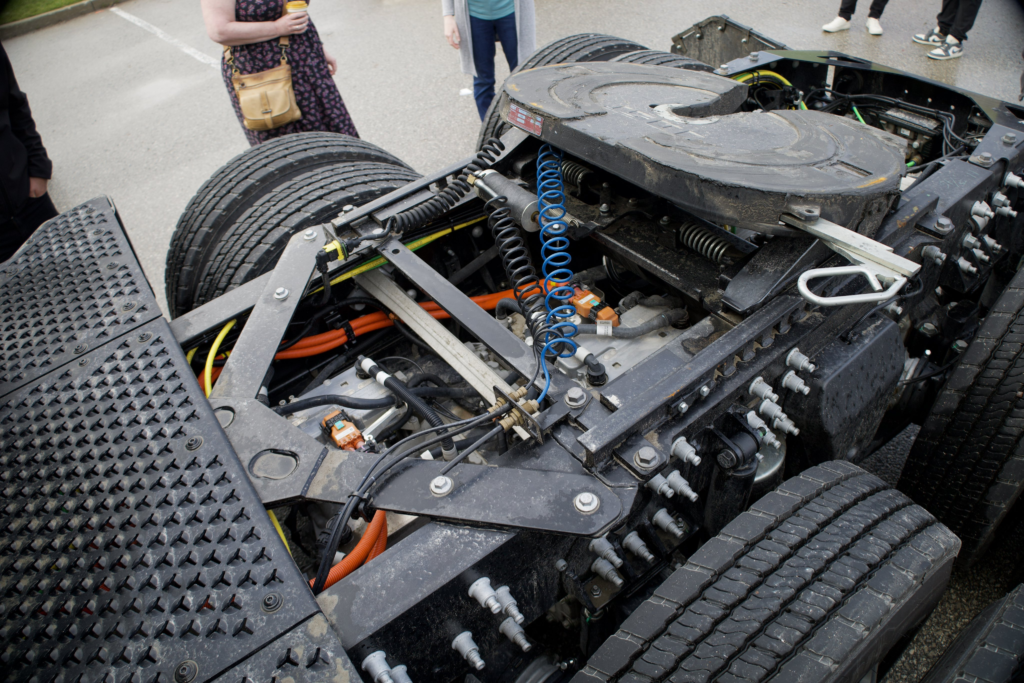
California’s Air Resources Board officially confirmed in April 2026 that the Tesla Semi Long Range holds an 822 kWh battery. The Standard Range model carries 548 kWh. For comparison, the largest battery in a typical Tesla passenger car sits around 100 kWh. The Semi’s long-range pack is more than eight times that size. At a real-world consumption of 1.7 kWh per mile under full load, those figures produce roughly 325 miles and 500 miles of range respectively, both measured at 82,000 pounds gross combined weight. Running empty, the Long Range version can theoretically cover over 620 miles on a single charge.
7. It Can Save Fleet Operators $200,000 per Million Miles in Fuel

Tesla’s official figures put fuel savings at over $200,000 per million miles versus diesel, assuming Megacharger pricing. Independent analysis from the International Council on Clean Transportation found that on fixed corridors in California, the Tesla Semi already holds a 3% total cost of ownership advantage over diesel. Add U.S. federal tax credits of up to $40,000 per zero-emission commercial vehicle under the Inflation Reduction Act, and the upfront price difference between a Tesla Semi and a diesel truck starts to shrink considerably.
8. Each Truck Is Estimated to Cut Around 50 Metric Tonnes of Emissions Per Year

A single Tesla Semi replacing a diesel truck is estimated to eliminate roughly 50 metric tons of greenhouse gas emissions annually. That figure comes from operational data gathered through DHL’s active fleet deployments in California. Freight currently accounts for about 25% of global transport emissions. DHL already operates over 150 Class 8 electric trucks across North America and has committed to scaling that number as Tesla ramps production.
9. DHL Drove It 388 Miles Fully Loaded on a Single Charge
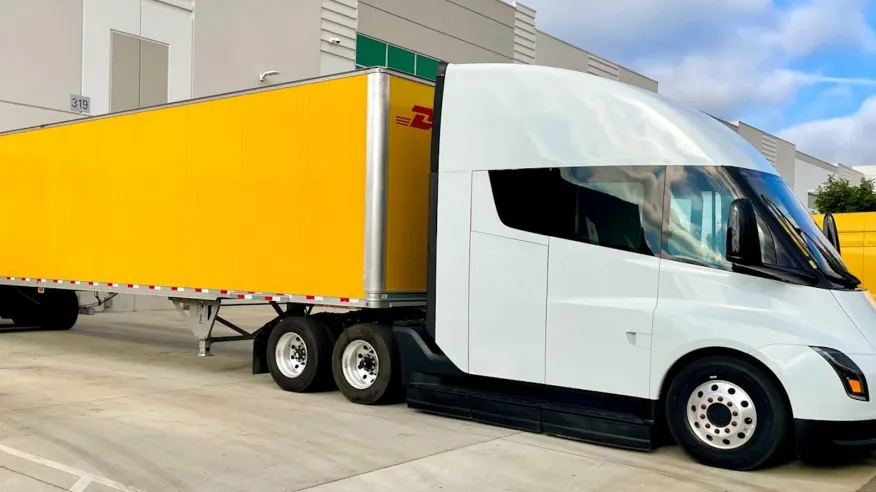
During a real-world test run from DHL’s Livermore, California facility in October 2024, a Tesla Semi covered 388 miles on one charge while hauling 75,000 pounds of actual customer freight—close to its maximum payload. DHL recorded an energy efficiency of 1.72 kWh per mile. For context, Volvo’s competing electric semi maxes out around 186 miles. The Mercedes eActros 600 reaches about 311 miles. The Tesla Semi Long Range, at 500 miles under full load, is still well ahead of both.
10. Volume Production Started in 2026, Nearly Nine Years After the Reveal

Tesla showed the world the Semi concept in November 2017. Musk promised production would begin in 2019. It didn’t. Limited deliveries to PepsiCo began in December 2022, but those were pilot-production trucks. Real mass production launched on April 29, 2026, nearly a decade after the original reveal. The company pinned the delay on battery supply. Building packs close to 822 kWh required cell production at a scale that simply didn’t exist yet. Tesla’s fix was to build the Semi factory directly adjacent to Gigafactory Nevada so cells move from the production line to assembly in the same complex, eliminating the supply chain gap. The new facility is designed for 50,000 Semis per year. As of early 2026, the Long Range version is priced at $290,000, significantly higher than Musk’s original $180,000 estimate.
After so many years of waiting, the electric Tesla Semi trucks have arrived. And one industry that will enormously benefit from this technology is the supply chain industry.
You May Also Like:
Autonomous Freight Revolution: How Self-Driving Trucks Are Reshaping Global Supply Chains
Aurora Innovation Is Bringing Autonomous Trucks to the U.S. Restaurant Supply Chain

I’m Dr. Brandial Bright, also known as the AVangelist. As a dedicated and passionate researcher in autonomous and electric vehicles (AVs and EVs), my mission is to educate and raise awareness within the automotive industry. As the Founder and Managing Partner of Fifth Level Consulting, I promote the adoption and innovation of advanced vehicle technologies through speaking engagements, consulting, and research as we progress to level 5 fully autonomous vehicles.