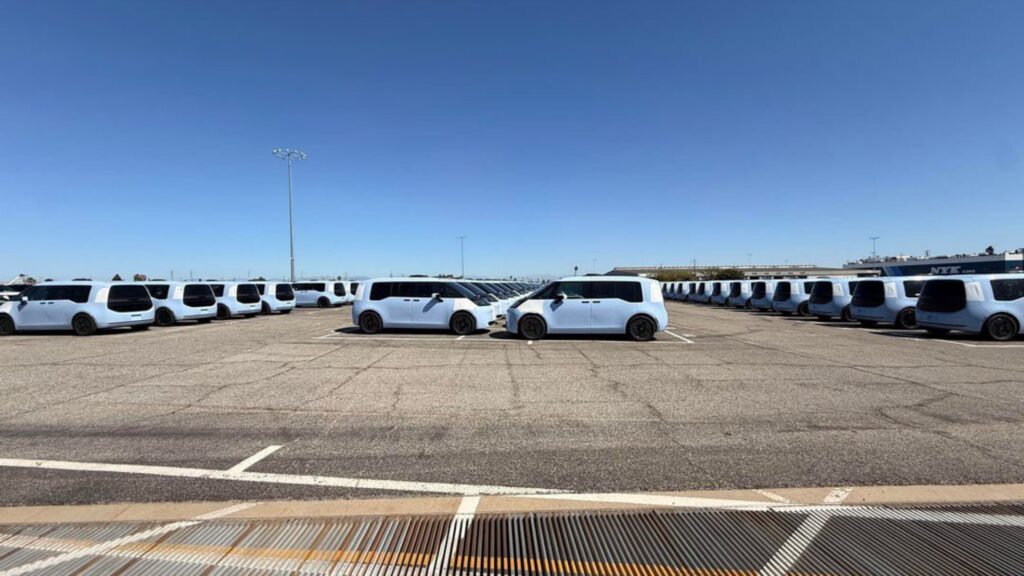
Most people still use Uber or Lyft to get to the airport. But Waymo has been slowly changing that. The Alphabet-owned robotaxi company now serves four U.S. airports with fully autonomous rides — no driver, no small talk, no tip. Here is everything you need to know about Waymo airport service areas and how each one actually works.
What Are Waymo Airport Service Areas?
Waymo airport service areas are designated zones where passengers can hail a fully autonomous vehicle to or from an airport. Each location has approved pickup and dropoff spots, often shaped by months or years of regulatory negotiations. The four airports currently in Waymo’s network are:
- Phoenix Sky Harbor
- San José Mineta
- San Francisco International
- San Antonio International
Waymo operates 24 hours a day, seven days a week at all four airports. Passengers use the Waymo One app to book rides, and the service includes trunk access for luggage.
Phoenix Sky Harbor — The Original
Phoenix Sky Harbor International Airport holds a special place in Waymo’s history. It is where the company first proved that autonomous airport service could work at scale.
Waymo began talks with Phoenix Sky Harbor in 2020, using what airport officials described as a “crawl, walk, run approach.” By 2022, Waymo had opened service to one of the airport’s two Sky Train stations. Full curbside service at Terminals 3 and 4 followed in 2023. Today, the airport records between 1,000 and 1,200 Waymo trips per day — a number that will grow as freeway access expands Phoenix’s coverage zone.
Pickup and dropoff at Sky Harbor works like this:
- Terminals 3 and 4 passengers use Level 1, outer curb, South Door 8 near Arrivals
- The PHX Sky Train connects terminals and parking to the rideshare areas at 24th Street and 44th Street Stations
- Trains run every 3 to 5 minutes and the ride takes about 5 minutes
- Waymo recommends requesting your ride after boarding the train for a timely pickup
Phoenix remains Waymo’s most mature airport market. Its high trip volume and smooth operations have served as the proof of concept that other airports now study before opening their doors.
San José Mineta International — California’s First
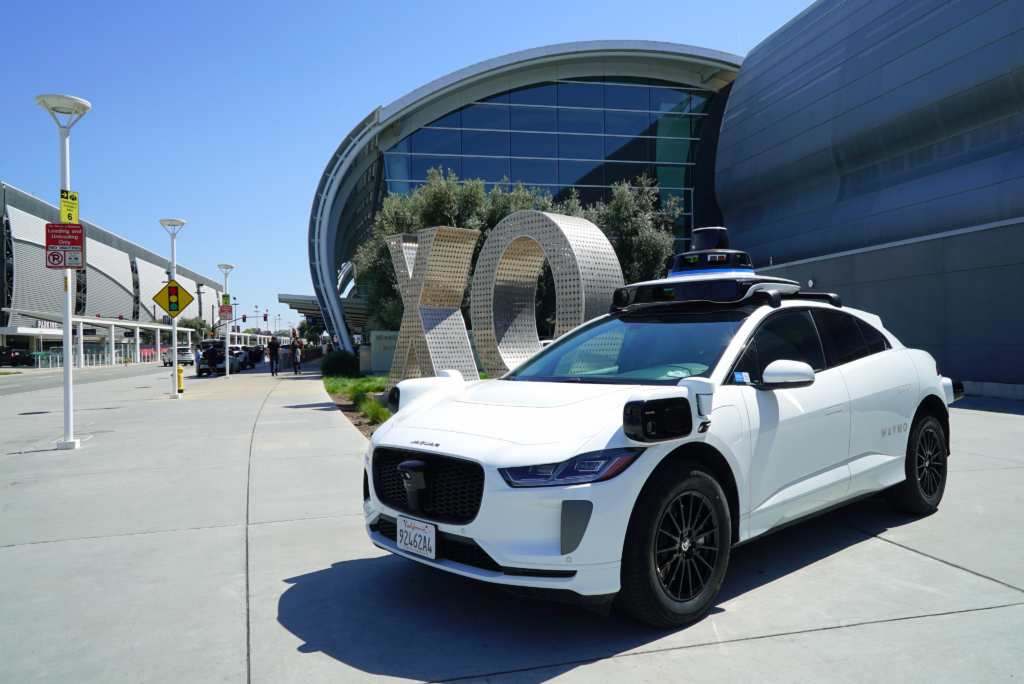
On November 12, 2025, three major Waymo milestones happened on the same day. The company launched Bay Area freeway access, unified its San Francisco and Silicon Valley service zones into a single 260-square-mile area, and opened curbside service at San José Mineta International Airport.
San José Mineta became the second U.S. airport and the first airport in California to offer commercial robotaxi service. The California Public Utilities Commission had authorized Waymo for commercial rides in San Jose back in May 2025, clearing the regulatory path for airport access.
The service offers 24/7 curbside pickup and dropoff at both terminal Ground Transportation Centers. Waymo rides to and from SJC currently use a mix of surface streets and freeway segments. The airport sits within Waymo’s broader Bay Area coverage, meaning passengers can travel seamlessly between San Francisco, the Peninsula, and the airport in one ride.
The timing couldn’t be more accurate. San Jose would soon host Super Bowl LX and FIFA World Cup matches at Levi’s Stadium. Waymo wanted the infrastructure in place before millions of visitors arrived.
San Francisco International — Worth the Wait, With Caveats
San Francisco International Airport is the most complicated chapter in Waymo’s airport story. The city is where Waymo’s technology was born. Yet SFO took years longer than Phoenix to allow autonomous service.
Airport officials delayed Waymo in 2023, asking the company to complete peninsula mapping and secure state-level operating approvals first. By September 2025, SFO and Waymo signed a testing and operations pilot permit. In December 2025, Waymo employees began fully autonomous rides to the airport. Public access launched on January 29, 2026 — timed, not coincidentally, with the Super Bowl.
SFO is now the third U.S. airport in Waymo’s network. But the launch came with a significant restriction that is worth knowing about. Pickups and dropoffs are currently limited to the Rental Car Center Level 1 Curbside on North McDonnell Road, accessible via the AirTrain Blue Line. That is roughly a 10-minute detour from the terminals. Uber and Lyft, by contrast, operate from Level 5 of the Domestic Garage — the same building as the terminals, handling an estimated 800,000 monthly trips.
SFO’s stated reason for the routing is operational: keeping autonomous vehicles away from the busiest terminal traffic while the service scales. Critics argue it is a friction point designed to slow adoption. Either way, Waymo has publicly committed to expanding to terminal-direct pickups in the future. No timeline has been given.
Access is also rolling out in waves. If you are already an active Waymo rider in the Bay Area, you likely already have SFO access in your app. New users may still be on a waitlist.
San Antonio International — The Newest Addition
San Antonio International Airport joined Waymo’s airport network in early 2026, making it the first Waymo airport in Texas and the fourth in the country.
Waymo first launched its San Antonio robotaxi service in February 2026, initially as an invitation-based rollout. The airport service followed shortly after, with pickup and dropoff available at:
- Terminal A and Terminal B curbside at Departures
- The Arrivals outer curb near Rideshare Zone 2
Access is currently limited to riders already inside Waymo’s San Antonio service. The company has said it plans to open the service to all public riders in the city soon.
San Antonio is part of Waymo’s broader Texas expansion, which also includes Austin, Dallas, and Houston. The company now operates driverless vehicles across all four Texas cities, with commercial public access being rolled out on a phased schedule.
The Bigger Picture
Waymo airport service areas represent one of the most strategically valuable parts of the company’s business. Airport rides are longer, higher-fare trips that drive revenue at scale. Each new airport approval also builds public trust and regulatory goodwill in that market.
What makes Waymo’s airport rollouts interesting is how different each one is. Phoenix was built through years of patient, cooperative dialogue. San José came as part of a single day of sweeping Bay Area expansion. SFO took three times as long as comparable cities due to local politics and permitting complexity. San Antonio is the newest proof that Waymo’s pace of airport expansion is accelerating.
The company is completing more than 500,000 paid rides per week across its full network. With airport access now live in four cities and freeway integration connecting more of those service areas, the gap between Waymo and traditional ride-hail at airports is shrinking — one autonomous trip at a time.
You May Also Like:
Waymo Service Areas in the US: A Definitive Guide
Will Self-Driving Cars Replace Human Drivers Anytime Soon?
Waymo’s 6th-Generation Robotaxi Begins Full Autonomous Operations
2026 Waymo Safety Impact Compared with Human Drivers (in Waymo’s Operating Cities)

I’m Dr. Brandial Bright, also known as the AVangelist. As a dedicated and passionate researcher in autonomous and electric vehicles (AVs and EVs), my mission is to educate and raise awareness within the automotive industry. As the Founder and Managing Partner of Fifth Level Consulting, I promote the adoption and innovation of advanced vehicle technologies through speaking engagements, consulting, and research as we progress to level 5 fully autonomous vehicles.