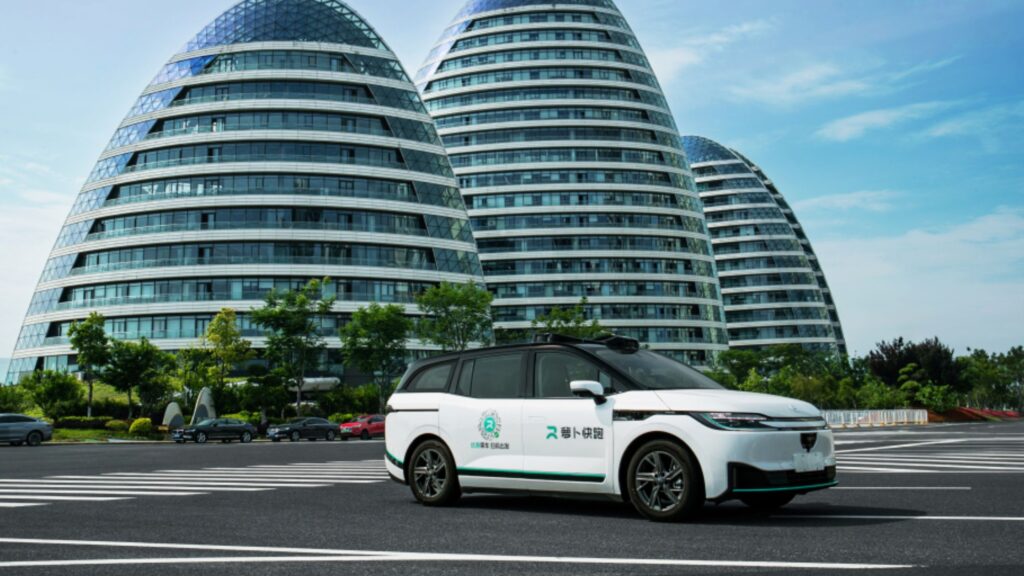
Baidu’s Apollo Go is fast becoming one of the biggest names in the self-driving industry. This autonomous vehicle behemoth is spreading across the globe faster than you might think.
In February 2026, Apollo Go completed over 20 million trips, and the weekly order volume peaked at 300,000 trips in late 2025.
Apollo Go operates across 22 cities globally. The service covers thousands of square kilometers, and its vehicles have no difficulty in complex urban traffic, construction zones, and highways. Also, it operates in rain, fog, and other challenging conditions that would test even experienced human drivers. And it’s doing all of this almost profitably in some markets.
Let’s discover some interesting things about Baidu’s Apollo Go.
Key Facts About Baidu’s Apollo Go
1. The Humble Beginnings: From Search Engine to Self-Driving Contender
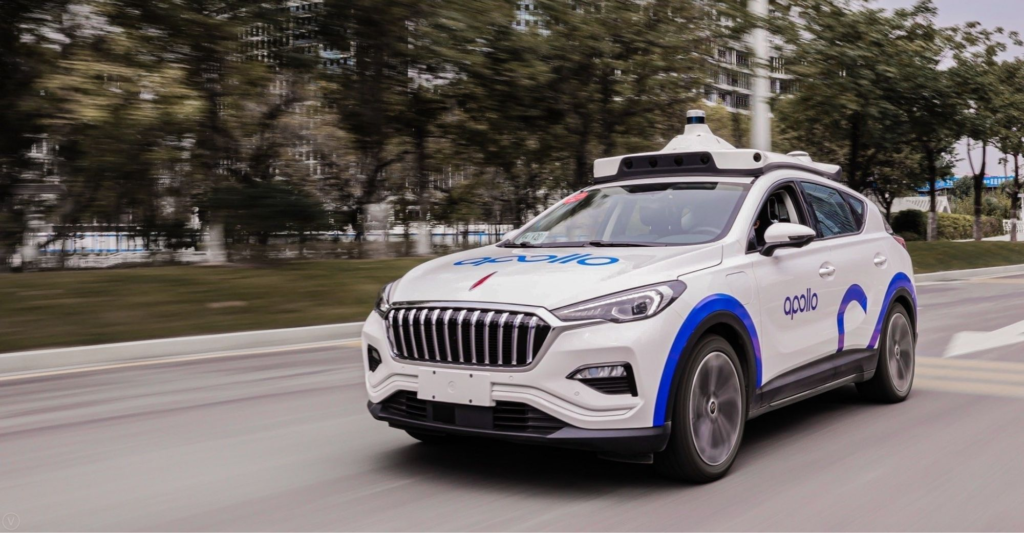
Baidu was founded by Robin Li and Eric Xu on January 18, 2000, as China’s answer to Google. But Li had bigger visions than just running a search engine.
In 2013, Baidu quietly started autonomous vehicle research at its research institute. The company quickly recognized that AI and autonomous driving were the future of mobility. Four years of stealth development led to a watershed moment.
On April 19, 2017, at the Shanghai Auto Show, Baidu officially launched the Apollo project. It was an open-source autonomous driving platform designed for breakthroughs in self-driving technology. The name “Apollo” possibly evokes humanity’s moon landing achievement.
The early days involved partnerships with over 50 companies including Intel, BMW, and Ford. By 2018, Baidu rolled out the Apolong, a Level 4 autonomous minibus that could carry 14 people. It was manufactured in partnership with King Long and operated in 22 urban parks across multiple Chinese cities.
The real game-changer came in July 2022, when Baidu introduced the Apollo RT6, their sixth-generation robotaxi. It was the world’s first purpose-built robotaxi designed from the ground up for autonomous operation. The vehicle comes with a completely detachable steering wheel.
2. The RT6 Revolution: A $28,000 Game-Changer
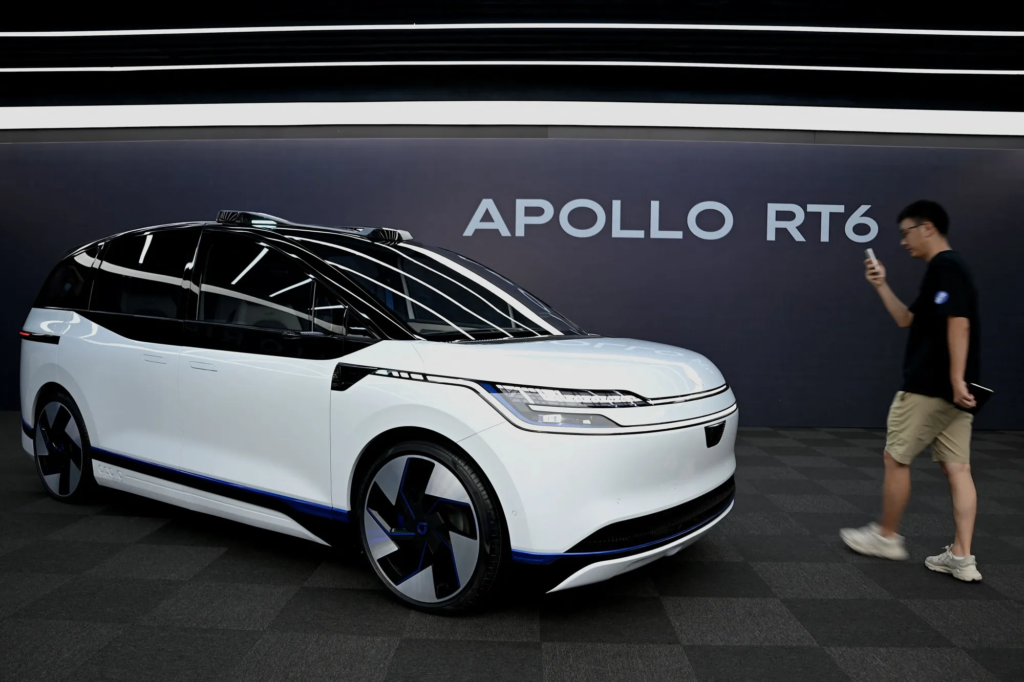
The Apollo RT6 costs approximately 204,600 yuan to produce. That’s roughly $28,350 USD. To put that in perspective, that’s less than many conventional new cars and a fraction of what competitors spend on their autonomous vehicles.
The previous generation Apollo vehicle cost 480,000 yuan. Baidu slashed production costs by more than 50 percent in a single generation. They are building these vehicles from scratch on their proprietary “Apollo Galaxy” platform rather than retrofitting existing cars.
The RT6 comes loaded with 38 to 40 sensors. About eight LiDAR units, six millimeter-wave radars, 12 ultrasonic sensors, and 12 cameras. The computing power reaches 1,200 TOPS.
The vehicle can detect objects up to 440 meters away. It features a 110 kW electric motor from BYD. The battery pack is lithium iron phosphate, and it’s swappable, meaning it can be changed in just three minutes. This eliminates charging downtime and keeps the fleet operational longer.
The car has no steering wheel, and the driver’s seat area becomes extra passenger space, a vending machine, a desk, or even gaming consoles.
3. Mind-Blowing Scale: 20 Million Rides and Counting
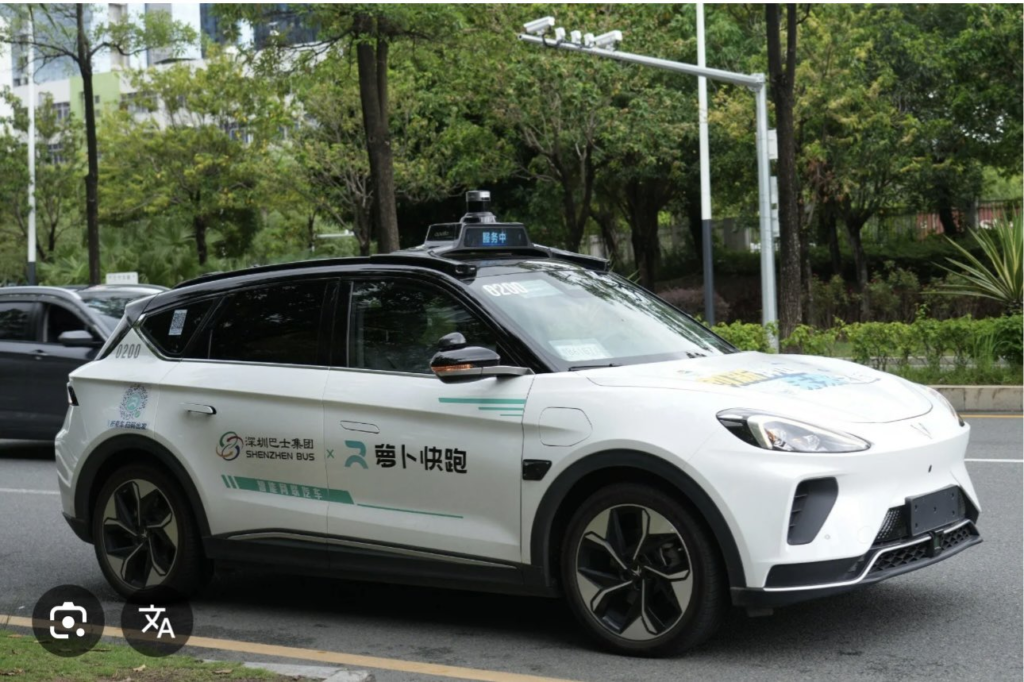
By February 2026, Baidu’s Apollo Go delivered over 20 million cumulative rides globally. In the fourth quarter of 2025 alone, the service provided 3.4 million fully autonomous trips. That represents a year-over-year growth of more than 200 percent.
Weekly orders hit a peak of 300,000 trips in late 2025. The service now operates across 22 cities worldwide. In Wuhan alone, Apollo Go covers 3,000 square kilometers, with a catchment population of 7.7 million. That’s over half the city’s population with access to the service.
Baidu’s Apollo Go fleet has logged more than 240 million autonomous kilometers without a single major accident. Of those, over 190 million kilometers were completed in fully driverless mode without any safety driver present. To understand the safety record, Apollo Go has experienced only 1/14th the accident rate of human drivers over the past two years.
According to insider sources, the business as a whole is still not fully profitable but has hit break-even at scale in some cities like Wuhan. CEO Robin Li stated that Wuhan taxi fares are over 30 percent cheaper than China’s tier-one cities and far below those in many overseas markets.
4. Global Expansion: Moving Beyond China’s Borders
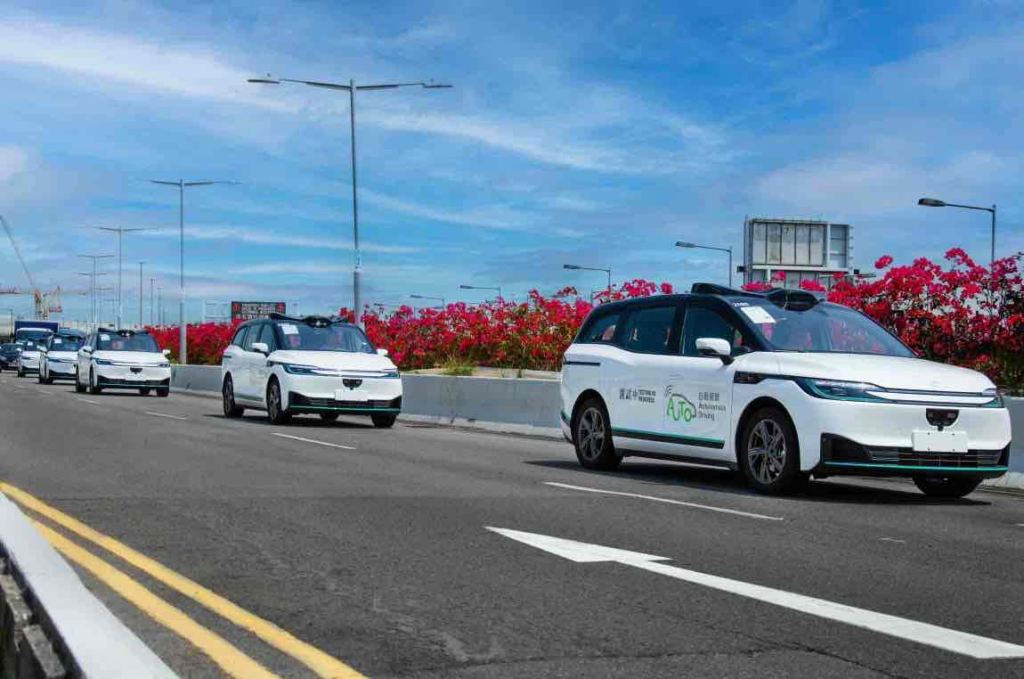
Apollo Go isn’t staying in China. The international expansion accelerated in 2025 and 2026.
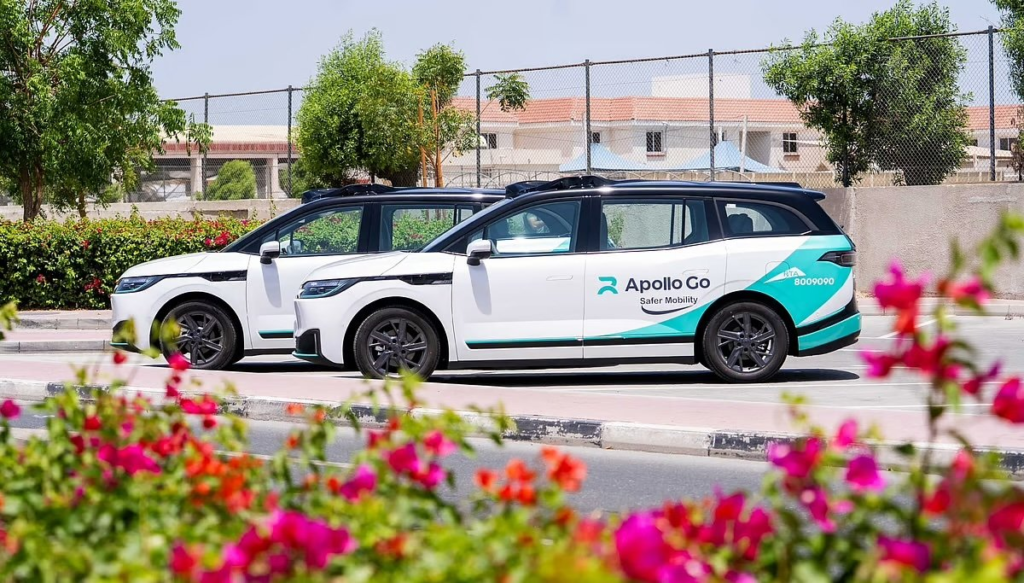
In the Middle East, Apollo Go launched in both Dubai and Abu Dhabi. In January 2026, Baidu opened its first overseas operations center, the Apollo Go Park in Dubai. The 2,000-square-meter facility serves as a comprehensive hub managing infrastructure, charging, maintenance, and fleet operations.
Dubai’s Roads and Transport Authority granted Apollo Go the emirate’s first permit for fully driverless testing without a safety driver. The service began commercial operations in February 2026 through a partnership with Uber. Users in Dubai can now hail Apollo Go vehicles through the Uber app in designated areas like Jumeirah.
In Abu Dhabi, Apollo Go partnered with AutoGo, a UAE-based autonomous mobility company. The fully driverless commercial service launched on Yas Island in January 2026 via the AutoGo app. The companies secured permits to operate hundreds of vehicles across Abu Dhabi as part of a phased expansion.
These Middle East deployments align with Dubai’s goal of having 25 percent of all transportation trips be autonomous by 2030.
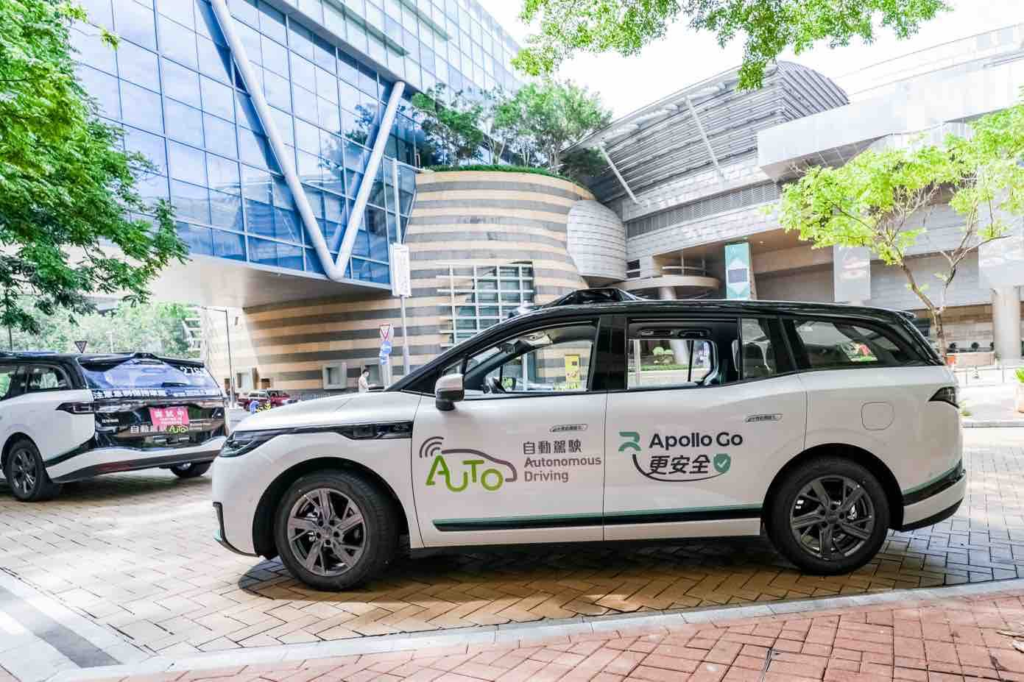
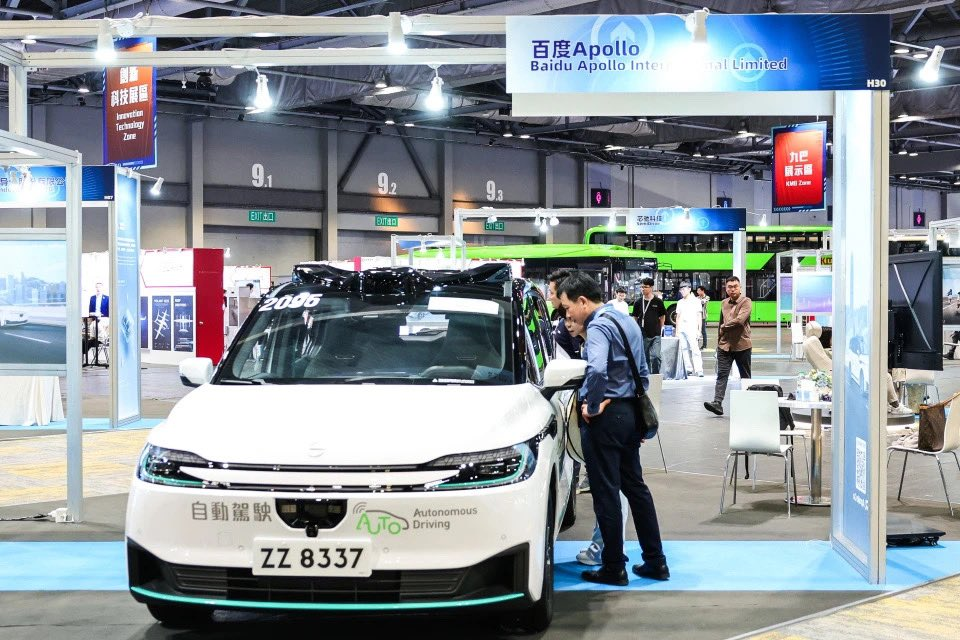
In Asia, Apollo Go made its first expansion beyond mainland China to Hong Kong in late 2024. The Hong Kong deployment expanded testing zones across Kowloon and Kwun Tong.
In February 2026, Apollo Go officially entered South Korea, the service’s first expansion into an Asian market beyond China and Hong Kong. The South Korean market is replete with sophisticated consumers and advanced infrastructure, making it an ideal testbed for further Asian expansion.
Europe is next. Apollo Go signed partnerships with PostBus in Switzerland, where testing began in the canton of St. Gallen. Consumer operations are expected to begin by late 2027.
In the United Kingdom and Germany, Apollo Go partnered with Lyft and Uber to launch autonomous vehicle pilot programs. The vehicles, manufactured by Jiangling Motors, are expected to begin operations in 2026. London will likely be the first city where both Apollo Go and Waymo operate, creating a fascinating competitive environment.
5. Strategic Partnerships: Uber, Lyft, and CATL
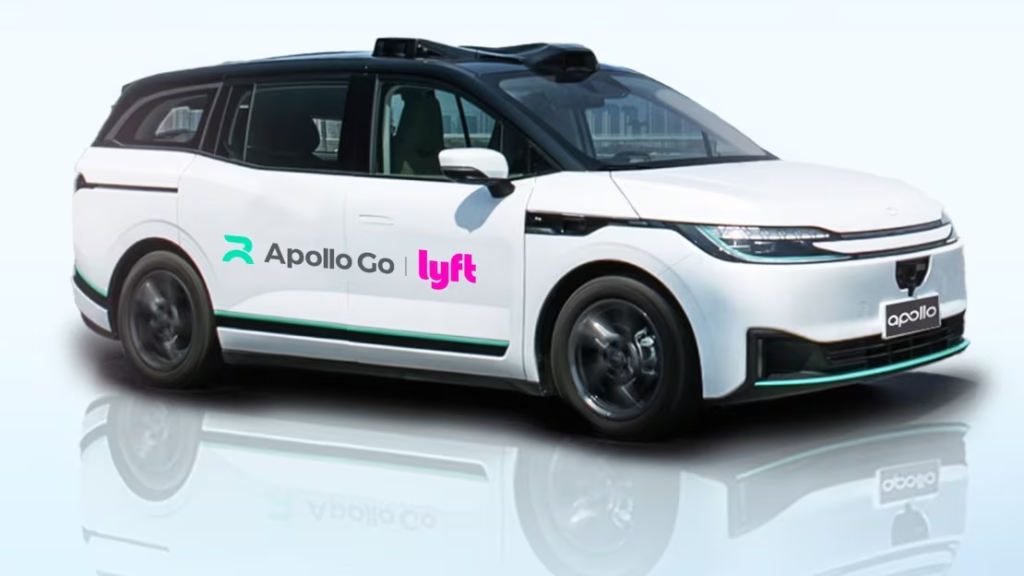
Apollo Go’s growth strategy hinges on partnerships with established players. This approach allows rapid scaling without massive capital expenditure.
The Uber partnership, announced in July 2025 and launched in February 2026, is transformative. Uber brings its massive user base and operational expertise. Apollo Go provides the autonomous technology. The partnership kicked off in Dubai and is set to expand to multiple international markets.
When you open the Uber app in Dubai and request a ride, you might get matched with an Apollo Go robotaxi if you book Uber Comfort, UberX, or select the “Autonomous” option.
The Lyft partnership targets European expansion. Lyft will deploy Apollo Go’s sixth-generation vehicles in Germany and the United Kingdom starting in 2026. These partnerships give Apollo Go instant market access and brand recognition in regions where Baidu has limited consumer awareness.
One of the most intriguing partnerships came in February 2025 when Baidu signed a strategic cooperation agreement with CATL, the world’s largest electric vehicle battery manufacturer. The alliance focuses on two core areas: autonomous driving technology and smart digitalization.
CATL will provide its advanced power batteries, battery-swapping products and services, and skateboard chassis technology for Apollo Go vehicles. Traditional charging requires vehicles to sit idle for extended periods. However, with battery swapping, an Apollo Go vehicle can have its battery replaced in three minutes and get back on the road.
6. The Technology Stack: Why Apollo Go Works
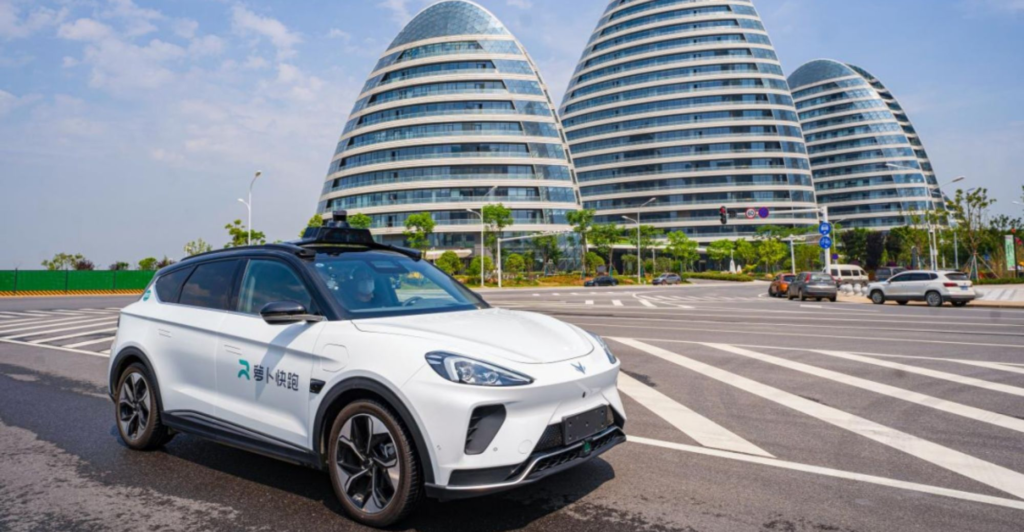
Apollo Go has a sophisticated technological foundation.
It operates on Baidu’s self-developed Apollo autonomous driving platform. Baidu controls the entire stack from perception to planning to control. It’s a vertical integration that allows faster iteration and optimization.
The perception system relies on sensor fusion. Multiple sensor types complement each other. LiDAR provides precise 3D mapping. Cameras offer high-resolution visual data and color information. Millimeter-wave radar works in all weather conditions. Ultrasonic sensors detect nearby objects.
The computing architecture features redundancy throughout. The RT6 has dual computing units for backup. If one fails, the other takes over seamlessly. The braking system has redundancy. The entire architecture is designed with safety-critical systems duplicated.
Baidu developed the Apollo ADFM, described as the world’s first foundation model capable of supporting Level 4 autonomous driving. This AI model utilizes deep learning trained on over 100 million kilometers of real-world driving data. It can predict and respond to scenarios the vehicles have never encountered.
The vehicles communicate with infrastructure through 5G and C-V2X technology. The vehicle-to-everything connectivity allows the cars to receive real-time traffic information, signal timing data, and warnings about road conditions ahead. It’s not just the car being smart. The entire system is intelligent.
You May Also Like:
Physical AI in Autonomous Vehicles: How Will It Work?
Nuro’s Autonomous Vehicle Journey: From Delivery Robots to Level 4 Robotaxis with Uber and Lucid
7. The North American Situation: Why You Can’t Ride Apollo Go in the U.S. (Yet)
Despite being one of the world’s largest robotaxi service, Apollo Go has virtually no presence in North America. If you’re in the United States and want to experience Apollo Go, you’ll have to wait a little longer.
Geopolitical tensions between the United States and China create significant barriers. There are concerns about data security, technology transfer, and Chinese companies operating critical infrastructure in America.
Regulatory frameworks in the U.S. vary by state and municipality. Each jurisdiction has different testing requirements, insurance mandates, and operational restrictions. It’s a challenging situation for any autonomous vehicle company, but particularly difficult for a Chinese firm.
There’s also the competitive landscape. Waymo, owned by Alphabet, is already operating commercial robotaxi services in San Francisco, Phoenix, Los Angeles, and other U.S. cities. Waymo has spent over a decade building relationships with American regulators and the public. They’ve invested billions in U.S. operations.
Tesla is developing its own autonomous taxi service. The U.S. market is crowded with well-funded, politically connected competitors.
From Apollo Go’s perspective, international markets outside North America offer less competitive pressure and more regulatory openness. The Middle East actively courts autonomous vehicle companies as part of smart city initiatives. European regulators, while stringent, are generally technology-neutral. Asian markets are geographically closer and culturally more familiar.
That said, Baidu maintains a presence in the United States through its Apollo Autonomous Driving USA division, led by General Manager Helen K. Pan. This team focuses on partnerships, technology development, and monitoring the North American autonomous vehicle environment. They’re keeping the door open for future expansion if and when conditions change.
For now, if you want to experience Apollo Go, you’ll need to travel to China, Hong Kong, UAE, or wait for the European launches.
8. Safety First: The Numbers Behind the Steering Wheel-Free Future
Safety is the paramount concern with autonomous vehicles, and Apollo Go takes this seriously.
Over the past two years, Apollo Go vehicles have experienced only 1/14th the accident rate of human drivers.
The vehicle architecture prioritizes redundancy. Every critical system has a backup. The computing units are redundant. The braking system is redundant. The power supply is redundant. Multiple sensor types provide overlapping coverage so if one fails, others compensate.
Apollo Go has traveled over 240 million autonomous kilometers without a single major accident. This safety record has earned regulatory trust. Cities like Wuhan and Chongqing granted permits for fully driverless commercial operation without safety drivers because the data proved these vehicles are reliable.
The vehicles undergo rigorous testing before deployment. Baidu operates Apollo Park in Beijing, a dedicated testing facility with over 200 autonomous vehicles. The facility supports development, testing, and validation of 5G and C-V2X technologies. Vehicles must pass extensive closed-course testing before graduating to public roads.
Even after deployment, monitoring is continuous. The Apollo Go operations centers track every vehicle in real-time. If anomalies occur, human operators can remotely monitor or intervene. As confidence grows, this intervention becomes increasingly rare.
The RT6 features interactive lights that communicate with pedestrians and other road users. These visual signals indicate when the vehicle is about to move, yielding, or navigating around obstacles. It helps other road users understand the vehicle’s intentions, reducing unpredictability.
9. Economic Viability: The Path to Profitability

The autonomous vehicle industry has burned through tens of billions of dollars. Many companies remain years away from profitability. Apollo Go dares to be different.
In Wuhan, Apollo Go has broken even and reportedly achieved unit-level profitability in 2025. This means that on a per-ride basis, revenues exceed costs. It’s a monumental achievement. CEO Robin Li emphasized that Wuhan’s taxi fares are significantly lower than tier-one Chinese cities and international markets. If the business model works in a low-fare environment, the economics improve dramatically in premium markets.
The RT6’s low production cost of approximately $28,000 also counts. Traditional taxis have a human driver who needs to be paid wages and benefits. That’s typically the largest operating expense. Remove the driver, and the cost structure transforms.
Operating costs for Apollo Go are reportedly one-seventh of Waymo’s costs and 30 percent lower than Tesla’s projected costs.
Fleet size matters too. The target fleet size in Dubai is 1,000 vehicles in the coming years. Scale drives down per-unit costs for maintenance, insurance, and operations.
Revenue will grow through multiple channels. The core business is ride-hailing fees. But Baidu is exploring advertising inside vehicles, premium service tiers, and potentially vehicle customization where the interior is configured for specific use cases like mobile offices or entertainment pods.
10. What’s Next: The 2026 Roadmap and Beyond
In 2026, Apollo Go is prioritizing fleet expansion. The Dubai fleet is scaling toward 1,000 vehicles. Abu Dhabi is expanding beyond Yas Island to broader coverage across the emirate. The European pilots in London, Germany, and Switzerland are launching. South Korea operations are ramping up.
The partnership strategy continues. Beyond Uber and Lyft, Apollo Go is pursuing relationships with local taxi companies, fleet operators, and mobility service providers. It’s an asset-light approach that allows rapid scaling without proportional capital investment.
Technology development never stops. Baidu is working on camera-centric autonomy to complement the sensor-heavy approach. This aligns with trends from companies like Tesla. While LiDAR provides precision, cameras are cheaper. A hybrid approach could optimize cost and performance.
The CATL partnership will bring about new vehicle designs. Expect to see Apollo Go vehicles built from the ground up with CATL’s skateboard chassis and integrated battery-swapping systems. These next-generation vehicles could push costs even lower while improving performance.
Conclusion
By 2030, Baidu aims to operate in 100 cities globally. The ride volume could reach hundreds of millions annually. The vision is that autonomous ride-hailing becomes as common as ordering food delivery.
The most interesting part is that Robin Li has suggested that autonomous rides could cost half as much as traditional taxis.
Removing the driver cost makes this possible.
Let’s just imagine urban transportation becoming twice as affordable while being safer and more accessible.
That’s the promise Apollo Go is working toward.
Also Read:
Autonomous Vehicles: 10 Amazing Things to Know About Waymo in 2026
Boeing’s Wisk Aero: Autonomous evToL Revolutionizing Self-Flying Transportation

I’m Dr. Brandial Bright, also known as the AVangelist. As a dedicated and passionate researcher in autonomous and electric vehicles (AVs and EVs), my mission is to educate and raise awareness within the automotive industry. As the Founder and Managing Partner of Fifth Level Consulting, I promote the adoption and innovation of advanced vehicle technologies through speaking engagements, consulting, and research as we progress to level 5 fully autonomous vehicles.